Sunday, 22nd December 2024
My approach to running a link blog
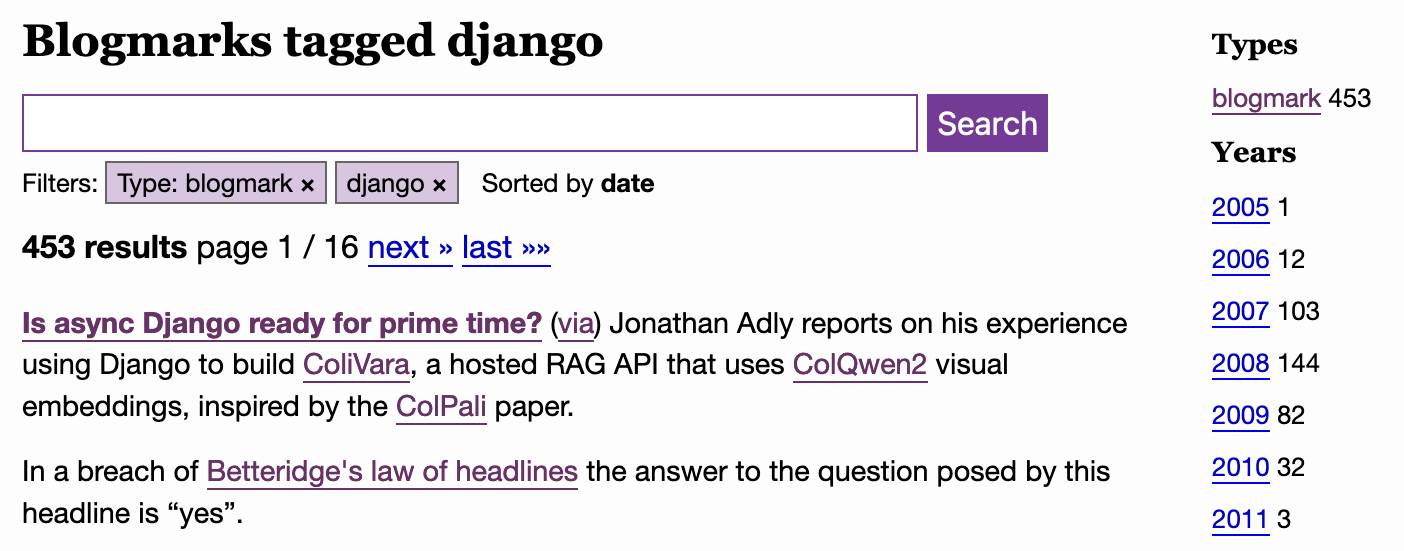
I started running a basic link blog on this domain back in November 2003—publishing links (which I called “blogmarks”) with a title, URL, short snippet of commentary and a “via” link where appropriate.
[... 1,510 words]What happened to the world’s largest tube TV? (via) This YouTube video is an absolute delight.
Shank Mods describes the legendary Sony PVM-4300 - the largest CRT television ever made, released by Sony in 1989 and weighing over 400lb. CRT enthusiasts had long debated its very existence, given the lack of known specimens outside of Sony's old marketing materials. Then Shank tracked a working one down... on the second floor of a 300 year old Soba noodle restaurant in Osaka, Japan.
This story of how they raced to rescue the TV before the restaurant was demolished, given the immense difficulty of moving a 400lb television (and then shipping it to the USA), is a fantastic ride.
openai/openai-openapi. Seeing as the LLM world has semi-standardized on imitating OpenAI's API format for a whole host of different tools, it's useful to note that OpenAI themselves maintain a dedicated repository for a OpenAPI YAML representation of their current API.
(I get OpenAI and OpenAPI typo-confused all the time, so openai-openapi is a delightfully fiddly repository name.)
The openapi.yaml file itself is over 26,000 lines long, defining 76 API endpoints ("paths" in OpenAPI terminology) and 284 "schemas" for JSON that can be sent to and from those endpoints. A much more interesting view onto it is the commit history for that file, showing details of when each different API feature was released.
Browsing 26,000 lines of YAML isn't pleasant, so I got Claude to build me a rudimentary YAML expand/hide exploration tool. Here's that tool running against the OpenAI schema, loaded directly from GitHub via a CORS-enabled fetch() call: https://tools.simonwillison.net/yaml-explorer#.eyJ1c... - the code after that fragment is a base64-encoded JSON for the current state of the tool (mostly Claude's idea).
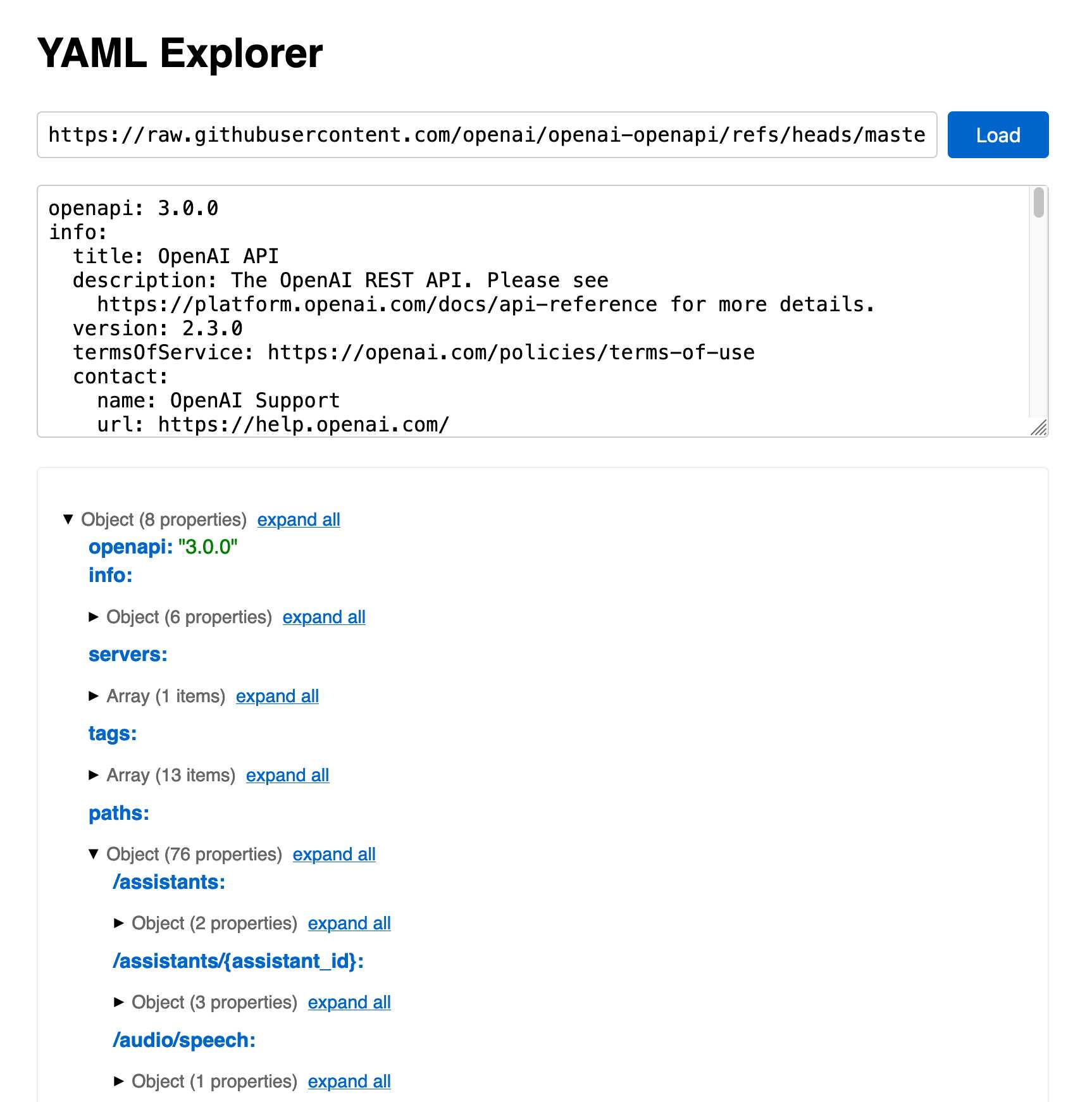
The tool is a little buggy - the expand-all option doesn't work quite how I want - but it's useful enough for the moment.
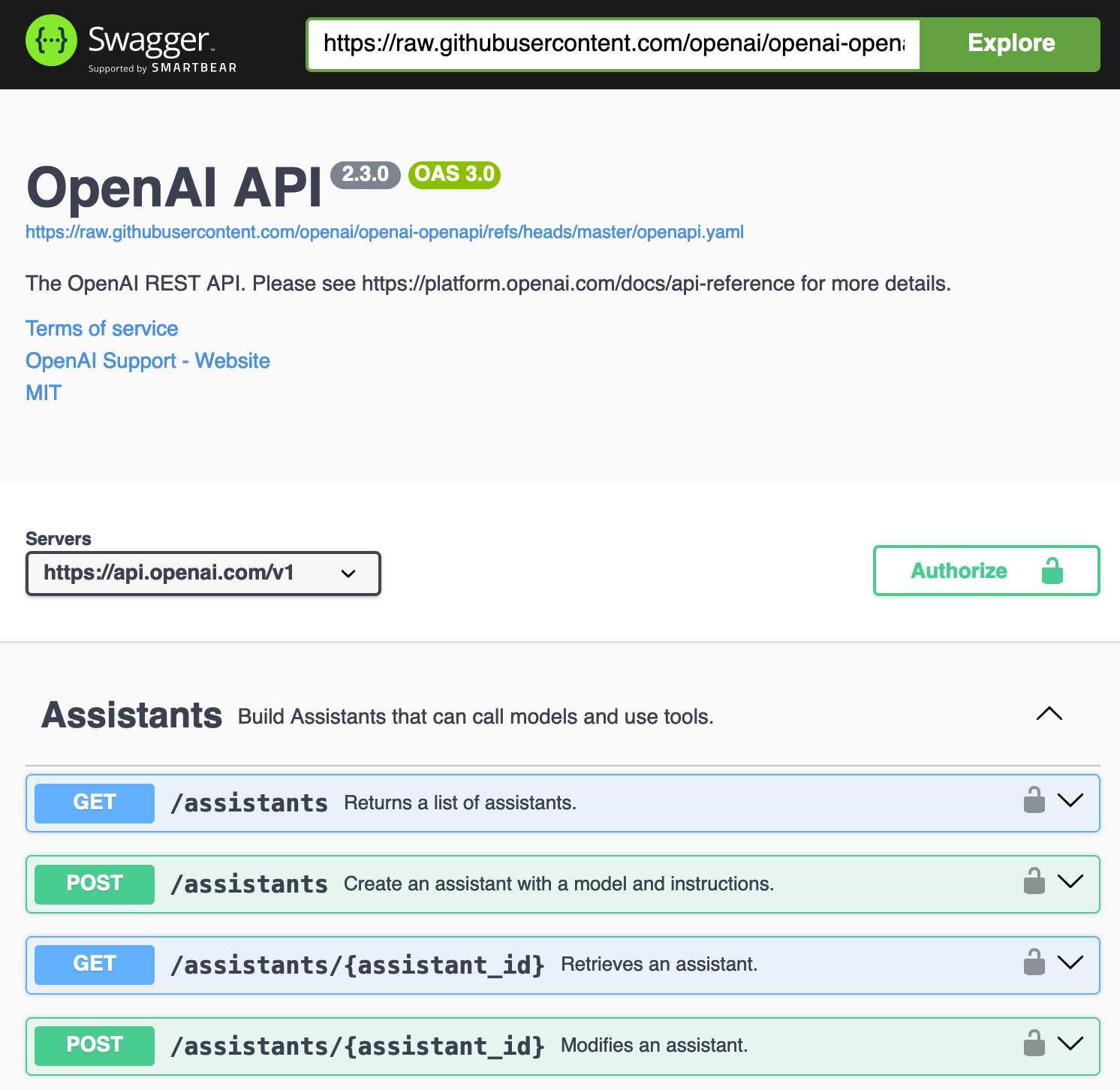
Update: It turns out the petstore.swagger.io demo has an (as far as I can tell) undocumented ?url= parameter which can load external YAML files, so here's openai-openapi/openapi.yaml in an OpenAPI explorer interface.