10th October 2024 - Link Blog
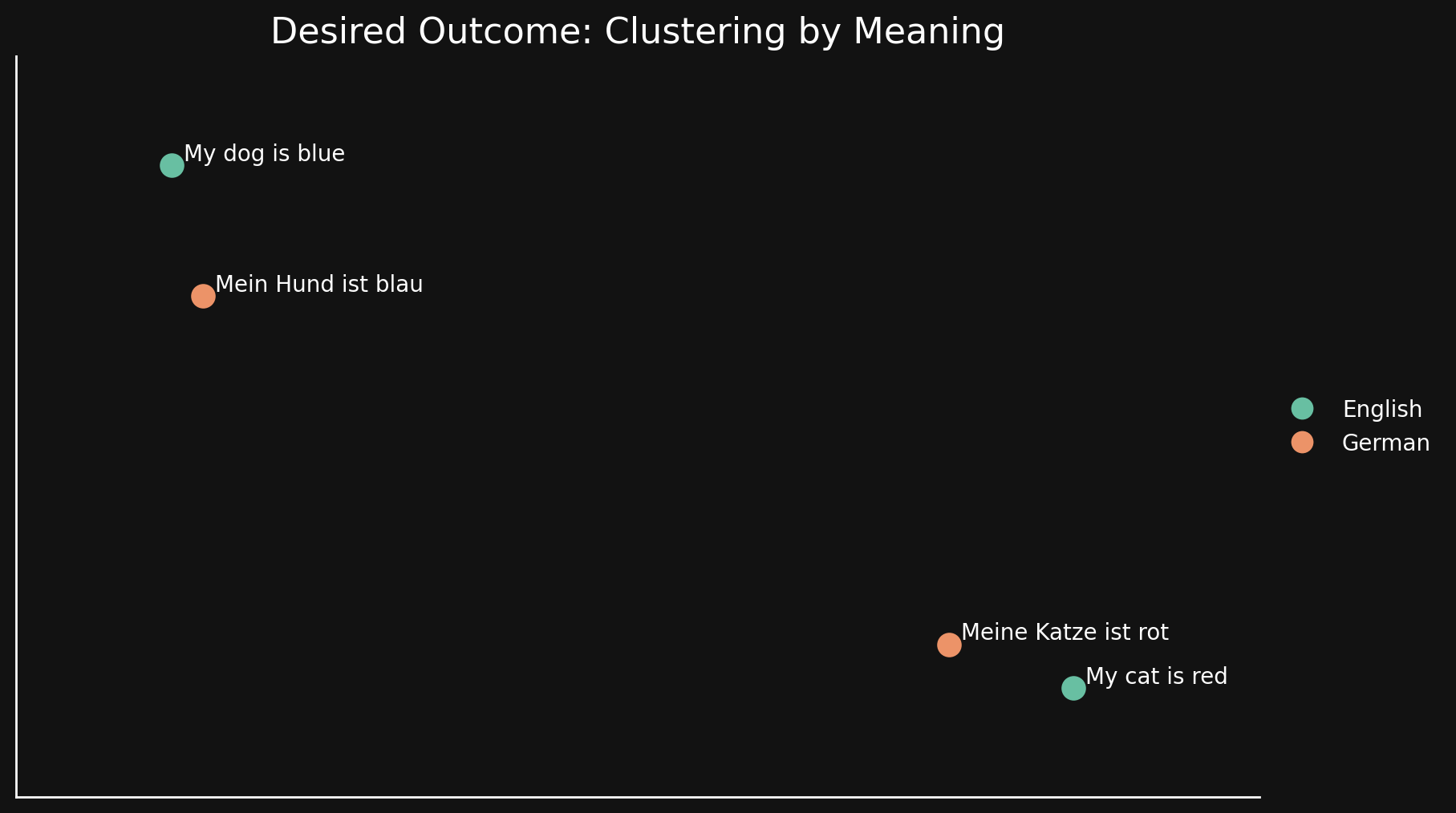
Bridging Language Gaps in Multilingual Embeddings via Contrastive Learning (via) Most text embeddings models suffer from a "language gap", where phrases in different languages with the same semantic meaning end up with embedding vectors that aren't clustered together.
Jina claim their new jina-embeddings-v3 (CC BY-NC 4.0, which means you need to license it for commercial use if you're not using their API) is much better on this front, thanks to a training technique called "contrastive learning".
There are 30 languages represented in our contrastive learning dataset, but 97% of pairs and triplets are in just one language, with only 3% involving cross-language pairs or triplets. But this 3% is enough to produce a dramatic result: Embeddings show very little language clustering and semantically similar texts produce close embeddings regardless of their language
Recent articles
- Hello Python 3.15, goodbye 3.10, and now I can use 3.11 - 12th October 2026
- A new feature for my blog, built using my voice - 9th October 2026
- Claude Haiku 5.5 - 7th October 2026
- We're going to need default hard budget caps on pretty much everything - 3rd October 2026