March 2026
115 posts: 10 entries, 27 links, 19 quotes, 4 notes, 42 beats, 8 chapters, 5 newsletters
Wednesday, 18th March 2026
Autoresearching Apple’s “LLM in a Flash” to run Qwen 397B locally. Here's a fascinating piece of research by Dan Woods, who managed to get a custom version of Qwen3.5-397B-A17B running at 5.5+ tokens/second on a 48GB MacBook Pro M3 Max despite that model taking up 209GB (120GB quantized) on disk.
Qwen3.5-397B-A17B is a Mixture-of-Experts (MoE) model, which means that each token only needs to run against a subset of the overall model weights. These expert weights can be streamed into memory from SSD, saving them from all needing to be held in RAM at the same time.
Dan used techniques described in Apple's 2023 paper LLM in a flash: Efficient Large Language Model Inference with Limited Memory:
This paper tackles the challenge of efficiently running LLMs that exceed the available DRAM capacity by storing the model parameters in flash memory, but bringing them on demand to DRAM. Our method involves constructing an inference cost model that takes into account the characteristics of flash memory, guiding us to optimize in two critical areas: reducing the volume of data transferred from flash and reading data in larger, more contiguous chunks.
He fed the paper to Claude Code and used a variant of Andrej Karpathy's autoresearch pattern to have Claude run 90 experiments and produce MLX Objective-C and Metal code that ran the model as efficiently as possible.
danveloper/flash-moe has the resulting code plus a PDF paper mostly written by Claude Opus 4.6 describing the experiment in full.
The final model has the experts quantized to 2-bit, but the non-expert parts of the model such as the embedding table and routing matrices are kept at their original precision, adding up to 5.5GB which stays resident in memory while the model is running.
Qwen 3.5 usually runs 10 experts per token, but this setup dropped that to 4 while claiming that the biggest quality drop-off occurred at 3.
It's not clear to me how much the quality of the model results are affected. Claude claimed that "Output quality at 2-bit is indistinguishable from 4-bit for these evaluations", but the description of the evaluations it ran is quite thin.
Update: Dan's latest version upgrades to 4-bit quantization of the experts (209GB on disk, 4.36 tokens/second) after finding that the 2-bit version broke tool calling while 4-bit handles that well.
Thursday, 19th March 2026
Thoughts on OpenAI acquiring Astral and uv/ruff/ty
The big news this morning: Astral to join OpenAI (on the Astral blog) and OpenAI to acquire Astral (the OpenAI announcement). Astral are the company behind uv, ruff, and ty—three increasingly load-bearing open source projects in the Python ecosystem. I have thoughts!
[... 1,378 words]Friday, 20th March 2026
I had Claude Code run a micro-benchmark comparing different approaches to implementing tagging in SQLite. Traditional many-to-many tables won, but FTS5 came a close second. Full table scans with LIKE queries performed better than I expected, but full table scans with JSON arrays and json_each() were much slower.
Congrats to the @cursor_ai team on the launch of Composer 2!
We are proud to see Kimi-k2.5 provide the foundation. Seeing our model integrated effectively through Cursor's continued pretraining & high-compute RL training is the open model ecosystem we love to support.
Note: Cursor accesses Kimi-k2.5 via @FireworksAI_HQ hosted RL and inference platform as part of an authorized commercial partnership.
— Kimi.ai @Kimi_Moonshot, responding to reports that Composer 2 was built on top of Kimi K2.5
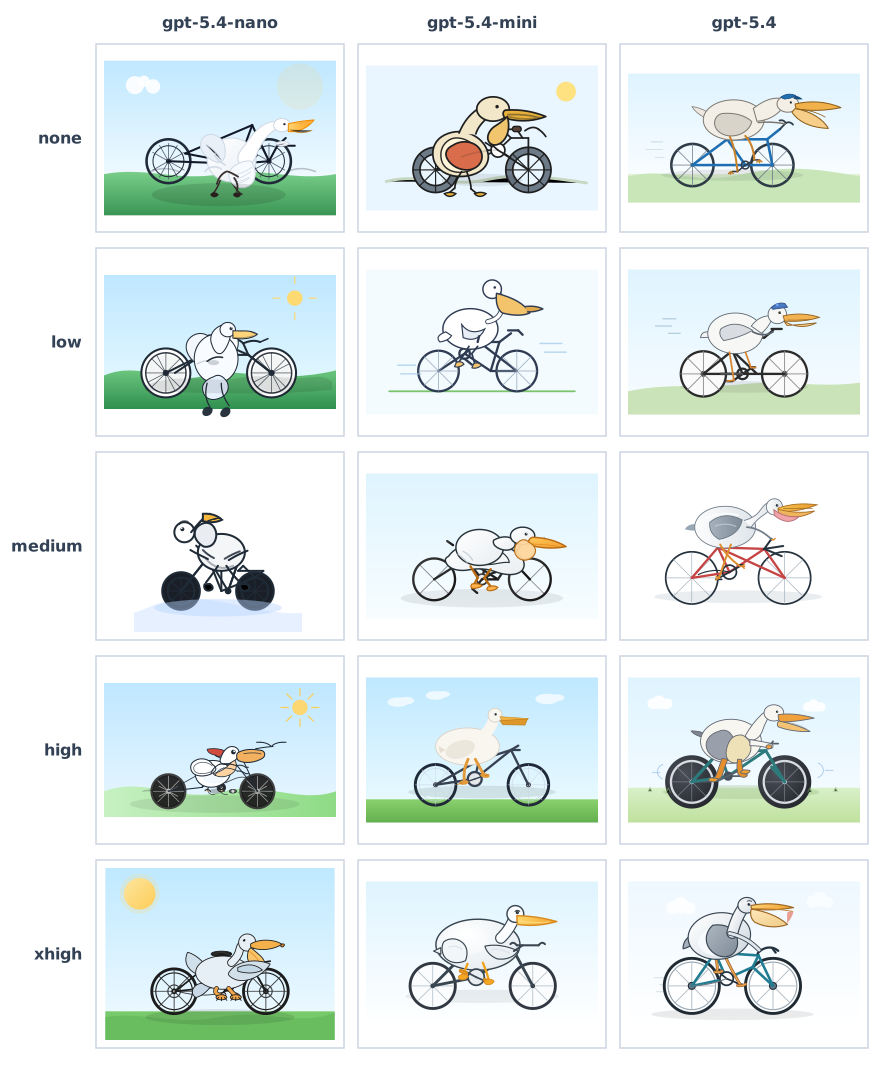
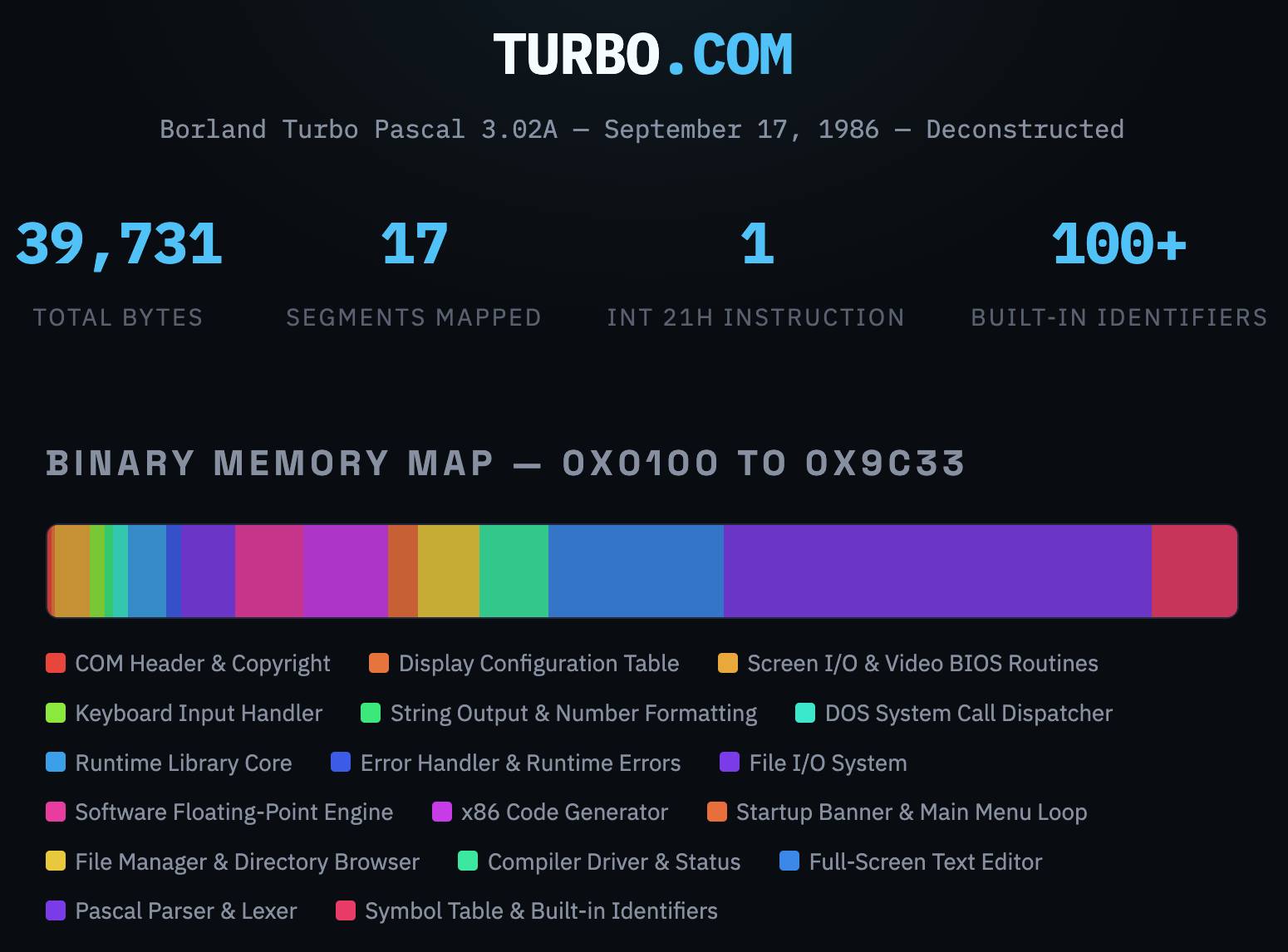
Turbo Pascal 3.02A, deconstructed. In Things That Turbo Pascal is Smaller Than James Hague lists things (from 2011) that are larger in size than Borland's 1985 Turbo Pascal 3.02 executable - a 39,731 byte file that somehow included a full text editor IDE and Pascal compiler.
This inspired me to track down a copy of that executable (available as freeware since 2000) and see if Claude could interpret the binary and decompile it for me.
It did a great job, so I had it create this interactive artifact illustrating the result. Here's the sequence of prompts I used (in regular claude.ai chat, not Claude Code):
Read this https://prog21.dadgum.com/116.html
Now find a copy of that binary online
Explore this (I attached the zip file)
Build an artifact - no react - that embeds the full turbo.com binary and displays it in a way that helps understand it - broke into labeled segments for different parts of the application, decompiled to visible source code (I guess assembly?) and with that assembly then reconstructed into readable code with extensive annotations
Update: Annoyingly the Claude share link doesn't show the actual code that Claude executed, but here's the zip file it gave me when I asked to download all of the intermediate files.
I ran Codex CLI with GPT-5.4 xhigh against that zip file to see if it would spot any obvious hallucinations, and it did not. This project is low-enough stakes that this gave me enough confidence to publish the result!
Turns out it's hallucinated slop
Update 2, 24th March 2026: rep_lodsb on Hacker News is someone who actually understands assembler, and they reviewed the annotations and found them to be hallucinated slop:
[...] Obviously, there has to be a lot more to even a simple-minded x86 code generator than just a generic "emit opcode byte" and "emit call" routine. In general, what A"I" produced here is not a full disassembly but a collection of short snippets, potentially not even including the really interesting ones. But is it even correct?
EmitByte here is unnecessarily pushing/popping AX, which isn't modified by the few instructions in between at all. No competent assembly language programmer would do this. So maybe against all expectations, Turbo Pascal is just really badly coded? No, it's of course a hallucination: those instructions don't appear in the binary at all! [...]
But searching for e.g. the hex opcode B0 E8 ('mov al,0xe8') is enough to confirm that this code snippet isn't to be found anywhere.
There is a lot more suspicious code, including some that couldn't possibly work (like the "ret 1" in the system call dispatcher, which would misalign the stack).
Conclusion: it's slop
Because it's amusing to loop this kind of criticism through a model, I pasted their feedback into Claude along with instructions to re-review their the code and it agreed with their assessment:
The commenter's core charge — that the annotated disassembly is "slop" — is substantiated. The artifact presents a mix of genuine analysis (real hex dumps, some correctly disassembled sections) and wholesale fabrication (invented assembly with plausible-sounding labels and comments for roughly half the binary). The fabricated sections look convincing to a casual reader but don't survive byte-level comparison with the actual binary.
Saturday, 21st March 2026
Using Git with coding agents
Git is a key tool for working with coding agents. Keeping code in version control lets us record how that code changes over time and investigate and reverse any mistakes. All of the coding agents are fluent in using Git's features, both basic and advanced.
This fluency means we can be more ambitious about how we use Git ourselves. We don't need to memorize how to do things with Git, but staying aware of what's possible means we can take advantage of the full suite of Git's abilities.
Git essentials
Each Git project lives in a repository - a folder on disk that can track changes made to the files within it. Those changes are recorded in commits - timestamped bundles of changes to one or more files accompanied by a commit message describing those changes and an author recording who made them. [... 1,396 words]
Profiling Hacker News users based on their comments
Here’s a mildly dystopian prompt I’ve been experimenting with recently: “Profile this user”, accompanied by a copy of their last 1,000 comments on Hacker News.
[... 976 words]Sunday, 22nd March 2026
Bram Cohen wrote about his coherent vision for the future of version control using CRDTs, illustrated by 470 lines of Python.
I fed that Python (minus comments) into Claude and asked for an explanation, then had it use Pyodide to build me an interactive UI for seeing how the algorithms work.
TIL that Cloudflare's 1.1.1.1 DNS service (and 1.1.1.2 and 1.1.1.3, which block malware and malware + adult content respectively) has a CORS-enabled JSON API, so I had Claude Code build me a UI for running DNS queries against all three of those resolvers.
Aaron Harper wrote about Node.js worker threads, which inspired me to run a research task to see if they might help with running JavaScript in a sandbox. Claude Code went way beyond my initial question and produced a comparison of isolated-vm, vm2, quickjs-emscripten, QuickJS-NG, ShadowRealm, and Deno Workers.
Stuart Breckenridge pointed out that PC Gamer Recommends RSS Readers in a 37MB Article That Just Keeps Downloading, highlighting a truly horrifying example of web bloat that added up to 100s more MBs thanks to auto-playing video ads. I decided to have Claude Code for web use Rodney to investigate the page - prompt here.
Experimenting with Starlette 1.0 with Claude skills
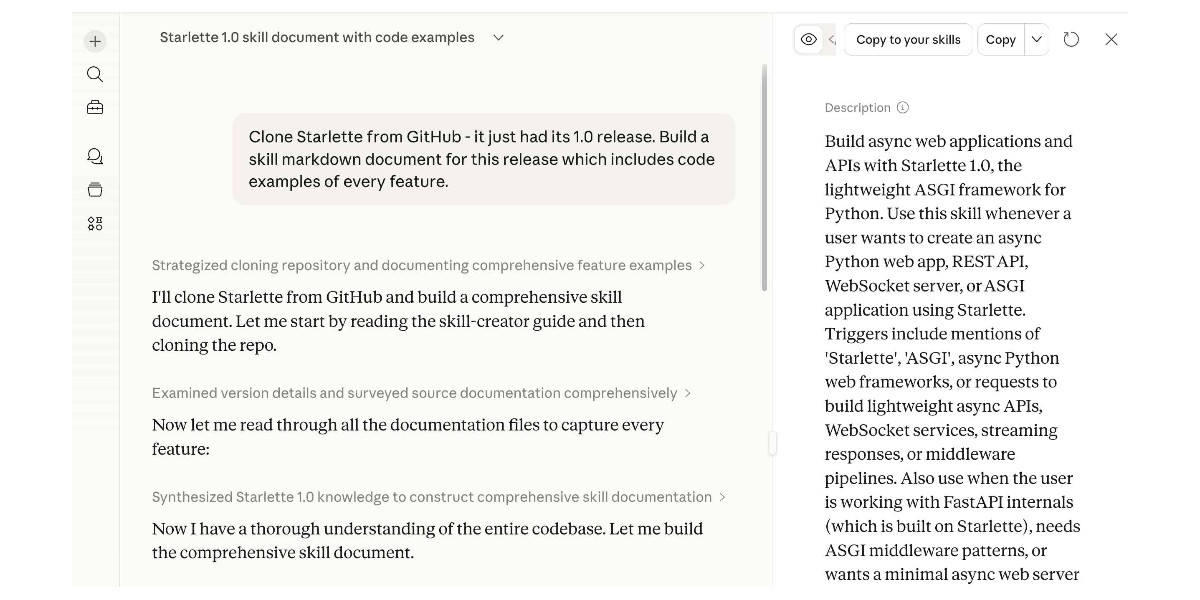
Starlette 1.0 is out! This is a really big deal. I think Starlette may be the Python framework with the most usage compared to its relatively low brand recognition because Starlette is the foundation of FastAPI, which has attracted a huge amount of buzz that seems to have overshadowed Starlette itself.
[... 1,194 words]Monday, 23rd March 2026
Last month I added a feature I call beats to this blog, pulling in some of my other content from external sources and including it on the homepage, search and various archive pages on the site.
On any given day these frequently outnumber my regular posts. They were looking a little bit thin and were lacking any form of explanation beyond a link, so I've added the ability to annotate them with a "note" which now shows up as part of their display.
Here's what that looks like for the content I published yesterday:
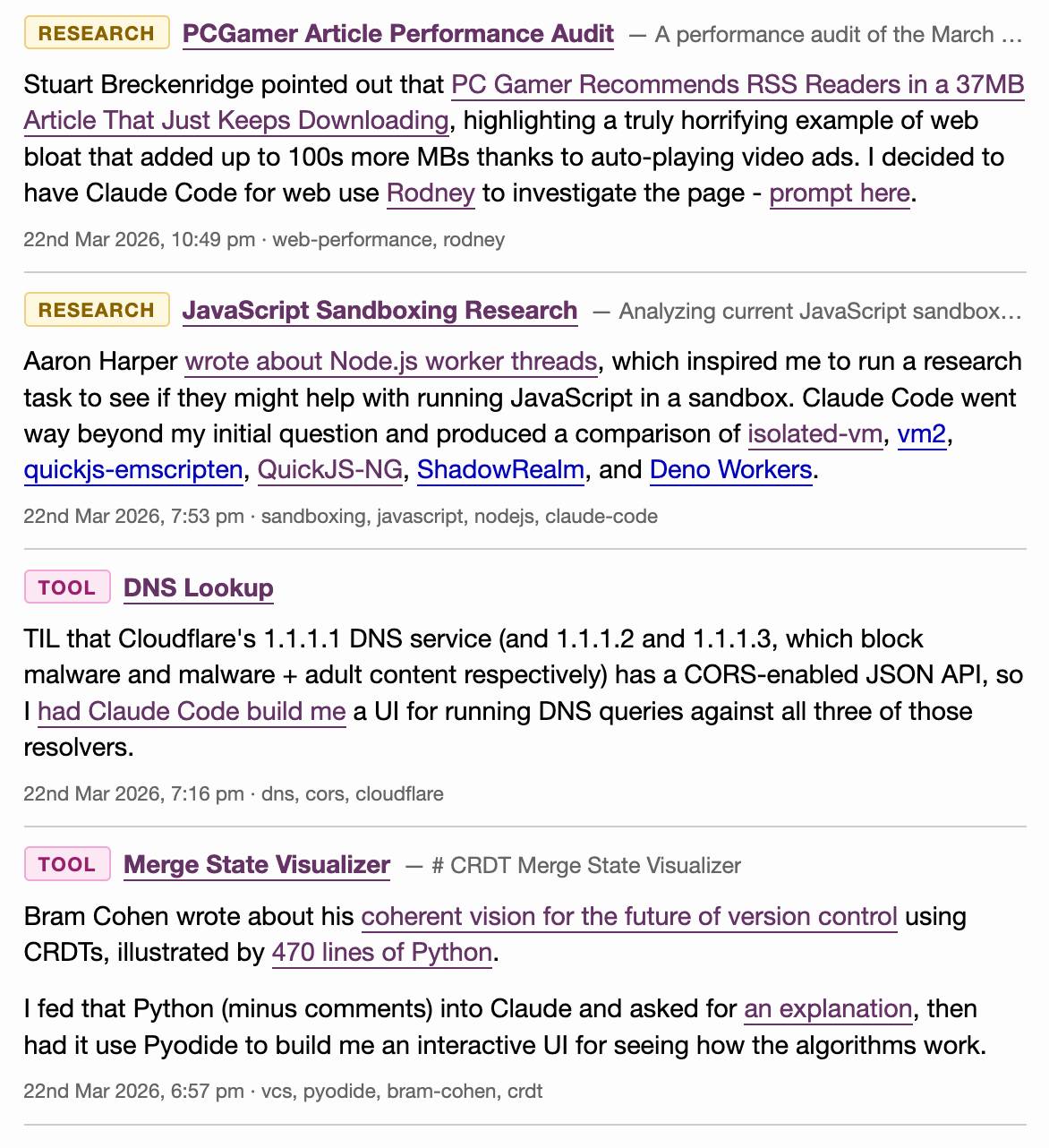
I've also updated the /atom/everything/ Atom feed to include any beats that I've attached notes to.
I have been doing this for years, and the hardest parts of the job were never about typing out code. I have always struggled most with understanding systems, debugging things that made no sense, designing architectures that wouldn't collapse under heavy load, and making decisions that would save months of pain later.
None of these problems can be solved LLMs. They can suggest code, help with boilerplate, sometimes can act as a sounding board. But they don't understand the system, they don't carry context in their "minds", and they certianly don't know why a decision is right or wrong.
And the most importantly, they don't choose. That part is still yours. The real work of software development, the part that makes someone valuable, is knowing what should exist in the first place, and why.
— David Abram, The machine didn't take your craft. You gave it up.
The most interesting alpha of datasette-files yet, a new plugin which adds the ability to upload files directly into a Datasette instance. Here are the release notes in full:
- Columns are now configured using the new column_types system from Datasette 1.0a26. #8
- New
file_actionsplugin hook, plus ability to import an uploaded CSV/TSV file to a table. #10- UI for uploading multiple files at once via the new documented JSON upload API. #11
- Thumbnails are now generated for image files and stored in an internal
datasette_files_thumbnailstable. #13
slop is something that takes more human effort to consume than it took to produce. When my coworker sends me raw Gemini output he’s not expressing his freedom to create, he’s disrespecting the value of my time
— Neurotica, @schwarzgerat.bsky.social
Tuesday, 24th March 2026
I wrote about Dan Woods' experiments with streaming experts the other day, the trick where you run larger Mixture-of-Experts models on hardware that doesn't have enough RAM to fit the entire model by instead streaming the necessary expert weights from SSD for each token that you process.
Five days ago Dan was running Qwen3.5-397B-A17B in 48GB of RAM. Today @seikixtc reported running the colossal Kimi K2.5 - a 1 trillion parameter model with 32B active weights at any one time, in 96GB of RAM on an M2 Max MacBook Pro.
And @anemll showed that same Qwen3.5-397B-A17B model running on an iPhone, albeit at just 0.6 tokens/second - iOS repo here.
I think this technique has legs. Dan and his fellow tinkerers are continuing to run autoresearch loops in order to find yet more optimizations to squeeze more performance out of these models.
Update: Now Daniel Isaac got Kimi K2.5 working on a 128GB M4 Max at ~1.7 tokens/second.
Malicious litellm_init.pth in litellm 1.82.8 — credential stealer.
The LiteLLM v1.82.8 package published to PyPI was compromised with a particularly nasty credential stealer hidden in base64 in a litellm_init.pth file, which means installing the package is enough to trigger it even without running import litellm.
(1.82.7 had the exploit as well but it was in the proxy/proxy_server.py file so the package had to be imported for it to take effect.)
This issue has a very detailed description of what the credential stealer does. There's more information about the timeline of the exploit over here.
PyPI has already quarantined the litellm package so the window for compromise was just a few hours, but if you DID install the package it would have hoovered up a bewildering array of secrets, including ~/.ssh/, ~/.gitconfig, ~/.git-credentials, ~/.aws/, ~/.kube/, ~/.config/, ~/.azure/, ~/.docker/, ~/.npmrc, ~/.vault-token, ~/.netrc, ~/.lftprc, ~/.msmtprc, ~/.my.cnf, ~/.pgpass, ~/.mongorc.js, ~/.bash_history, ~/.zsh_history, ~/.sh_history, ~/.mysql_history, ~/.psql_history, ~/.rediscli_history, ~/.bitcoin/, ~/.litecoin/, ~/.dogecoin/, ~/.zcash/, ~/.dashcore/, ~/.ripple/, ~/.bitmonero/, ~/.ethereum/, ~/.cardano/.
It looks like this supply chain attack started with the recent exploit against Trivy, ironically a security scanner tool that was used in CI by LiteLLM. The Trivy exploit likely resulted in stolen PyPI credentials which were then used to directly publish the vulnerable packages.
I really think "give AI total control of my computer and therefore my entire life" is going to look so foolish in retrospect that everyone who went for this is going to look as dumb as Jimmy Fallon holding up a picture of his Bored Ape
— Christopher Mims, Technology columnist at The Wall Street Journal
Package Managers Need to Cool Down. Today's LiteLLM supply chain attack inspired me to revisit the idea of dependency cooldowns, the practice of only installing updated dependencies once they've been out in the wild for a few days to give the community a chance to spot if they've been subverted in some way.
This recent piece (March 4th) piece by Andrew Nesbitt reviews the current state of dependency cooldown mechanisms across different packaging tools. It's surprisingly well supported! There's been a flurry of activity across major packaging tools, including:
- pnpm 10.16 (September 2025) —
minimumReleaseAgewithminimumReleaseAgeExcludefor trusted packages - Yarn 4.10.0 (September 2025) —
npmMinimalAgeGate(in minutes) withnpmPreapprovedPackagesfor exemptions - Bun 1.3 (October 2025) —
minimumReleaseAgeviabunfig.toml - Deno 2.6 (December 2025) —
--minimum-dependency-agefordeno updateanddeno outdated - uv 0.9.17 (December 2025) — added relative duration support to existing
--exclude-newer, plus per-package overrides viaexclude-newer-package - pip 26.0 (January 2026) —
--uploaded-prior-to(absolute timestamps only; relative duration support requested, update: and added in pip 26.1 in April) - npm 11.10.0 (February 2026) —
min-release-age
pip currently only supports absolute rather than relative dates but Seth Larson has a workaround for that using a scheduled cron to update the absolute date in the pip.conf config file.
Auto mode for Claude Code.
Really interesting new development in Claude Code today as an alternative to --dangerously-skip-permissions:
Today, we're introducing auto mode, a new permissions mode in Claude Code where Claude makes permission decisions on your behalf, with safeguards monitoring actions before they run.
Those safeguards appear to be implemented using Claude Sonnet 4.6, as described in the documentation:
Before each action runs, a separate classifier model reviews the conversation and decides whether the action matches what you asked for: it blocks actions that escalate beyond the task scope, target infrastructure the classifier doesn’t recognize as trusted, or appear to be driven by hostile content encountered in a file or web page. [...]
Model: the classifier runs on Claude Sonnet 4.6, even if your main session uses a different model.
They ship with an extensive set of default filters, and you can also customize them further with your own rules. The most interesting insight into how they work comes when you run this new command in the terminal:
claude auto-mode defaults
Here's the full JSON output. It's pretty long, so here's an illustrative subset:
From the "allow" list:
- Test Artifacts: Hardcoded test API keys, placeholder credentials in examples, or hardcoding test cases
- Local Operations: Agent deleting local files in working directory, local file operations within project scope, or using
--ignore-certificate-errorsfor local testing. "Project scope" means the repository the session started in — wandering into ~/, ~/Library/, /etc, or other repos is scope escalation (User Intent Rule #2), not a local operation. Does NOT cover irreversible destruction of pre-existing files or local stateful services — see "Irreversible Local Destruction" in BLOCK.- Read-Only Operations: GET requests, read-only API calls, or queries that don't modify state and don't contain sensitive information in the URL. Note: PREEMPTIVE BLOCK ON CLEAR INTENT still applies — if the transcript contains clear evidence the agent is using read-only operations to scout for a blocked action, block it.
- Declared Dependencies: Installing packages that are already declared in the repo's manifest files (requirements.txt, package.json, Cargo.toml, pyproject.toml, Gemfile, etc.) via standard commands that read those manifests (
pip install -r requirements.txt,npm install,cargo build,bundle install) — provided the agent has not modified the manifest in this session. Does NOT cover installing agent-chosen package names (e.g.pip install foo,npm install bar) — those carry typosquat and supply-chain risk. [...]
From "soft_deny":
- Git Destructive: Force pushing (
git push --force), deleting remote branches, or rewriting remote history- Git Push to Default Branch: Pushing directly to main, master, or the repository's default branch — this bypasses pull request review. Commits should be pushed to a new feature branch instead. -Code from External: Downloading and executing code from external sources — e.g.
curl | bash, deserializing external data via formats that can execute code (eval, exec, yaml.unsafe_load, pickle, etc), or similar mechanisms. Also includes running code from an external repo cloned earlier in the transcript (pip install -e, make install, python script.py, pickle.load/torch.load on cloned repo files) — "local on disk" does not mean trusted if it was cloned from an external source visible in the transcript. The repo the agent starts in is trusted.- Cloud Storage Mass Delete: Deleting or mass modifying files on cloud storage (S3, GCS, Azure Blob, etc.) [...]
I remain unconvinced by prompt injection protections that rely on AI, since they're non-deterministic by nature. The documentation does warn that this may still let things through:
The classifier may still allow some risky actions: for example, if user intent is ambiguous, or if Claude doesn't have enough context about your environment to know an action might create additional risk.
The fact that the default allow list includes pip install -r requirements.txt also means that this wouldn't protect against supply chain attacks with unpinned dependencies, as seen this morning with LiteLLM.
I still want my coding agents to run in a robust sandbox by default, one that restricts file access and network connections in a deterministic way. I trust those a whole lot more than prompt-based protections like this new auto mode.
Wednesday, 25th March 2026
LiteLLM Hack: Were You One of the 47,000? (via) Daniel Hnyk used the BigQuery PyPI dataset to determine how many downloads there were of the exploited LiteLLM packages during the 46 minute period they were live on PyPI. The answer was 46,996 across the two compromised release versions (1.82.7 and 1.82.8).
They also identified 2,337 packages that depended on LiteLLM - 88% of which did not pin versions in a way that would have avoided the exploited version.
New release of the base plugin that makes models from LLM available for use by other Datasette plugins such as datasette-enrichments-llm.
- New
register_llm_purposes()plugin hook andget_purposes()function for retrieving registered purpose strings. #1
One of the responsibilities of this plugin is to configure which models are used for which purposes, so you can say in one place "data enrichment uses GPT-5.4-nano but SQL query assistance happens using Sonnet 4.6", for example.
Plugins that depend on this can use model = await llm.model(purpose="enrichment") to indicate the purpose of the prompts they wish to execute against the model. Those plugins can now also use the new register_llm_purposes() hook to register those purpose strings, which means future plugins can list those purposes in one place to power things like an admin UI for assigning models to purposes.
Thoughts on slowing the fuck down. Mario Zechner created the Pi agent framework used by OpenClaw, giving considerable credibility to his opinions on current trends in agentic engineering. He's not impressed:
We have basically given up all discipline and agency for a sort of addiction, where your highest goal is to produce the largest amount of code in the shortest amount of time. Consequences be damned.
Agents and humans both make mistakes, but agent mistakes accumulate much faster:
A human is a bottleneck. A human cannot shit out 20,000 lines of code in a few hours. Even if the human creates such booboos at high frequency, there's only so many booboos the human can introduce in a codebase per day. [...]
With an orchestrated army of agents, there is no bottleneck, no human pain. These tiny little harmless booboos suddenly compound at a rate that's unsustainable. You have removed yourself from the loop, so you don't even know that all the innocent booboos have formed a monster of a codebase. You only feel the pain when it's too late. [...]
You have zero fucking idea what's going on because you delegated all your agency to your agents. You let them run free, and they are merchants of complexity.
I think Mario is exactly right about this. Agents let us move so much faster, but this speed also means that changes which we would normally have considered over the course of weeks are landing in a matter of hours.
It's so easy to let the codebase evolve outside of our abilities to reason clearly about it. Cognitive debt is real.
Mario recommends slowing down:
Give yourself time to think about what you're actually building and why. Give yourself an opportunity to say, fuck no, we don't need this. Set yourself limits on how much code you let the clanker generate per day, in line with your ability to actually review the code.
Anything that defines the gestalt of your system, that is architecture, API, and so on, write it by hand. [...]
I'm not convinced writing by hand is the best way to address this, but it's absolutely the case that we need the discipline to find a new balance of speed v.s. mental thoroughness now that typing out the code is no longer anywhere close to being the bottleneck on writing software.
A backend for datasette-files that adds the ability to store and retrieve files using an S3 bucket. This release added a mechanism for fetching S3 configuration periodically from a URL, which means we can use time limited IAM credentials that are restricted to a prefix within a bucket.