23 posts tagged “games”
2026
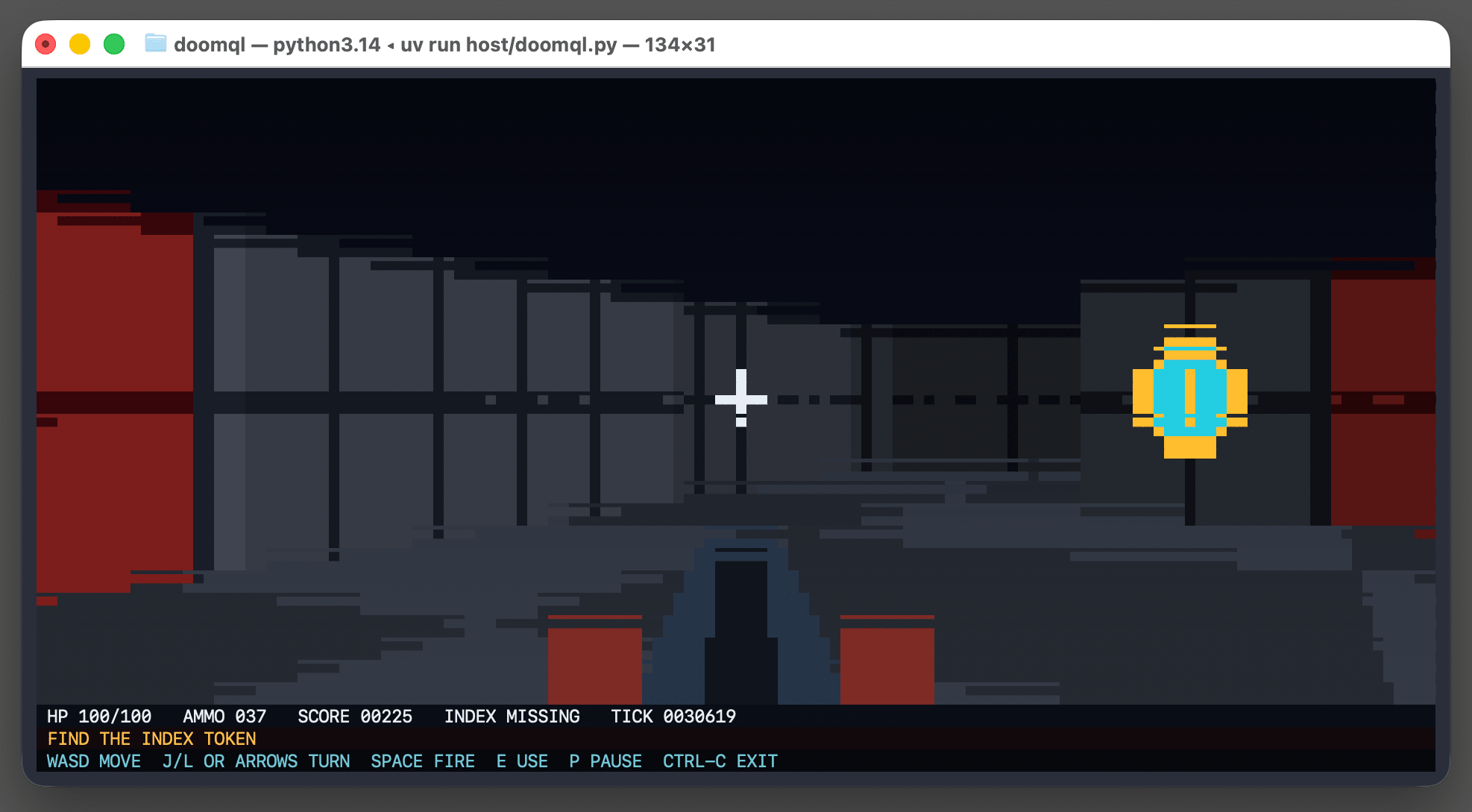
DOOMQL (via) Peter Gostev built this using GPT-5.6 Sol. This is a lot of fun:
DOOMQL started with a deliberately unreasonable question: what if SQLite were the game engine, not merely the place where a game stores data?
The result is a small, original Doom-like game in which SQL owns movement, collision, enemies, combat, progression and every RGB pixel on screen.
It's implemented as a Python terminal script - I tried it out like this:
cd /tmp
git clone https://github.com/petergpt/doomql
cd doomql
uv run host/doomql.py
Here's the huge SQL query that implements a full ray tracer in SQLite using a recursive CTE.
Running the above script creates a /tmp/doomql/.doomql/doomql.sqlite SQLite database, which you can explore using Datasette like this:
uvx --prerelease=allow  --with datasette-apps datasette \
  /tmp/doomql/.doomql/doomql.sqlite \
  -p 4444 --root --secret 1 --internal internal.db
The --with datasette-apps option installs the new Datasette Apps plugin, which supports creating custom HTML+JavaScript apps that can run SQL queries directly within the Datasette interface.
I created a new app, pasted the copy-paste prompt into Claude chat (Fable 5) and told it:
Build an app that displays the current state of the screen using the frame_pixels view with its x, y, r, g, b columns. have it refresh once a second.
This got me a working HTML+JavaScript app inside Datasette that could reflect the current state while I played the game in my terminal. Then I added:
add a minimap
And now my Datasette App looks like this:
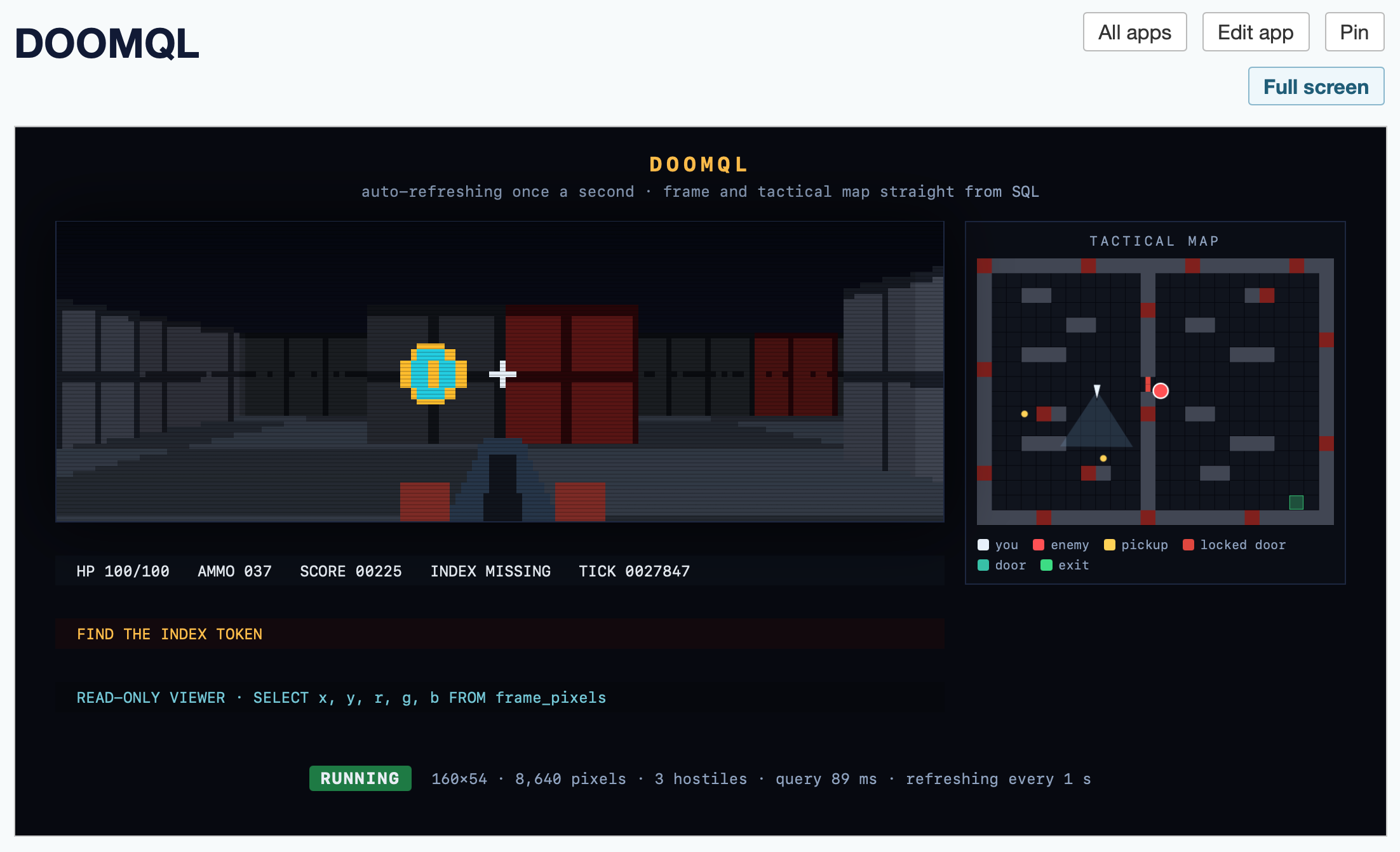
Here's the HTML app code - paste that into your own Datasette instance (using the uvx --with datasette-apps recipe from above) to try it yourself.
Via Hacker News I learned that UK publisher Usborne published free PDFs of their 1980s Computer Books, some of which I remember working through on my Commodore 64 as a child.
These were so great! Beautifully illustrated books with fun projects made up of code you could type into your own machine.
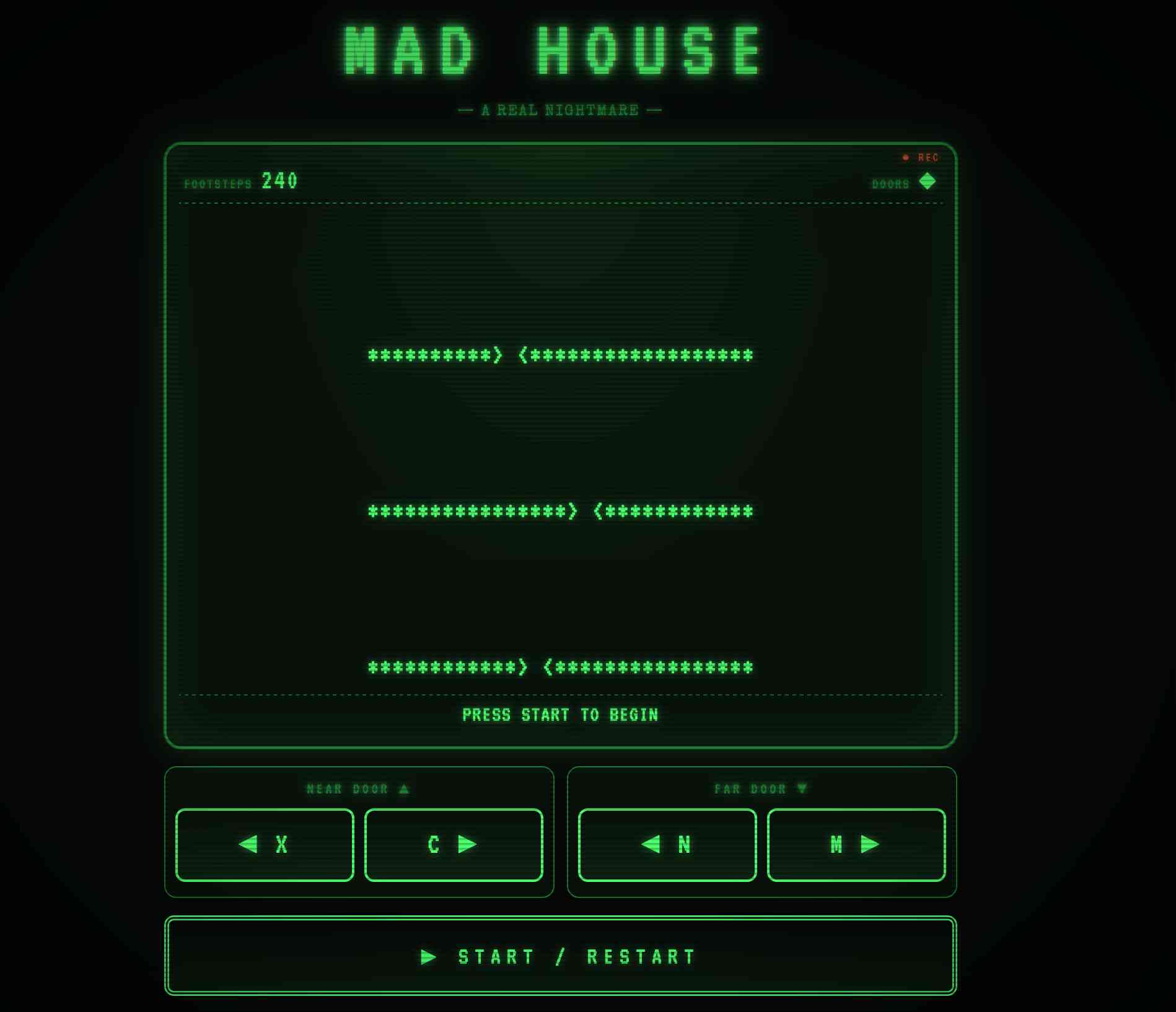
I remember playing "Mad House" typed in from the 1983 book "Creepy Computer Games", so I fed that PDF into Claude and had it build an interactive version of that game in JavaScript and HTML:
Build a vanilla JS artifact that exactly recreates the game Mad House from this book, make sure it's mobile friendly and has a suitable retro aesthetic
Credit the book title and link to https://usborne.com/us/books/computer-and-coding-books
2025
The Unexpected Effectiveness of One-Shot Decompilation with Claude (via) Chris Lewis decompiles N64 games. He wrote about this previously in Using Coding Agents to Decompile Nintendo 64 Games, describing his efforts to decompile Snowboard Kids 2 (released in 1999) using a "matching" process:
The matching decompilation process involves analysing the MIPS assembly, inferring its behaviour, and writing C that, when compiled with the same toolchain and settings, reproduces the exact code: same registers, delay slots, and instruction order. [...]
A good match is more than just C code that compiles to the right bytes. It should look like something an N64-era developer would plausibly have written: simple, idiomatic C control flow and sensible data structures.
Chris was getting some useful results from coding agents earlier on, but this new post describes how a switching to a new processing Claude Opus 4.5 and Claude Code has massively accelerated the project - as demonstrated started by this chart on the decomp.dev page for his project:
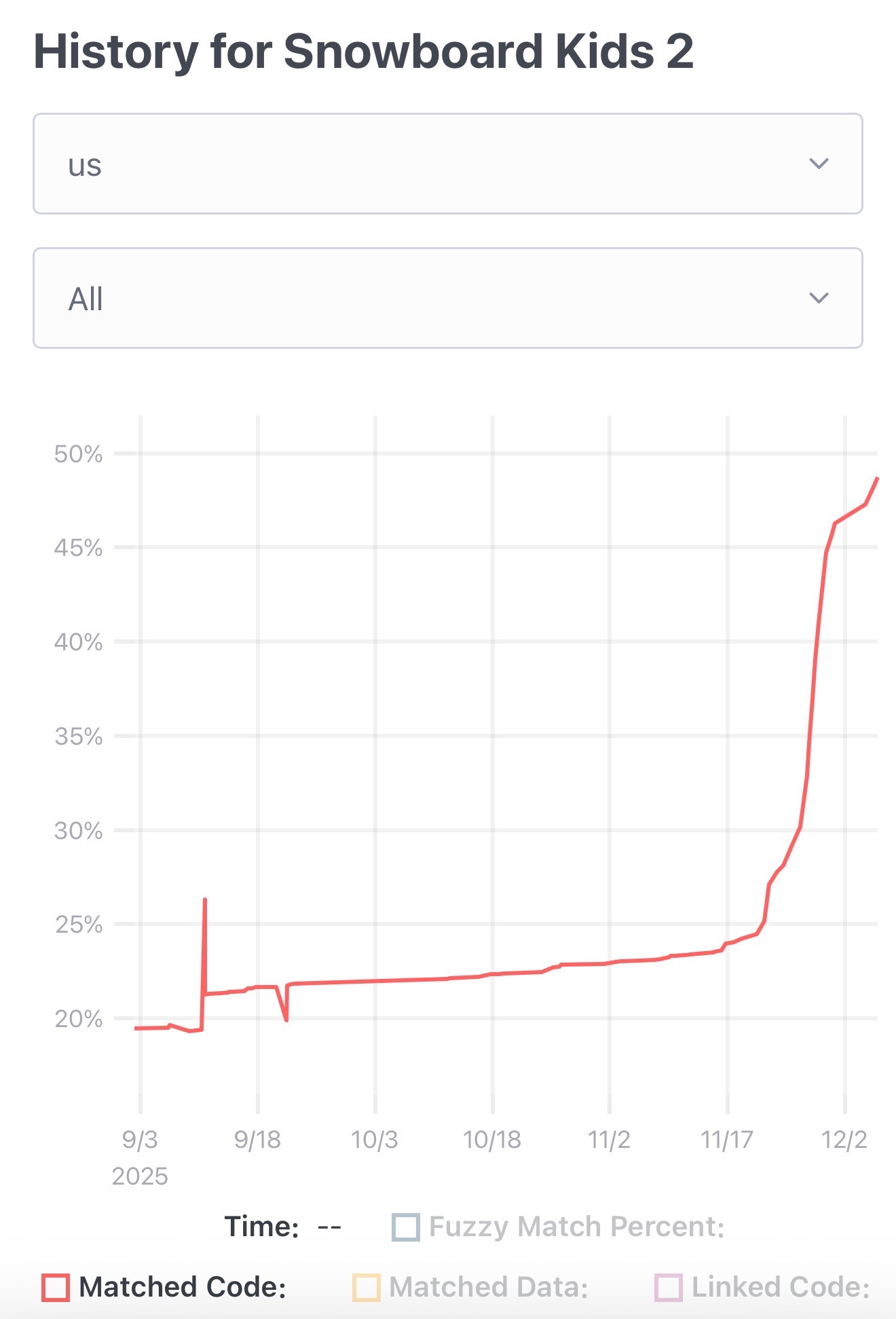
Here's the prompt he was using.
The big productivity boost was unlocked by switching to use Claude Code in non-interactive mode and having it tackle the less complicated functions (aka the lowest hanging fruit) first. Here's the relevant code from the driving Bash script:
simplest_func=$(python3 tools/score_functions.py asm/nonmatchings/ 2>&1)
# ...
output=$(claude -p "decompile the function $simplest_func" 2>&1 | tee -a tools/vacuum.log)
score_functions.py uses some heuristics to decide which of the remaining un-matched functions look to be the least complex.
Stimulation Clicker (via) Neal Agarwal just created the worst webpage. It's extraordinary. All of the audio was created specially for this project, so absolutely listen in to the true crime podcast and other delightfully weird little details.
Works best on a laptop - on mobile I ran into some bugs.
2021
The Digital Antiquarian: Sam and Max Hit the Road. Delightful history and retrospective review of 1993’s Sam and Max Hit the Road. I didn’t know Sam and Max happened because the independent comic’s creator worked for LucasArts and the duo had embedded themselves in LucasArts culture through their use in the internal educational materials prepared for SCUMM University.
2017
Game developer’s guide to graphical projections (with video game examples), Part 1: Introduction. Absolutely delightful series of illustrated essays by Matej ‘Retro’ Jan explaining how different graphical projections can be used for video game art. Each concept is illustrated by screenshots or gifs from a mixture of games spanning four decades. Reading this was a real treat.
Return of the Obra Dinn: Dithering Process (via) Lucas Pope (creator of “Papers, Please”) has a new game under development: “Return of the Obra Dinn”, a first-person adventure mystery game set in 1807 that is spectacularly rendered in a 1-bit art style. He has a development diary on tigsource.com, and in this entry he describes the extreme lengths he has gone to in order to develop the best possible dithering implementation for rendering his 3D world in 1-bit colour. “It feels a little weird to put 100 hours into something that won’t be noticed by its absence.”
Dead End Thrills. Duncan Harris Is a photographer who works in the medium of video game screen captures.
2014
Calendars: When posting a facebook event page for an event that is repeated on two dates, should you use one page or two? (The events are games that are identical and should not have overlapping players)
I would use separate pages. The most valuable part of a Facebook event page is being able to see who is going to that event (and hence which of your friends will be there). If there are two events on two separate days you want to be able to maintain two separate lists of attendees.
[... 97 words]2013
What are some great board games to play for 3 or more people?
I suggest looking in to German-style board games. They tend to be quick to learn and extremely well balanced but with a great deal of strategic depth once you get in to them, and they also have running times in the order of 45 minutes to an hour and a half. They’re ideal for games nights, especially if you might be playing with people who think they don’t like board games.
[... 254 words]What are good ideas and examples for event gamification?
Straight up points and badges style gamification seems a little contrived to me, but there’s definitely a lot to be said for activities that encourage delegates to meet new people.
[... 279 words]2012
Are there guides for playing Minecraft on Mac laptops?
I play on a Mac laptop using the trackpad and ctrl+click for right clicking and that works absolutely fine. It’s worth fiddling with the keyboard commands in the options screen (as with any game) but I’ve found it to be perfectly playable otherwise.
[... 58 words]What programming language is primarily used in the making of big budget console games?
C++ still rules the roost here, but many games also integrate a dynamic scripting language of some kind for scripting level logic and so on. Lua is a popular option for this.
[... 52 words]2010
Tuning Canabalt. Fascinating insight in to the game parameter tuning needed to make a game feel just right.
The Pac-Man Dossier. Exuberantly detailed. Everything from how collision detection works to the exact pathfinding and target selection algorithms used by the four different ghosts. There’s even a tutorial for playing the legendary 256th level, where an overflow bug corrupts one half of the screen.
Werewolf: How a parlour game became a tech phenomenon. The legendary “everyone’s a villager” game from Foo Camp ’08 gets a write-up in Wired.
2008
Just One More Grim Thing (via) Tim Schafer releases 72 pages of design documentation for Grim Fandango, my all-time favourite computer game.
Update 18th Feb 2025: That blog entry is no longer available, but Gameshelf preserved a copy of the PDF.
GiantBomb.com. Launched today, powered by Django—a combination of (mostly ex-Gamespot) quality editorial content and a massive structured wiki of every computer game ever released. This is going to be a lot of fun—all of the crazy detailed content that Wikipedia tends to reject.
Walk, Don’t Run (via) A retrospective look at Grim Fandango (possibly my favourite game of all time) and the fan community that are keeping it alive, nearly a decade after it was first released.
Core Techniques and Algorithms in Game Programming. Scarily detailed online book on games programming, including 2D and 3D graphics, AI, multiplayer network code, indoor and outdoor rendering, character animation and much more. UPDATE: Removed the original link, which appeared to be a pirated copy.
2007
Musical hackery. Indescribably clever musical video game creation, where images from classic games spell out their own theme tunes. The smartest thing I’ve seen on YouTube, well, ever.
Weewar (Nat v.s. me). Really impressive turn based strategy game, implemented entirely in the browser. Surprisingly addictive; you have been warned.
Team Fortress 2. I gave this a go today for old time’s sake. Nine years in development and all they could come up with was TFC without the grenades?