47 posts tagged “text-to-image”
2023
From Deep Learning Foundations to Stable Diffusion. Brand new free online video course from Jeremy Howard: 30 hours of content, covering everything you need to know to implement the Stable Diffusion image generation algorithm from scratch. I previewed parts of this course back in December and it was fascinating: this field is moving so fast that some of the lectures covered papers that had been released just a few days before.
Stable Diffusion copyright lawsuits could be a legal earthquake for AI. Timothy B. Lee provides a thorough discussion of the copyright lawsuits currently targeting Stable Diffusion and GitHub Copilot, including subtle points about how the interpretation of “fair use” might be applied to the new field of generative AI.
I lost everything that made me love my job through Midjourney over night. A poster on r/blender describes how their job creating graphics for mobile games has switched from creating 3D models for rendering 2D art to prompting Midjourney v5 and cleaning up the results in Photoshop. “I am now able to create, rig and animate a character thats spit out from MJ in 2-3 days. Before, it took us several weeks in 3D. [...] I always was very sure I wouldn’t lose my job, because I produce slightly better quality. This advantage is gone, and so is my hope for using my own creative energy to create.”
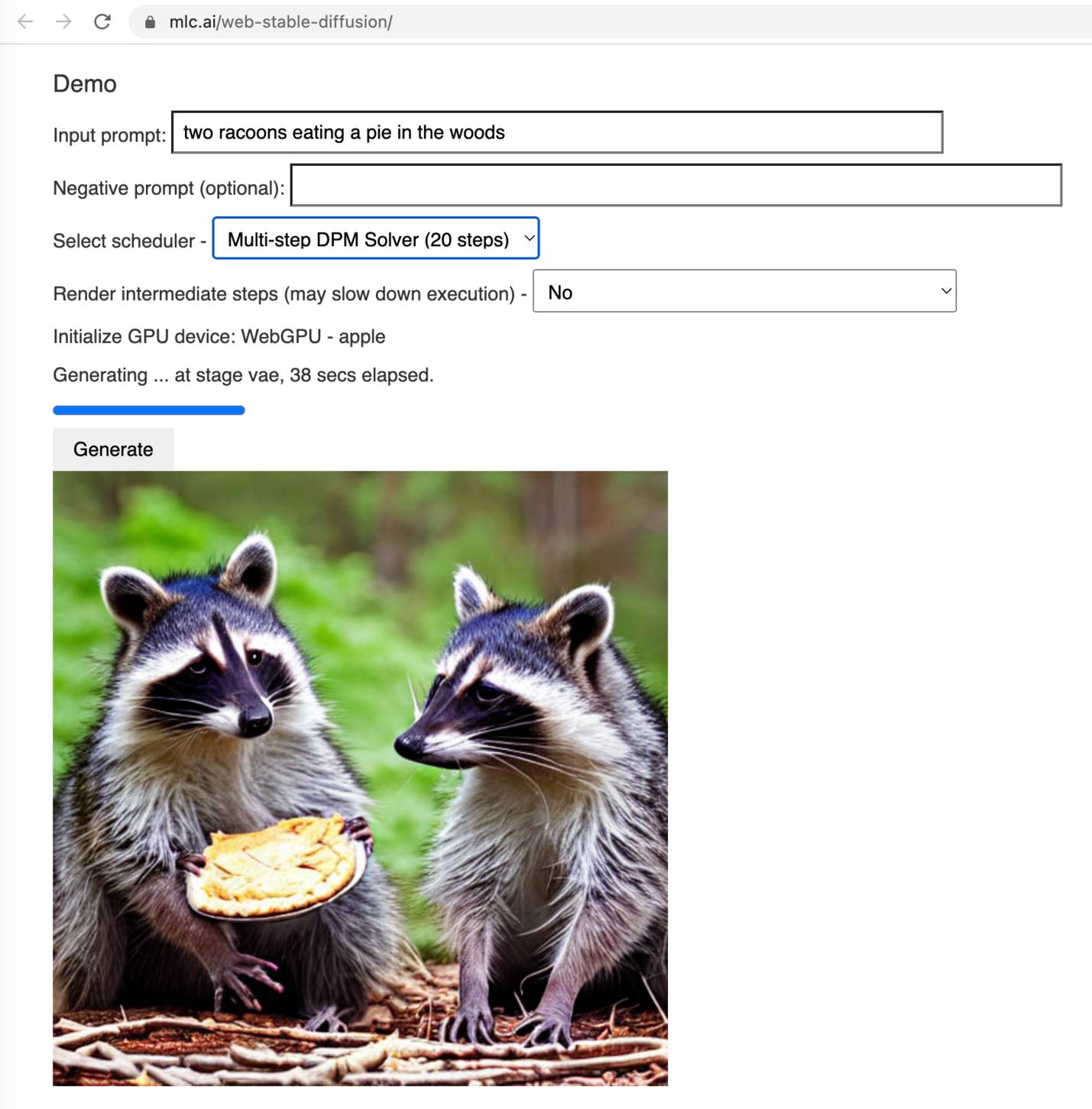
Web Stable Diffusion (via) I just ran the full Stable Diffusion image generation model entirely in my browser, and used it to generate an image of two raccoons eating pie in the woods. I had to use Google Chrome Canary since this depends on WebGPU which still isn't fully rolled out, but it worked perfectly.
ControlNet (via) A spectacular step forward in image generation—using “conditional control” to control models like Stable Diffusion. The README here is full of examples of what this enables. Extremely finely grained control of generated images based on a sketch, or in input image—including tricks like using Canny edge detection (an algorithm from 1986) to convert any image into an outline which can then be used as input to the model.
2022
Stable Diffusion 2.0 and the Importance of Negative Prompts for Good Results. Stable Diffusion 2.0 is out, and it’s a very different model from 1.4/1.5. It’s trained using a new text encoder (OpenCLIP, in place of OpenAI’s CLIP) which means a lot of the old tricks—notably using “Greg Rutkowski” to get high quality fantasy art—no longer work. What DOES work, incredibly well, is negative prompting—saying things like “cyberpunk forest by Salvador Dali” but negative on “trees, green”. Max Woolf explores negative prompting in depth in this article, including how to combine it with textual inversion.
The AI that creates any picture you want, explained. Vox made this explainer video about text-to-image generative AI models back in June, months before Stable Diffusion was released and shortly before the DALL-E preview started rolling out to a wider audience. It’s a really good video—in particular the animation that explains at a high level how diffusion models work, which starts about 5m30s in.
The Illustrated Stable Diffusion (via) Jay Alammar provides a detailed, clearly explained description of how the Stable Diffusion image generation model actually works under the hood..
I Resurrected “Ugly Sonic” with Stable Diffusion Textual Inversion (via) “I trained an Ugly Sonic object concept on 5 image crops from the movie trailer, with 6,000 steps [...] (on a T4 GPU, this took about 1.5 hours and cost about $0.21 on a GCP Spot instance)”
The Changelog: Stable Diffusion breaks the internet. I’m on this week’s episode of The Changelog podcast, talking about Stable Diffusion, AI ethics and a little bit about prompt injection attacks too.
Exploring the training data behind Stable Diffusion
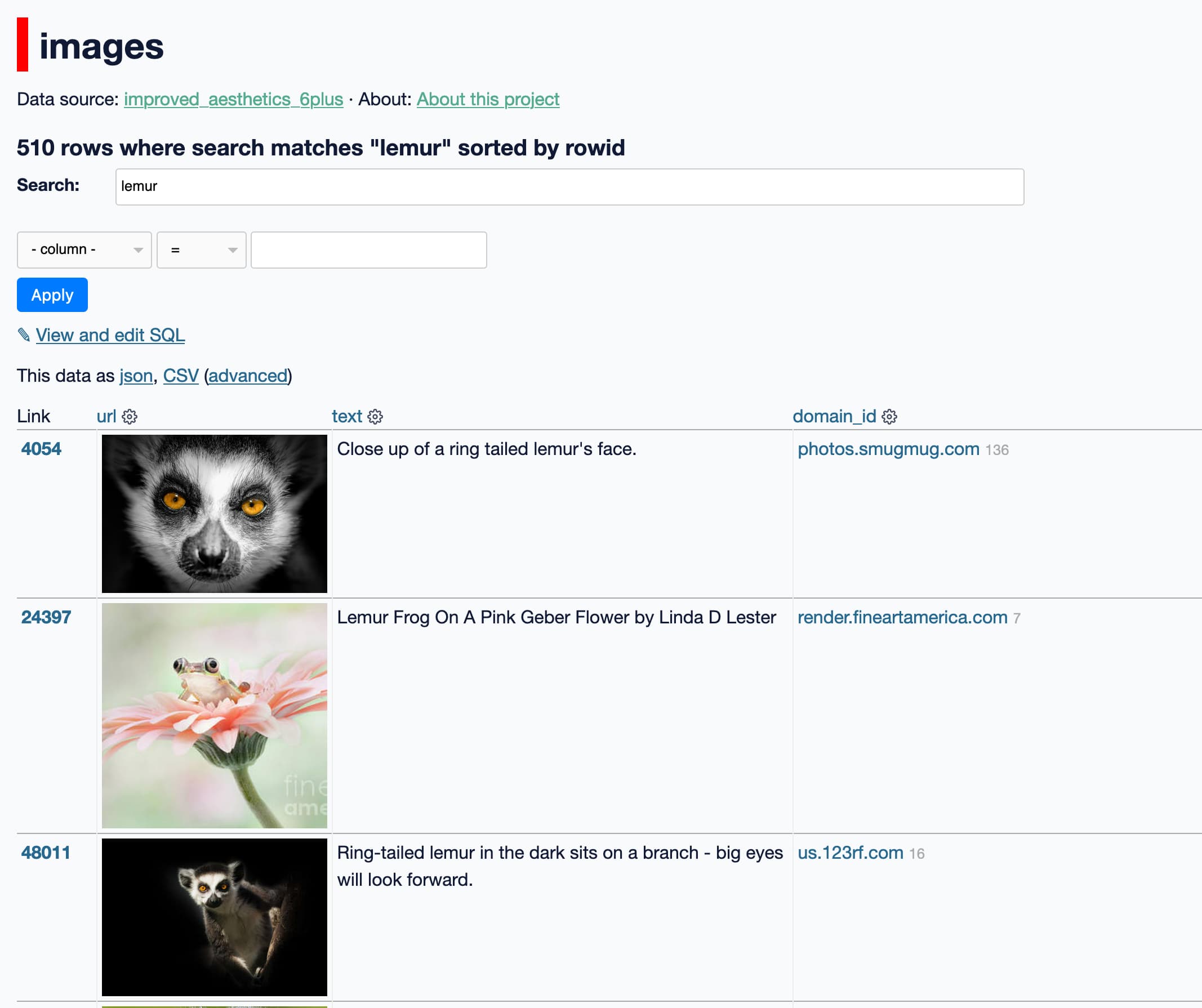
Two weeks ago, the Stable Diffusion image generation model was released to the public. I wrote about this last week, in Stable Diffusion is a really big deal—a post which has since become one of the top ten results for “stable diffusion” on Google and shown up in all sorts of different places online.
[... 2,897 words]For these reasons, I don’t think I’ll be using Midjourney or any similar tool to illustrate my newsletter going forward (an exception would be if I were writing about the technology at a later date and wanted to show examples). Even though the job wouldn’t go to a different, deserving, human artist, I think the optics are shitty, and I do worry about having any role in helping to set any kind of precedent in this direction.
Grokking Stable Diffusion (via) Jonathan Whitaker built this interactive Jupyter notebook that walks through how to use Stable Diffusion from Python step-by-step, and then dives deep into helping understand the different components of the implementation, including how text is encoded, how the diffusion loop works and more. This is by far the most useful tool I’ve seen yet for understanding how this model actually works. You can run Jonathan’s notebook directly on Google Colab, with a GPU.
Run Stable Diffusion on your M1 Mac’s GPU. Ben Firshman provides detailed instructions for getting Stable Diffusion running on an M1 Mac.
Stable Diffusion is a really big deal
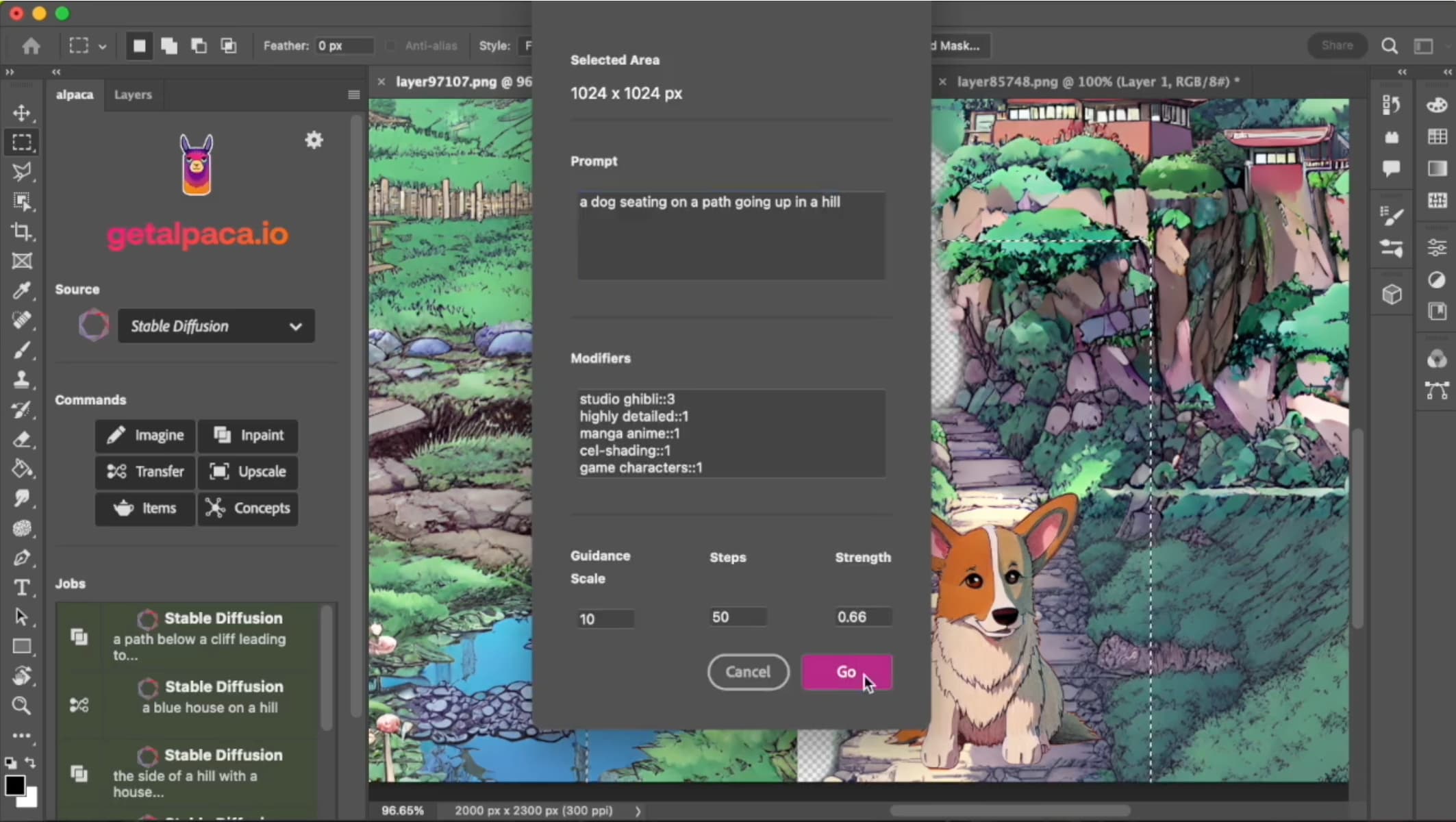
If you haven’t been paying attention to what’s going on with Stable Diffusion, you really should be.
[... 1,443 words]Stable Diffusion Public Release (via) New AI just dropped. Stable Diffusion is similar to DALL-E, but completely open source and with a CC0 license applied to everything it generates. I have a Twitter thread (the via) link of comparisons I’ve made between its output and my previous DALL-E experiments. The announcement buries the lede somewhat: to try it out, visit beta.dreamstudio.ai—which you can use for free at the moment, but it’s unclear to me how billing is supposed to work.
First impressions of DALL-E, generating images from text
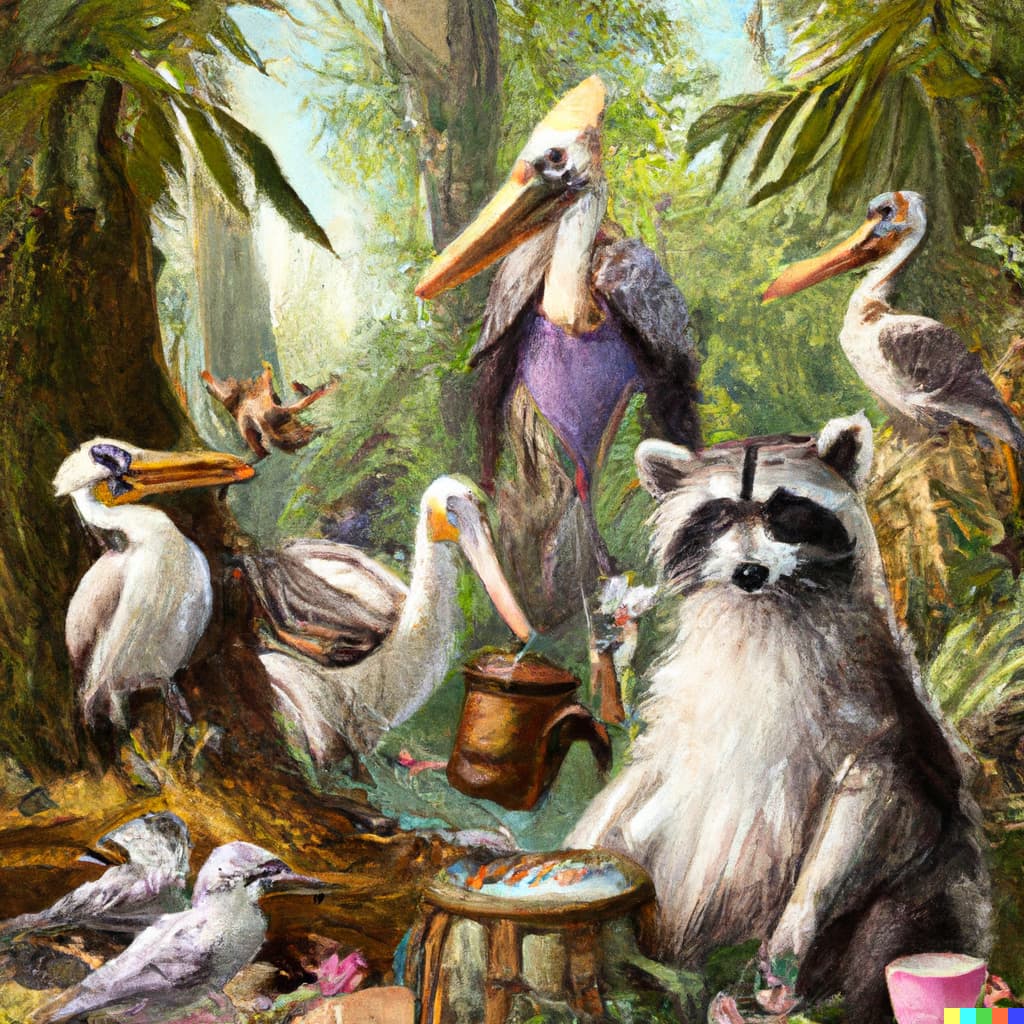
I made it off the DALL-E waiting list a few days ago and I’ve been having an enormous amount of fun experimenting with it. Here are some notes on what I’ve learned so far (and a bunch of example images too).
[... 2,102 words]