Wednesday, 28th October 2026
If your work does not benefit from current AI tooling, that is a finding, not a failing. Document why, share it with your community of peers, bring it to your manager, and work to find solutions. An engineer who can explain where AI does not yet help their work is demonstrating the judgement we are asking for.
— Terk Terkowitz, An update from Amazon engineering leadership on the role of the developer in the age of AI
The October inflection point for vibe game development
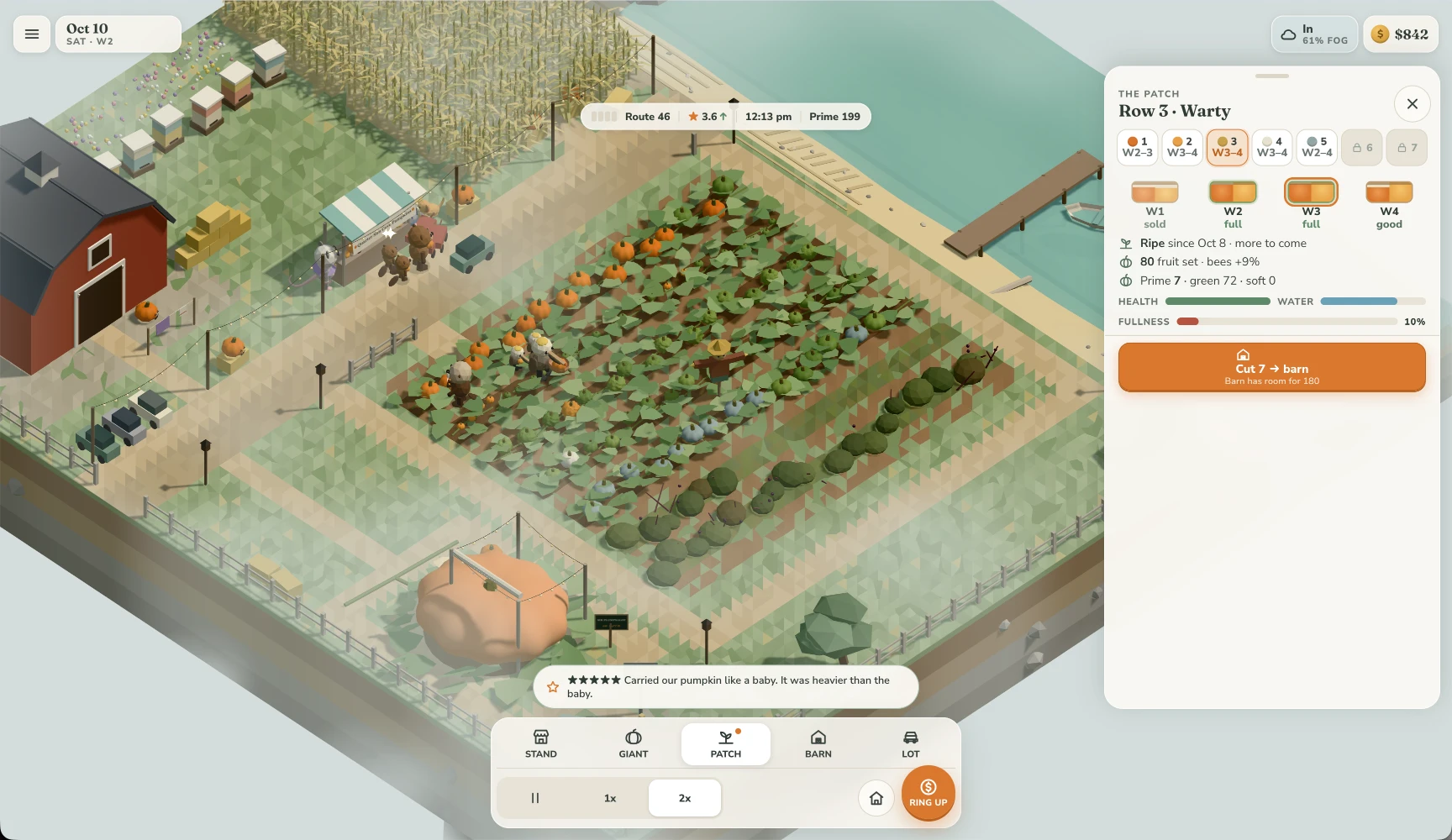
I’ve written before about how November 2025 was an inflection point for coding agents—the point where Opus 4.5 and GPT-5.1 crossed a tipping point that meant their respective coding agents became reliable daily drivers for software engineers. I think we’ve reached a new inflection point in October 2026, and this time it’s for vibe coding computer games.
[... 3,241 words]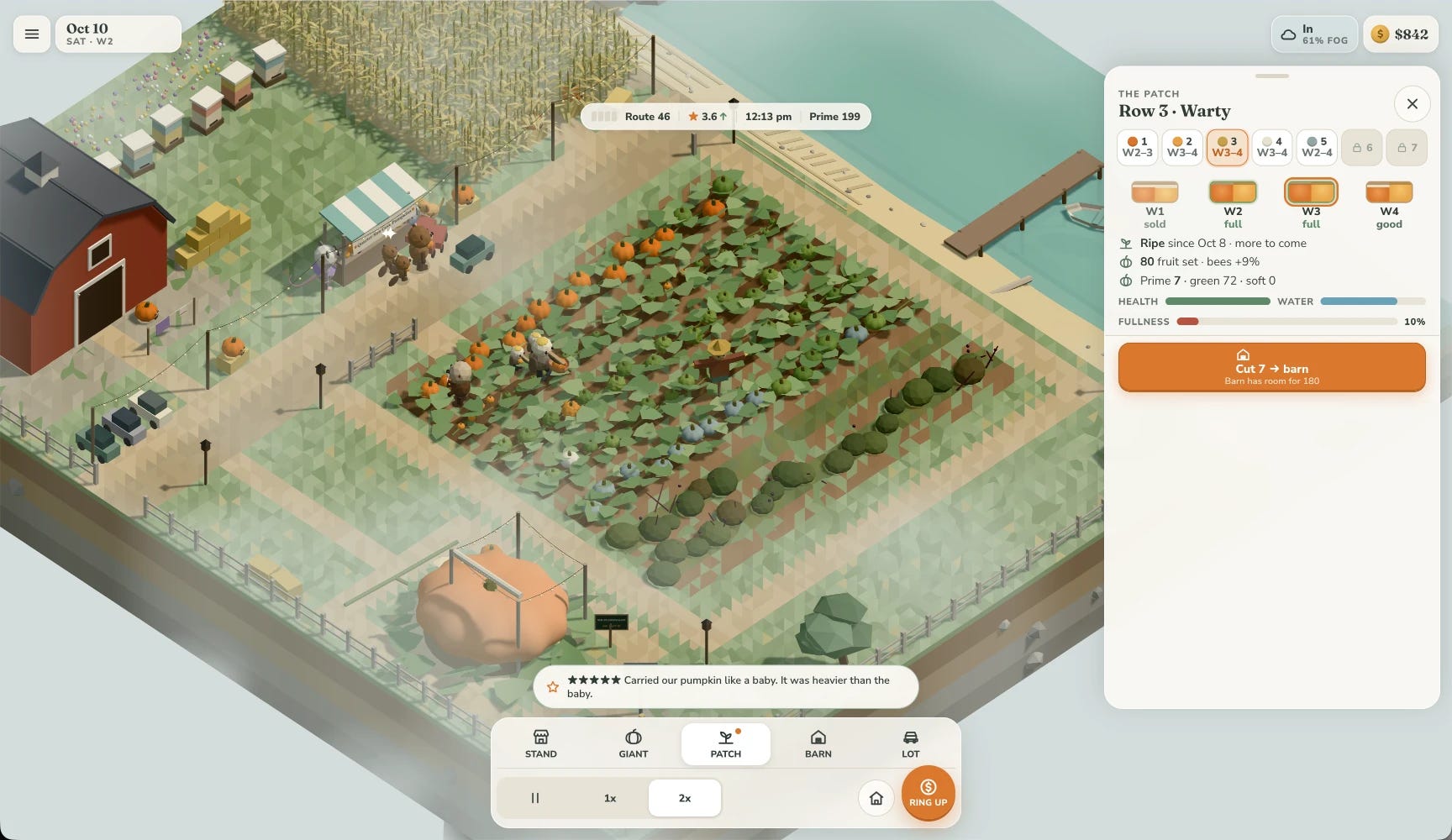
GitHub Octoverse 2026. I'm at GitHub Universe today (GitHub gave me a free ticket through their "GitHub Stars" program). EVP Jay Parikh just announced this year's Octoverse report, and highlighted these numbers in particular:
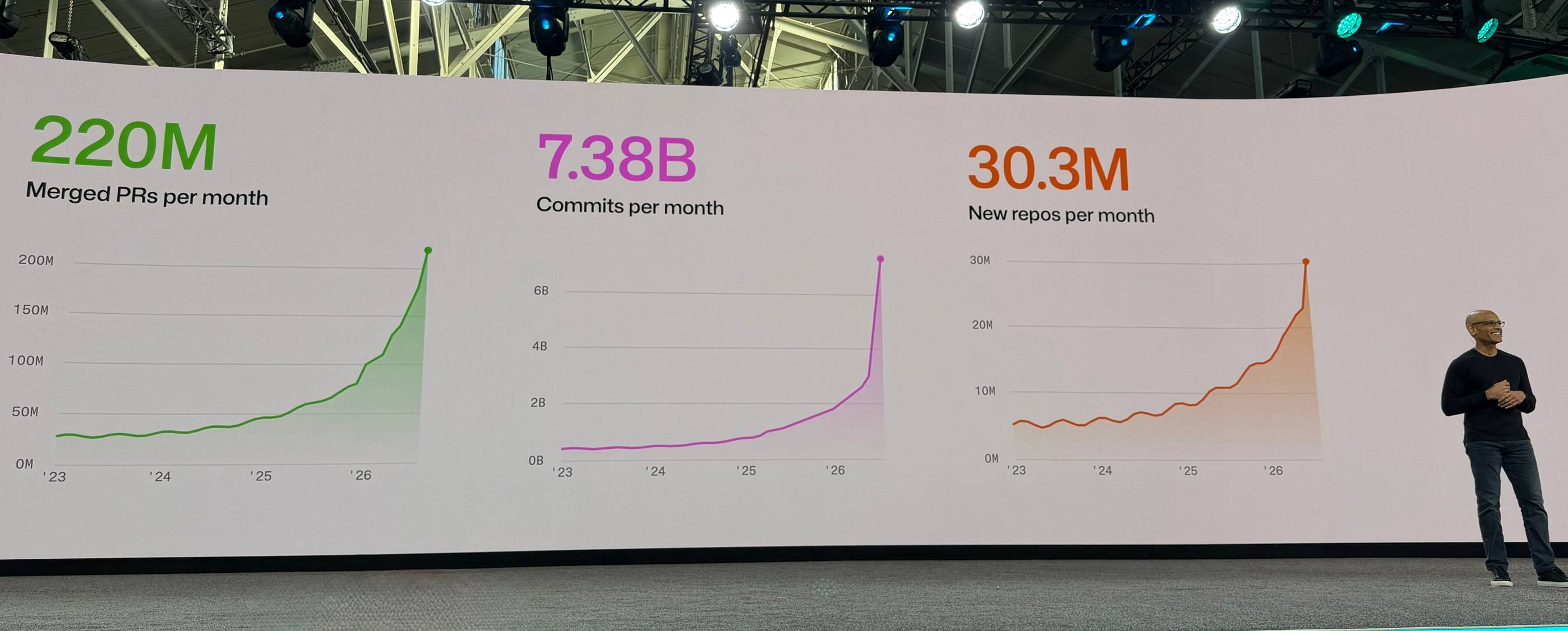
This is a pretty stark representation of the impact of agentic engineering on GitHub. In 2026, merged pull requests tripled in less than a year to 220 million per month. Commits more than tripled to 7.38 billion per month, with most of that increase in the second half of this year. New repository rate doubled this year, to 30.3 million per month.
The report includes new numbers by industry, and breaks out numbers for repositories that involve "interoperability or reverse engineering". The methodology section includes notes about how they did this:
Top countries by pushes to public repositories, adjusted by profile location. Pushes from each country were summed across the Octoverse year. To adjust for biases caused by VPN usage, LLM classification was used to extract the ISO 3166-1 alpha-2 code from the profiles of GitHub users who contributed pushes during this period [...]
Industry. Public repositories created 2022 to 2026 were sorted into NAICS sectors by a fine-tuned multilingual embedding model using name, description, topics, and README, from random samples per year. [...]
Interoperability. Counts public repositories created each year whose name, description, topics, or README mention interoperability or reverse engineering, or related terms, such as clean room implementation, drop-in replacement, or protocol re-implementation.