50 posts tagged “pypi”
2023
Introducing PyPI Organizations. Launched at PyCon US today: Organizations allow packages on the Python Package Index to be owned by a group, not an individual user account. “We’re making organizations available to community projects for free, forever, and to corporate projects for a small fee.”—this is the first revenue generating PyPI feature.
2022
APSW is now available on PyPI. News I missed from June: the venerable (17+ years old) APSW SQLite library for Python is now officially available on PyPI as a set of wheels, built using cibuildwheel. This is a really big deal: APSW is an extremely well maintained library which exposes way more low-level SQLite functionality than the standard library’s sqlite3 module, and to-date one of the only disadvantages of using it was the need to install it independently of PyPI. Now you can just run “pip install apsw”.
Should You Use Upper Bound Version Constraints?
(via)
Should you pin your library's dependencies using "click>=7,<8" or "click~=7.0"? Henry Schreiner's short answer is no, and his long answer is an exhaustive essay covering every conceivable aspect of this thorny Python packaging problem.
Plugin support for Datasette Lite
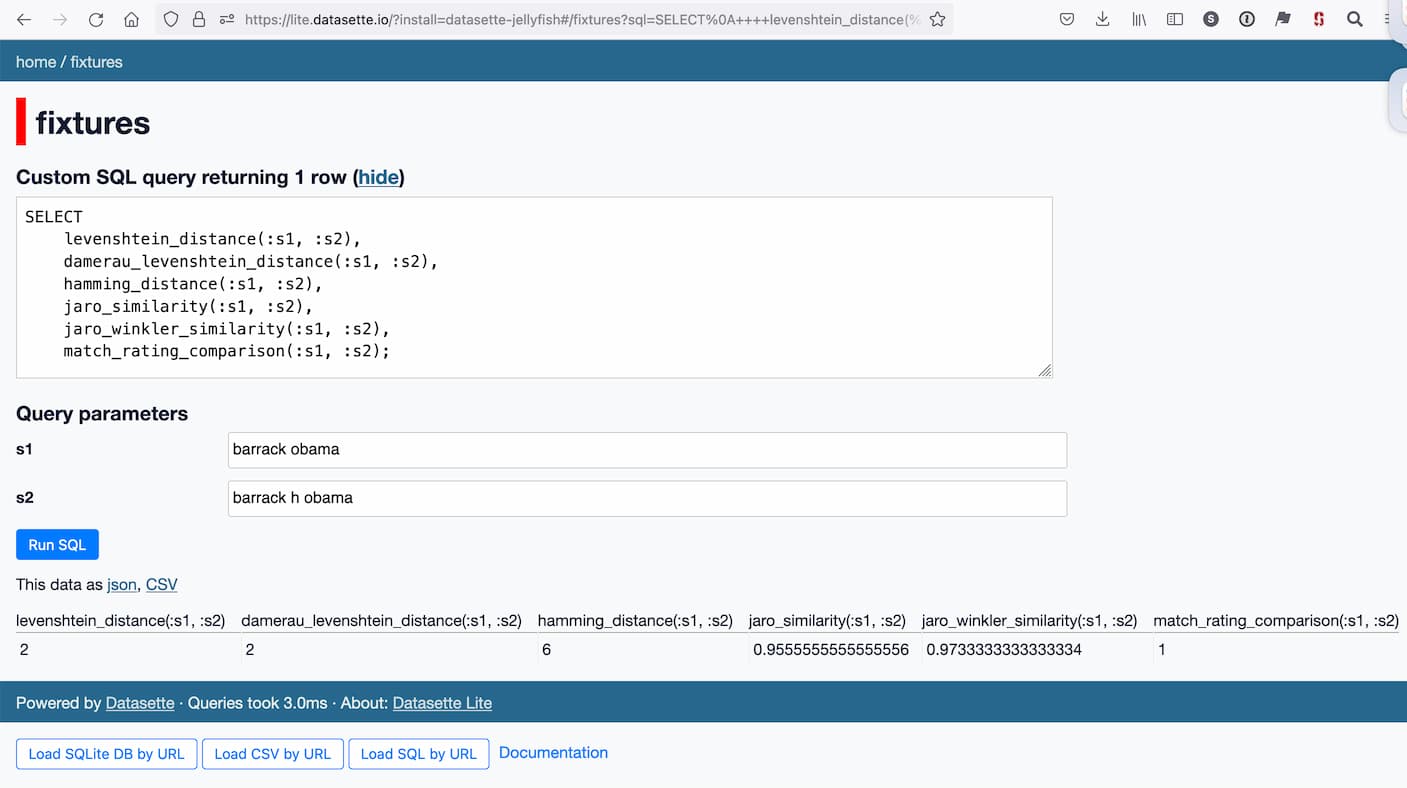
I’ve added a new feature to Datasette Lite, my distribution of Datasette that runs entirely in the browser using Python and SQLite compiled to WebAssembly. You can now install additional Datasette plugins by passing them in the URL.
[... 865 words]sethmlarson/pypi-data (via) Seth Michael Larson uses GitHub releases to publish a ~325MB (gzipped to ~95MB) SQLite database on a roughly monthly basis that contains records of 370,000+ PyPI packages plus their OpenSSF score card metrics. It’s a really interesting dataset, but also a neat way of packaging and distributing data—the scripts Seth uses to generate the database file are included in the repository.
Bundling binary tools in Python wheels
I spotted a new (to me) pattern which I think is pretty interesting: projects are bundling compiled binary applications as part of their Python packaging wheels. I think it’s really neat.
[... 903 words]Pillar Point Stewards, pypi-to-sqlite, improvements to shot-scraper and appreciating datasette-dashboards
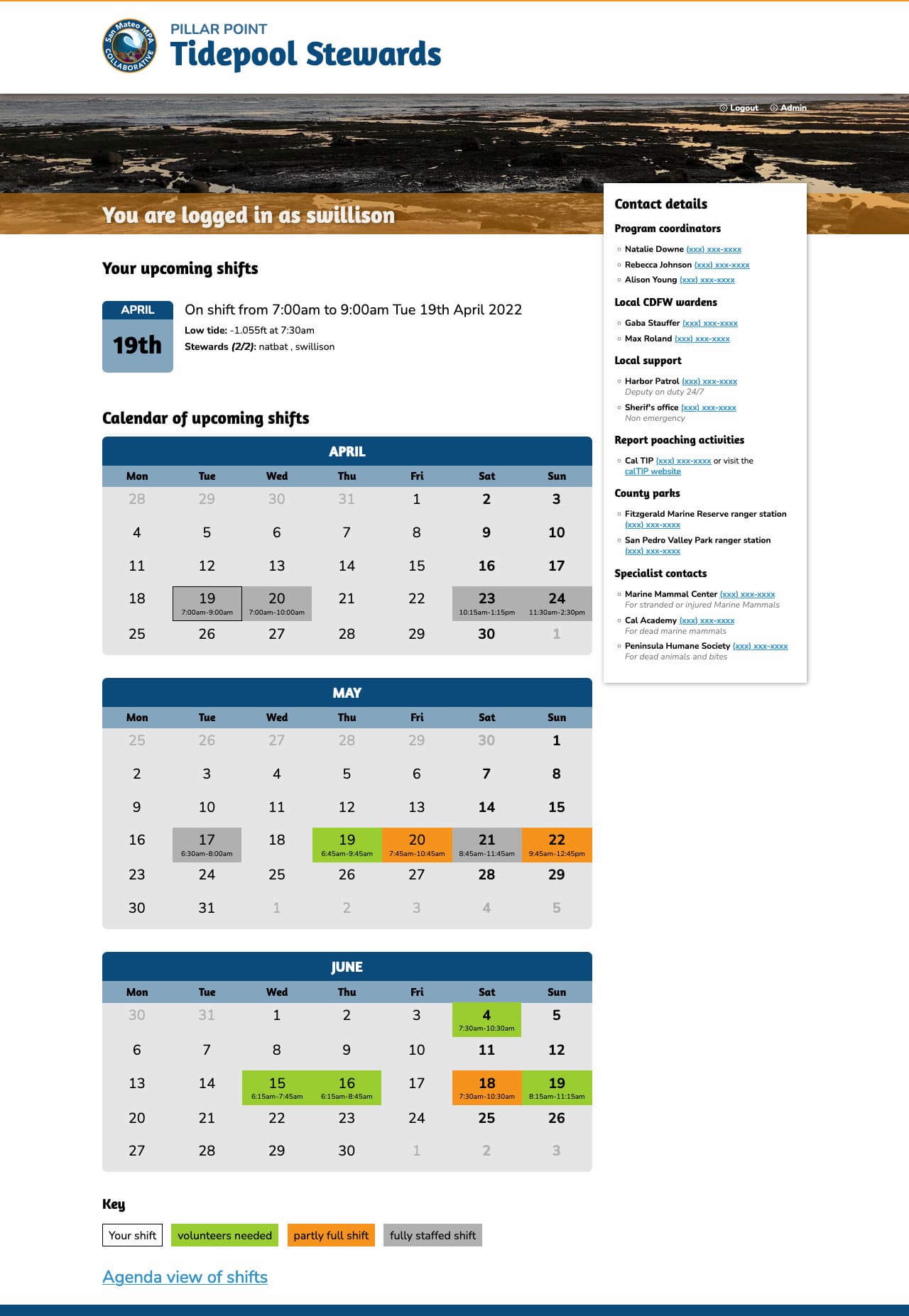
This week I helped Natalie launch the Pillar Point Stewards website and built a new tool for loading PyPI package data into SQLite, in order to help promote the excellent datasette-dashboards plugin by Romain Clement.
[... 1,985 words]2021
How to build, test and publish an open source Python library
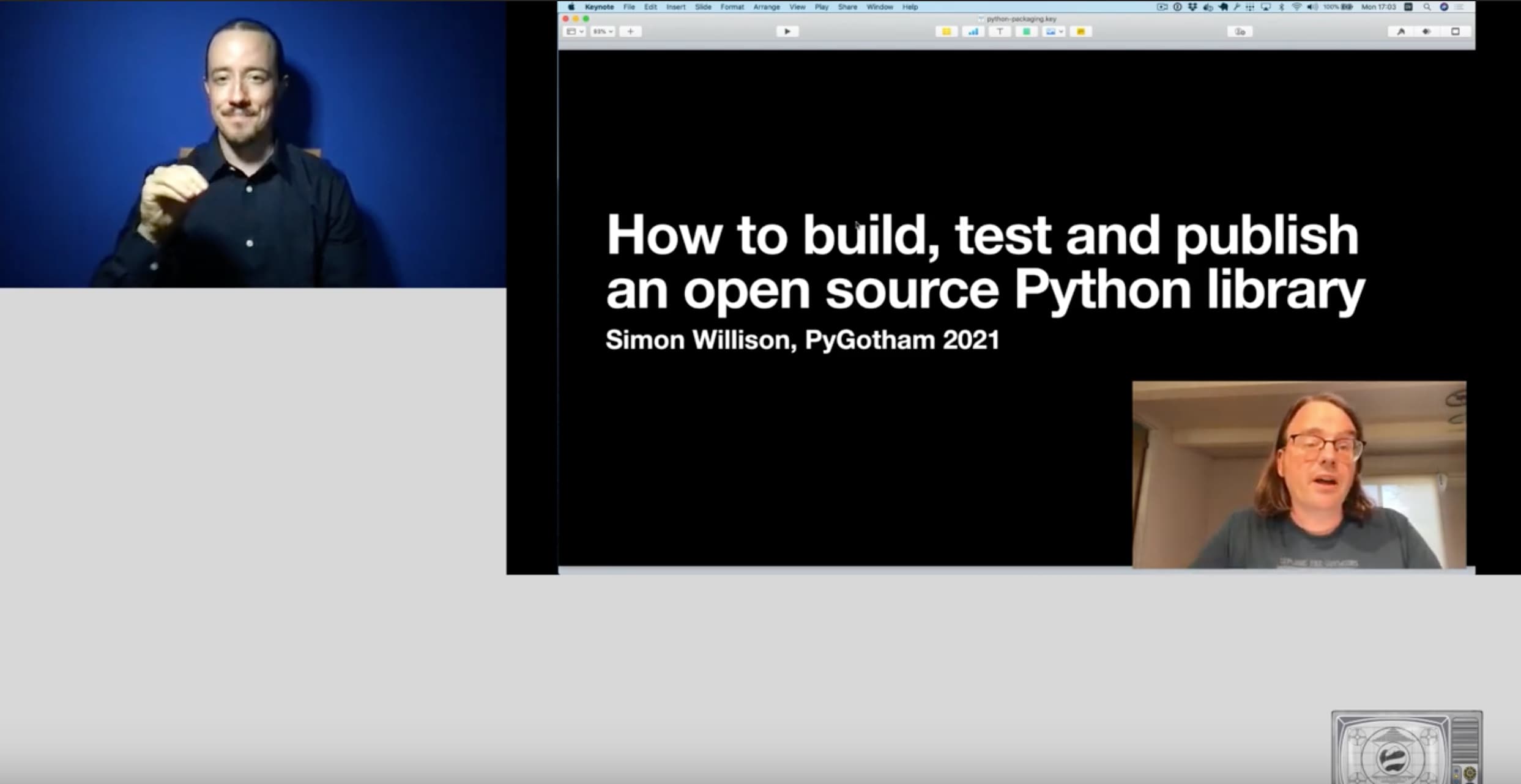
At PyGotham this year I presented a ten minute workshop on how to package up a new open source Python library and publish it to the Python Package Index. Here is the video and accompanying notes, which should make sense even without watching the talk.
[... 2,055 words]Datasette downloads per day (with Observable Plot) (via) I built an Observable notebook that imports PyPI package download data from datasette.io (itself scraped from pypistats.org using a scheduled GitHub Action) and plots it using Observable Plot. Datasette downloads from PyPI apparently jumped from ~800/day in May to ~4,000/day in July—would love to know why!
Powering the Python Package Index in 2021. PyPI now serves “nearly 900 terabytes over more than 2 billion requests per day”. Bandwidth is donated by Fastly, a value estimated at 1.8 million dollars per month! Lots more detail about how PyPI has evolved over the past years in this post by Dustin Ingram.
2020
Hunting for Malicious Packages on PyPI (via) Jordan Wright installed all 268,000 Python packages from PyPI in containers, and ran Sysdig to capture syscalls made during installation to see if any of them were making extra network calls or reading or writing from the filesystem. Absolutely brilliant piece of security engineering and research.
pypi-rename. I wanted to rename a PyPI package (renaming datasette-insert-api to datasette-insert as it’s about to grow some non-API features). PyPI recommend uploading a final release under the old name which points to (and depends on) the new name. I’ve built a cookiecutter template to codify that pattern.
A cookiecutter template for writing Datasette plugins
Datasette’s plugin system is one of the most interesting parts of the entire project. As I explained to Matt Asay in this interview, the great thing about plugins is that Datasette can gain new functionality overnight without me even having to review a pull request. I just need to get more people to write them!
[... 914 words]2019
Two malicious Python libraries caught stealing SSH and GPG keys. Nasty. Two typosquatting libraries were spotted on PyPI—targetting dateutil and jellyfish but with tricky variants of their names. They attempted to exfiltrate SSH and GPG keys and send them to an IP address defined server. npm has seen this kind of activity too—it’s important to consider this when installing packages.
pinboard-to-sqlite (via) Jacob Kaplan-Moss just released the second Dogsheep tool that wasn’t written by me (after goodreads-to-sqlite by Tobias Kunze)—this one imports your Pinterest bookmarks. The repo includes a really clean minimal example of how to use GitHub actions to run tests and release packages to PyPI.
PyPI now supports uploading via API token (via) All of my open source Python libraries are set up to automatically deploy new tagged releases as PyPI packages using Circle CI or Travis, but I’ve always get a bit uncomfortable about sharing my PyPI password with those CI platforms to get this to work. PyPI just added scopes authentication tokens, which means I can issue a token that’s only allowed to upload a specific project and see an audit log of when that token was last used.
2018
import-pypi. A devious Python 3 hack which abuses importlib.machinery to add a hook such that any time you type “import modulename” it checks to see if the module is installed and runs “pip install modulename” first if it isn’t. Intended as a joke, but if you habitually fire up temporary virtual environments for exploratory programming like I do this could actually be a neat little time-saver.
2017
csvs-to-sqlite: Automatically deploy tags as PyPI releases. I learned how to set up Travis CI to automatically deploy new package versions to PyPI when I push a version tag to GitHub (and the tests pass).
2010
What to do when PyPI goes down. My deployment scripts tend to rely on PyPI these days (they install dependencies in to a virtualenv) which makes me distinctly uncomfortable. Jacob explains how to use the PyPI mirrors that are starting to come online, but that won’t help if the PyPI listing links to an externally hosted file which starts to 404, as happened with the python-openid package quite recently (now fixed). The comments on the post discuss workarounds, including hosting your own PyPI mirror or bundling tar.gz files of your dependencies with your project.
2008
Kevin Teague explains the Python packaging ecosystem. The distinction between setuptools, PyPI, distutils, eggs, easy_install, pkg_resources and zc.buildout used to make my head spin. Kevin Teague’s outstanding explanation made it all make sense.