561 posts tagged “projects”
Posts about projects I have worked on.
2026
I added four player online mode to Battledrones - previous maps were limited to two.
Here's the initial prompt I used:
Add a new map for a four player battle - four way rotational symmetry, up to four AI players, works with the WebSocket non-audio based multiplayer mode so up to four human players can join (any spare slots use AI)
Claude Opus 5.5 added a new map called "Compass Rose" and modified the WebSockets multiplayer network code to support up to four players for that map, joining via share links or QR codes.

The new teams use robots themed in purple and green, joining the existing blue and red designs. You can preview those colors in the updated model browser.
Here's a replay link to watch a four way AI battle with the "Goliath Armada" mutator turned on, where each side starts with four giant Goliath mech units.
Battle Drones—a vibe coded RTS with audio-based multiplayer

My latest vibe coded game experiment is a Command & Conquer style RTS (Real Time Strategy) game called Battle Drones (play it here). Unlike my previous experiments, this one is actually fun to play. I’m somewhat embarrassed to admit that I got there by telling Claude to “Make it a LOT more fun”. It also supports multiplayer between nearby devices using audio to synchronize game state! Here’s what I’ve built so far, and some of the things I learned along the way.
[... 4,288 words]web-edit (previously) is my tiny web app for browsing and editing files in a folder. I mainly built it for editing files on different machines via Tailscale.
I added a "copy to clipboard" option for both text and image data. I needed this because I was running pelican prompts on a laptop from my phone (here's DeepSeek 4.1 Flash 1017) and I wanted an easy way to copy the resulting logs into a Gist.
Includes performance optimizations written by Claude Opus 5.5 after I fed it this Python 3.15 profiling report generated by GPT-6 Astra.
I was working on a project from my phone using Codex Remote when I found myself wanting to edit a credentials file without round-tripping those credentials through the LLM itself.
So... I had Codex and GPT-6 Astra Extra High build this Python web app which provides a web UI for viewing and editing files in a folder. It's intended to be run over Tailscale, so I can have an agent start this running and then edit files via my Tailscale network directly from my phone.
Here's the interface for browsing files in a folder:
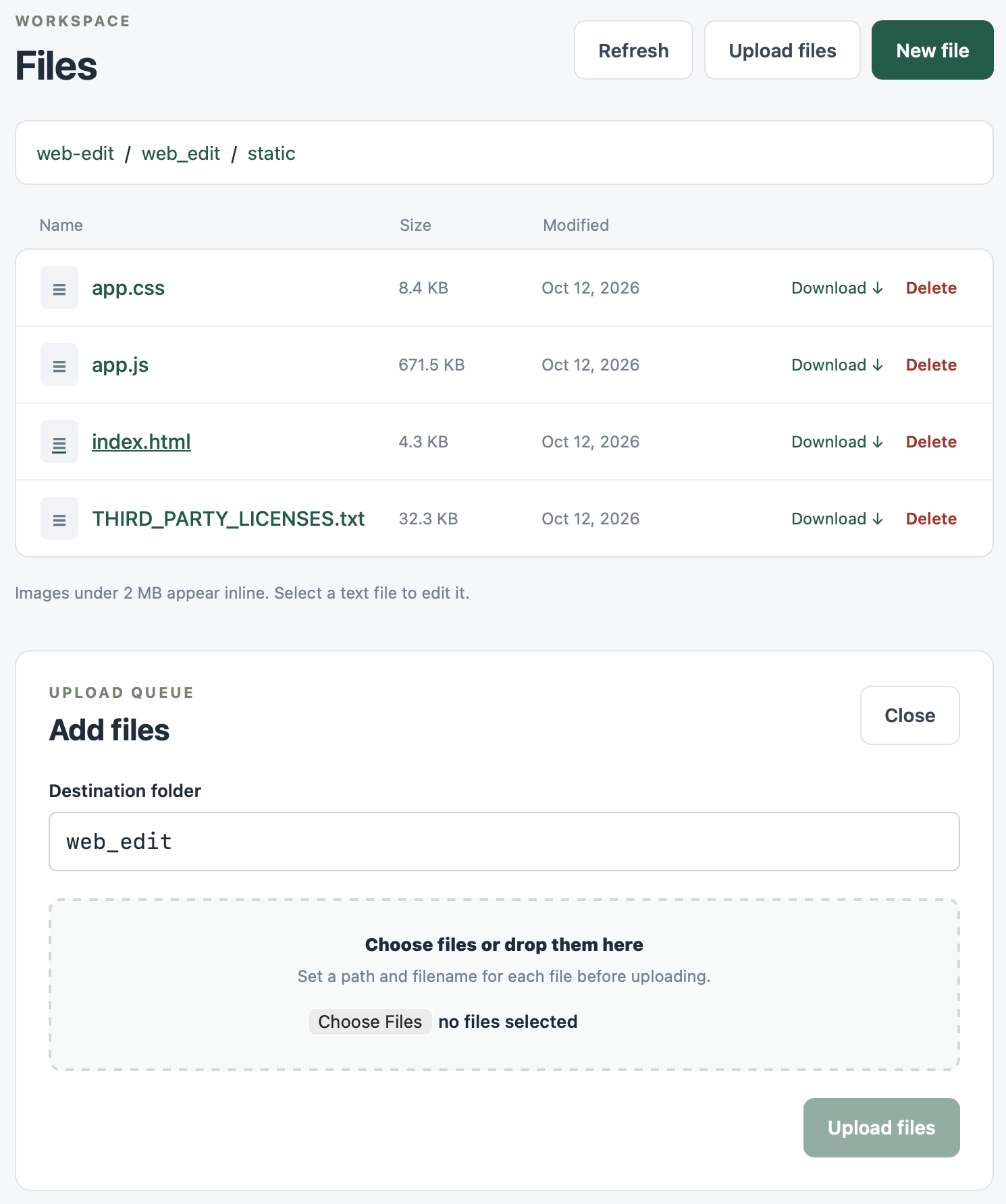
Editing uses CodeMirror 6 - I was going to use Monaco but that still doesn't have a great mobile experience yet.
I released ttok 0.4, ran uv tool upgrade ttok, piped a file into the new version... and realized that it was defaulting to the GPT-4 tokenizer when it should very clearly default to GPT-5/GPT-6 instead!
I figured switching the default was a reasonable excuse to finally ship a 1.0.
OpenAI haven't actually confirmed that GPT-6 uses the same tokenizer as the GPT-5 family yet - there's an angry issue about it - but I found this commit by William Liu which reports on an experiment he ran confirming that the tokenizers are likely the same:
All seven GPT models (5.5, 5.6 Sol/Terra/Luna, 6 Astra/Sol/Luna) report 44,794 tokens and match each other on every one of the 31 fixtures. GPT-6 introduces no input-count change on this corpus.
ttok is my CLI tool for counting tokens, using OpenAI's open source tiktoken library.
It hasn't been in updated in a couple of years, but I finally fixed a Click warning, updated CI, and added a --list-models command to list available models.
It works with uvx, so you can count tokens in anything like this:
cat file.txt | uvx ttok
I built this new plugin for LLM to add support for TypeSafe AI's new Jev model. Install it like this:
llm install llm-typesafe
Then set an API key (get one here, the waitlist seems to move pretty fast):
llm keys set typesafe
# Paste key
And now you can ask yes/no "noul" questions like this:
llm -m jev 'Please refund my last payment.' \
  -s 'Does this message explicitly request a refund?'
Output:
{"type": "noul", "noul": 0.99}
Or choice questions like this:
cat message.txt | llm -m jev \
  -s 'Which team should handle this message? If billing and technical issues both occur, choose billing.' \
  -o answer_type choice \
  -o criteria '{
    "billing":"Charges, invoices, payments, or refunds",
    "technical":"Problems installing or using the product",
    "other":"Neither category fits"
  }'
Or scoring questions like this:
cat report.txt | llm -m jev \
  -s 'How reproducible is the problem described in this report?' \
  -o answer_type score \
  -o criteria '[
    "No reproduction instructions",
    "Some instructions, but important steps are missing",
    "Complete steps with expected and actual results"
  ]'
See the README for more details.
I built this little web app the other day to help edit the commit messages for the Datasette security releases. The initial commits were full of coding agent cruft and references to issue IDs from our private repository, so they weren't fit for publication.
If you want to edit the commit messages for a repository you can run it like this:
uvx commit-rewriter path/to/repo
Omit the path if you are already in the directory for that repo.
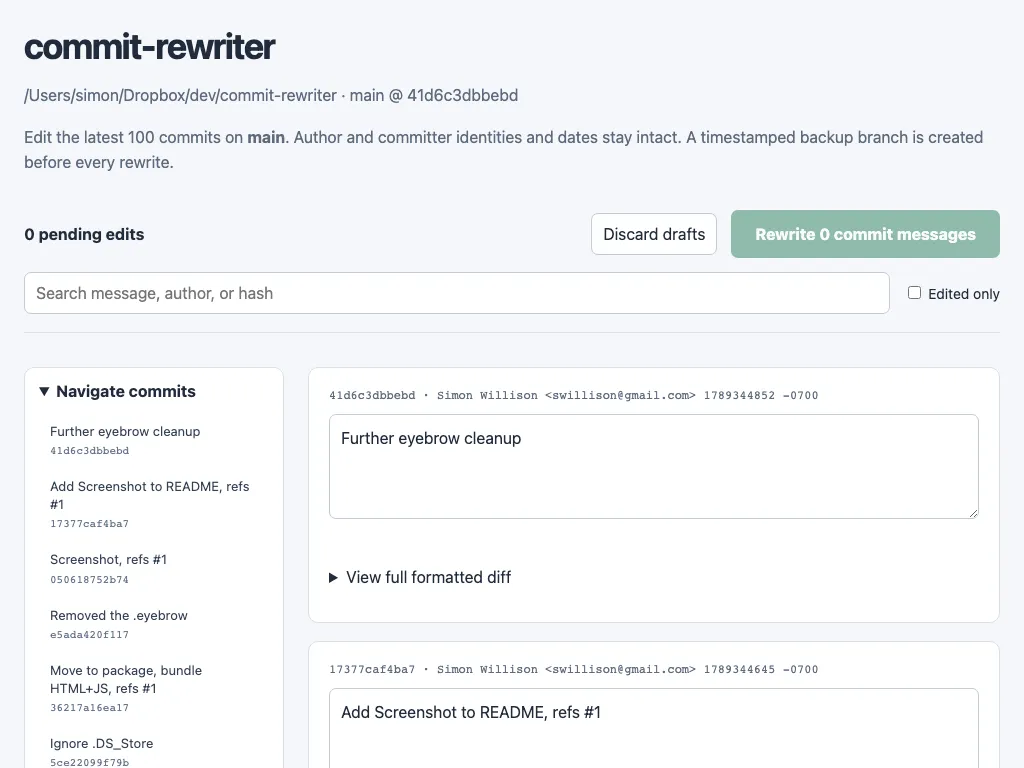
When you submit your edits the tool creates a timestamped branch of your current repo state - to allow you to revert if you need to - and then rewrites every commit from the first one you edited to the most recent.
I've long pondered what a database agnostic version of my sqlite-utils Python library and CLI utility might look like. This morning (literally a shower project) I tasked Codex and GPT-5.6 Sol Ultra with building a prototype:
Do a research spike to see what it would take to build a library with the same core API as SQLite-utils - in particular the insert and upsert and insert_all and upsert_all and create and update methods, and the table introspection stuff - but backed by SQLalchemy so it works for multiple database engines
Test against PostgreSQL and SQLite and duckdb
Use ~/dev/sqlite-utils for reference
Create a git repo for this and commit and early and often - use uv init to start the project - use red/green TDD and pytest, see ~/dev/django-sql-dashboard for one idea as to how the PostgreSQL tests could work
It took very few follow-up prompts to produce this project in a state good enough to release as an alpha.
Here's a one-liner I can use to list the rows in a table in my local PostgreSQL copy of my blog's database:
uvx --with 'alchemy-utils[postgresql]' alchemy-utils rows 'postgresql+psycopg://simon@localhost:5432/simonwillisonblog' redirects_redirect
The output from that starts like this:
[
  {
    "id": 2328,
    "domain": "simonwillison.net",
    "path": "2020/May/21/apple-photos-sqlite/",
    "target": "/2020/May/21/dogsheep-photos/",
    "created": "2020-05-21T13:03:46.591692-07:00"
  },
  {
    "id": 3,
    "domain": "feeds.simonwillison.net",
    "path": "swn-links",
    "target": "https://simonwillison.net/atom/links/",
    "created": "2017-10-01T14:12:54.820729-07:00"
  }
Or if you'd like a DuckDB database with every tree in San Francisco, schema created automatically to match the file:
curl 'https://raw.githubusercontent.com/simonw/sf-tree-history/refs/heads/main/Street_Tree_List.csv' | uvx --with 'alchemy-utils[duckdb]' alchemy-utils insert 'duckdb:////tmp/trees.db' trees - --csv
(That one took nearly an hour the first time I ran it, so I had Codex optimize it and got it down to around 35 seconds.)
New release of LLM adds support for reasoning traces, OpenAI Responses, server-side tools, and smarter logging
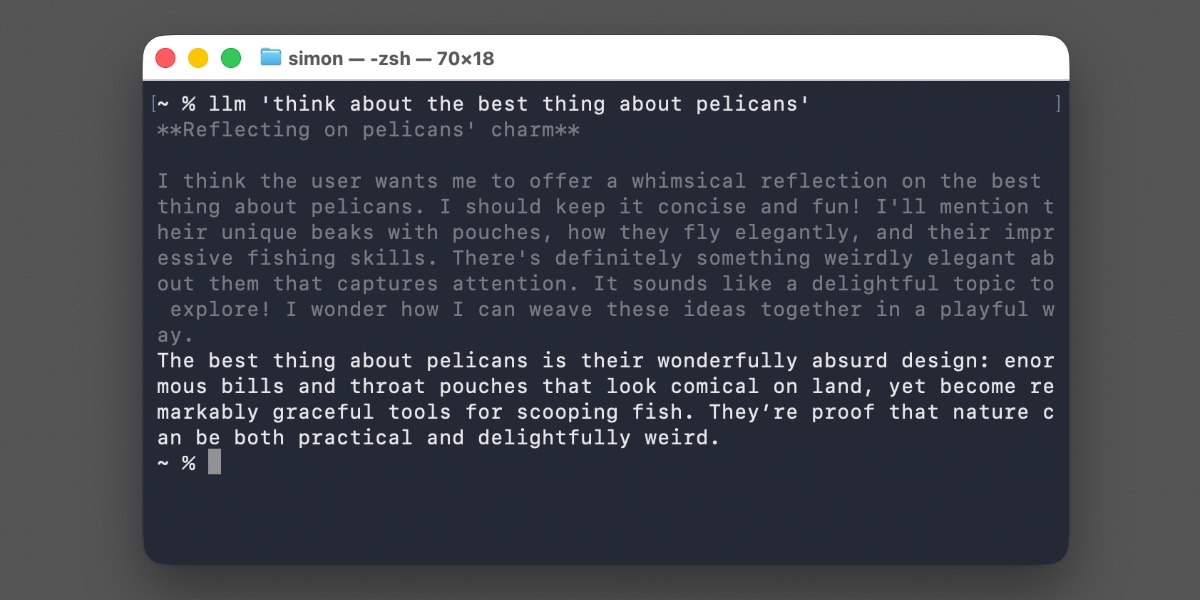
I released LLM 0.32 this morning, the most significant new version of LLM since the initial launch of the project. The new version includes support for visible reasoning traces, server-side provider tools, redesigned content-addressable SQLite logs, new models, and new features enabled by the OpenAI Responses API. I also released a new version of the llm-anthropic plugin with substantial updates of its own.
[... 1,230 words]I'm trying to get braver at releasing 1.0 versions. This little library is a year and a half old now - I've applied some sensible and non-disruptive fixes and shipped the big 1.0 for it.
Here's an example of what it can do, lifted from the README:
{
  "foo": {
    "bar": {
      "string": "This is a string with foxes in it",
      "nested": {
        "more": ["Here is a string", "another with foxes in it too"]
      }
    }
  }
}
Combine that with a replacements object:
{"1": "with foxes in it"}And condense_json(input_json, replacements) produces the following:
{
  "foo": {
    "bar": {
      "string": {"$r": ["This is a string ", {"$": "1"}]},
      "nested": {
        "more": ["Here is a string", {"$r": ["another ", {"$": "1"}, " too"]}]
      }
    }
  }
}
It scans for strings or substrings that are present in that replacements object and replaces those with a special {"$r": ...} syntax in the output.
You can reverse the effect with uncondense_json(condensed, replacements).
The idea is to make it easier to store JSON that includes duplicated data from other related structures. I use it to save space in the SQLite logs generated by LLM - see PR #1586 for the latest iteration of that.
Stateless MCP has recaptured my interest (and inspired mcp-explorer and datasette-mcp)
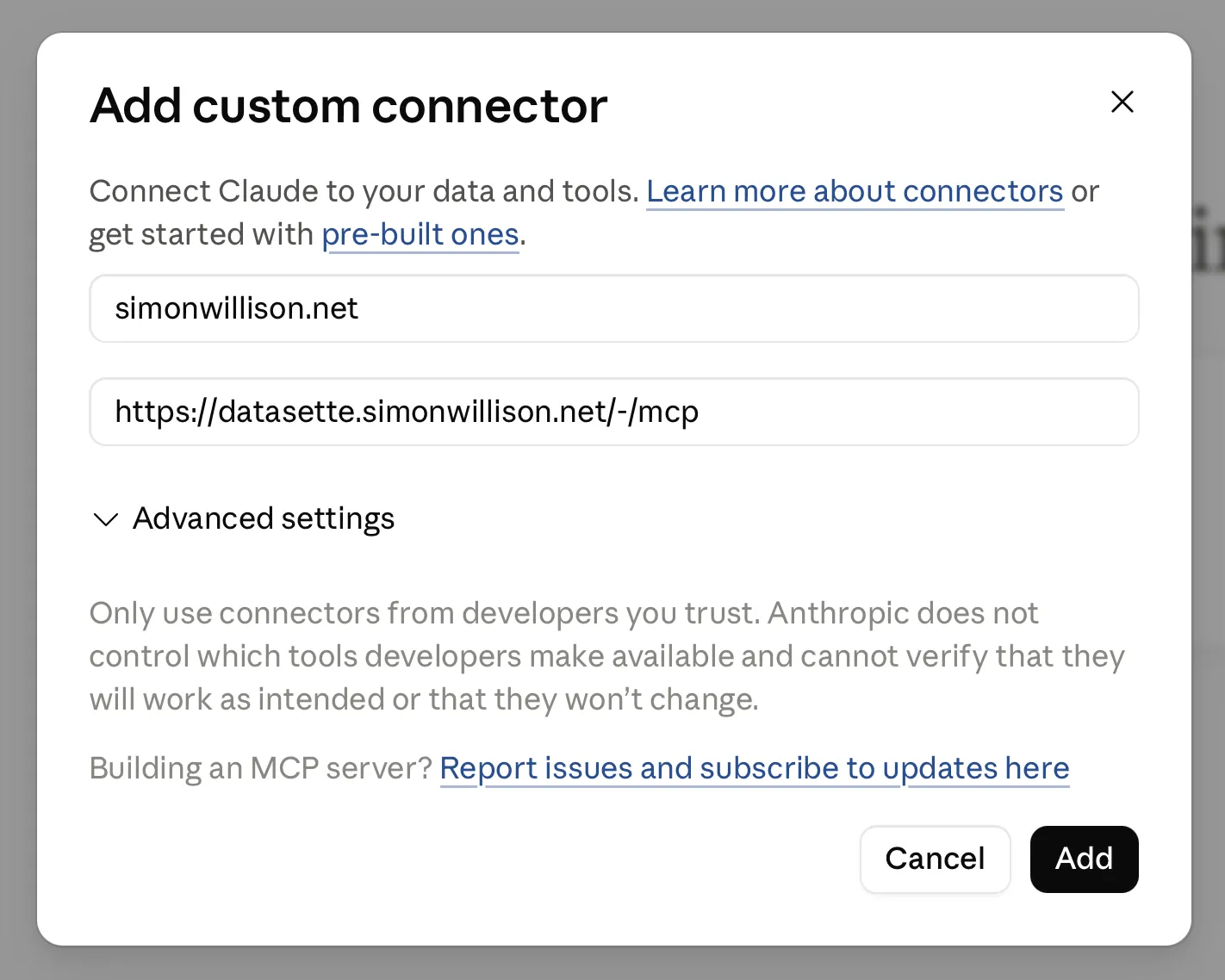
Tuesday was Stateless MCP day—the rollout of MCP 2.0, or the 2026-07-28 Model Context Protocol specification to use the more formal but less memorable name. This is the most significant change to the MCP spec since it first launched, and has also served to reignite my personal interest in the protocol.
[... 1,316 words]smevals—a small eval suite for evaluating models, prompts, and harnesses. I've been working with Jesse Vincent's Prime Radiant applied AI research lab building out this evals framework to help answer questions about the capabilities of different models.
The result is smevals, a new tool for running small eval suites across different model configurations and grading the results.
The blog entry describes the tool in detail. Here's the 10 second version:
- Tell your coding agent to
run uvx smevals docsto learn the tool (this outputs the README) - Then tell it to build you an eval suite
Once you've created an eval - which takes the form of a directory with some YAML files - you can run it against models like this:
uvx smevals run path-to-eval/ -m gpt-5.5 -m claude-opus-4.6
Runs are treated separately from grading operations - you can grade your runs (against your defined set of checks) using:
uvx smevals grade path-to-eval/
Then you can run a localhost web server to explore the results:
uvx smevals serve path-to-eval/
Or run the smevals build command to build that report as static HTML, which you can then host anywhere. Here's an example showing an eval suite I built to evaluate how well models can write haikus.
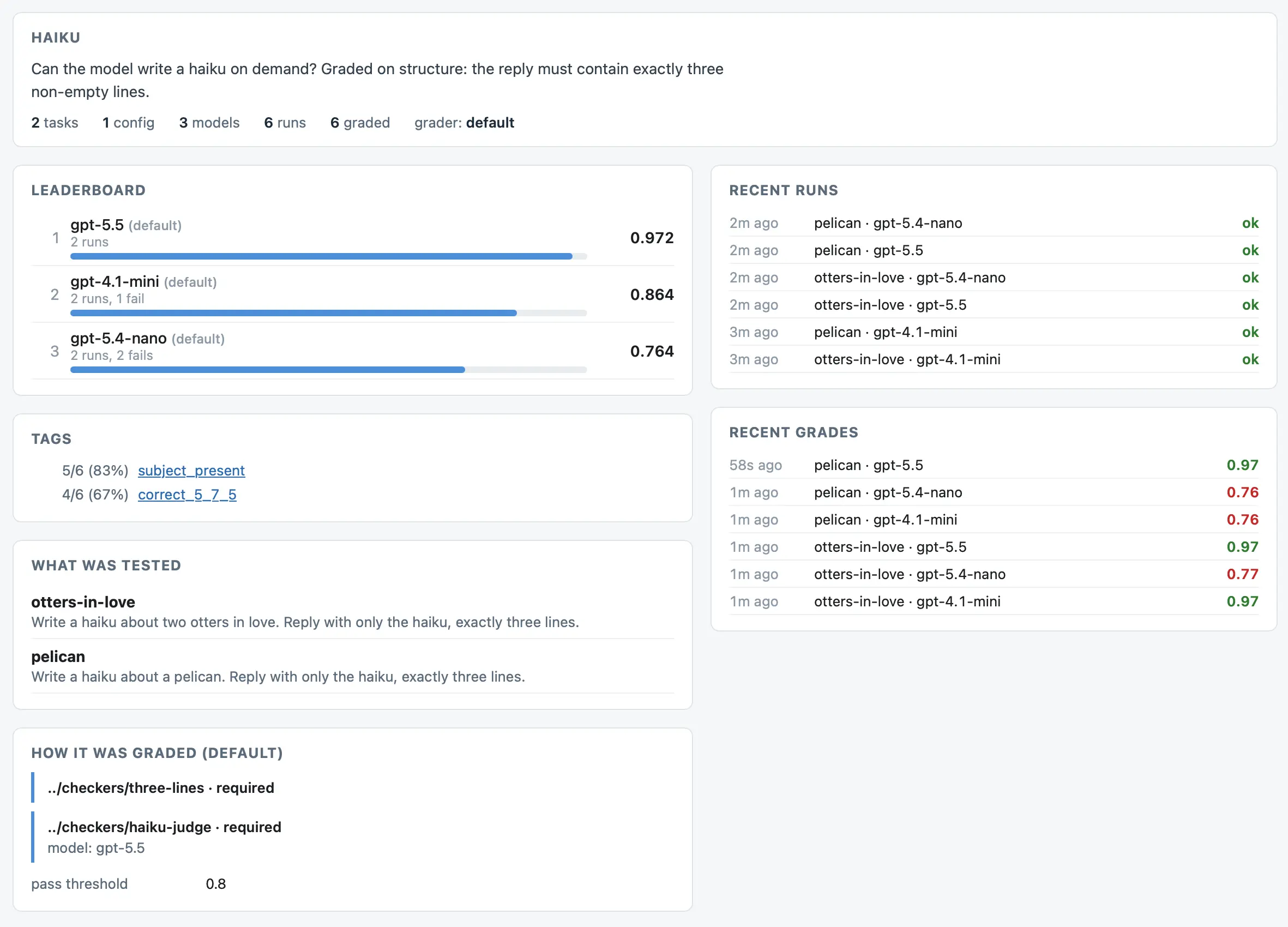
The most time-consuming part of this project was figuring out the vocabulary for it! Here's what I settled on, quoted from the announcement:
- An eval is a collection of challenges designed to answer a question about a model, for example, how good is that model at generating SVGs?
- Each eval is a collection of tasks. A task is a specific challenge, for example "Generate an SVG of a pelican riding a bicycle".
- When you run the eval you do so against one or more configs. Each config specifies a model to be evaluated, but may also include other parameters to test, such as different system prompts, model parameters, or agent harnesses.
- A run records what happened when a specific config was used to execute a specific task. A runner is the script that executes a run.
- Once you have collected one or more runs, you need to evaluate the results to see how well the model (or config) did. This is done by a grader, which produces a grade.
- Each grader runs a sequence of checks. These can be simple operations, like checking for a specific string in the output, or confirming that the output is valid XML. They can also be more complicated custom operations (implemented as scripts called checkers), including using other models to answer questions about the run.
I've been trying to figure out an approach I like for evals for several years now. smevals is my third iteration on the idea and it feels right to me. I'm looking forward to expanding this more in the future, as well as pointing it at some of my own projects.
A key goal of the new content-addressable logs in LLM 0.32rc1 was being able to support OpenAI Chat Completion style requests where each incoming message extends the previous conversation, like this:
curl http://localhost:8002/v1/chat/completions \
  -H 'Content-Type: application/json' \
  -d '{
    "model": "qwen3.5-4b",
    "messages": [
      {"role": "user", "content": "Capital of France?"},
      {"role": "assistant", "content": "Paris."},
      {"role": "user", "content": "Germany?"}
    ]
  }'
Here the conversation state is tracked by the client, so each of these requests gets longer and longer. The new schema design in LLM is designed to de-duplicate these using hashes of the individual message parts.
To test that out, I built this plugin:
uv tool install llm --pre
llm install llm-chat-completions-server
llm chat-completions-server -p 9001
Running this starts a localhost server on port 9001 that exposes your full collection of LLM models (from any plugins you have installed) using a ChatGPT Completions compatible endpoint.
GPT-5.6 Sol wrote the whole thing - it turns out it knows the OpenAI Chat Completions API shape really well.
The first dot-release since 4.0 a few days ago, introducing a number of minor new features.
sqlite-utils insertandsqlite-utils upsertnow accept a--codeoption for providing a block of Python code (or a path to a.pyfile) that defines arows()function orrowsiterable of rows to insert, as an alternative to importing from a file. (#684)
sqlite-utils already had features that allow you to pass blocks of Python code as CLI arguments, for example this one for the sqlite-utils convert command:
sqlite-utils convert content.db articles headline '
def convert(value):
    return value.upper()'
Allowing blocks of code to generate new rows directly was on obvious extension of that pattern:
sqlite-utils insert data.db creatures --code '
def rows():
    yield {"id": 1, "name": "Cleo"}
    yield {"id": 2, "name": "Suna"}
' --pk id
sqlite-utils insertandsqlite-utils upsertnow accept--type column-name typeto override the type automatically chosen when the table is created. This is useful for CSV or TSV columns such as ZIP codes that look like integers but should be stored asTEXTto preserve leading zeros. (#131)
A long-standing feature request which turned out to be a simple implementation.
- New
table.drop_index(name)method andsqlite-utils drop-indexcommand for dropping an index by name. Both acceptignore=True/--ignoreto ignore a missing index. (#626)sqlite-utils querycan now read the SQL query from standard input by passing-in place of the query, for exampleecho "select * from dogs" | sqlite-utils query dogs.db -. (#765)
Two more small features. I had Codex review all open issues and highlight the easiest ones!
sqlite-utils upsertcan now infer the primary key of an existing table, so--pkcan be omitted when upserting into a table that already has a primary key.
Another Codex suggestion, an obvious missing CLI feature from a Python library improvement that shipped in the 4.0 release.
table.transform()andtable.transform_sql()now acceptstrict=Trueorstrict=Falseto change a table’s SQLite strict mode. Omitting the option preserves the existing mode. (#787)- The
sqlite-utils transformcommand now accepts--strictand--no-strictto change a table’s strict mode. (#787)
These two were inspired by Prefer STRICT tables in SQLite by Evan Hahn, which did the rounds on Hacker News today. Evan pointed out that:
Unfortunately, I don’t think there’s a way to ALTER a table to make it strict. I think you have to copy the data out of the non-strict table into the strict one.
That's exactly what the sqlite-utils transform mechanism does, so I extended it to add the ability to switch tables from strict to non-strict and vice-versa.
Here's the GPT-5.6 Sol xhigh Codex transcript I used to implement those new strict table features. One of the most useful prompts I ran was this one:
use uv run python -c and manually exercise the new .transform(strict=) option, see if you can find any edge-cases or bugs
Effectively telling the model to manually test its work, outside of the automated tests it had already written. This turned up two minor issues that we then fixed.
sqlite-utils 4.0, now with database schema migrations
This morning I released sqlite-utils 4.0, the 124th release of that project and the first major version bump since 3.0 in November 2020. In addition to some small but significant breaking changes (described in this upgrade guide), this version introduces three major features: database migrations, nested transactions (via a new db.atomic() method), and support for compound foreign keys.
I hoped to release sqlite-utils 4.0 stable this weekend, but as I worked through the backlog of issues and PRs with a combination of Claude Fable 5 and GPT-5.5 the changelog since rc2 kept getting bigger.
The biggest new feature is support for introspecting and creating compound foreign keys - a feature that involves a subtle breaking change to table.foreign_keys and hence needed to land for the 4.0 stable release.
sqlite-utils also now follows SQLite's convention for case insensitive column names, which turned out to touch a bunch of different places at once.
sqlite-utils 4.0rc2, mostly written by Claude Fable (for about $149.25)
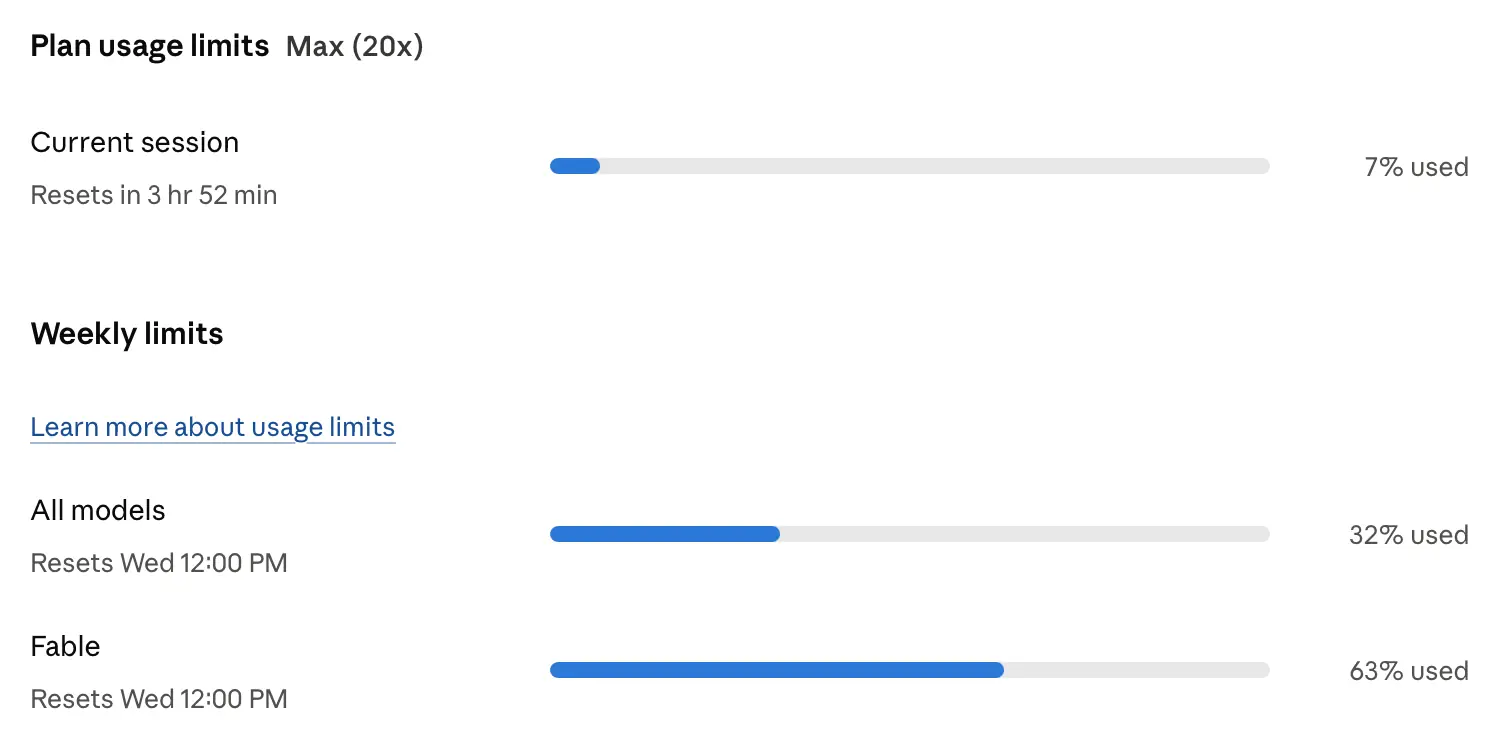
I wrote about the sqlite-utils 4.0rc1 release a couple of weeks ago. Since we only have Claude Fable on our Max subscriptions for a few more days, I decided to see if it could help me get to a 4.0 stable release that I felt truly comfortable about, since I try to keep to SemVer and like my incompatible major versions to be as rare as possible.
[... 2,427 words]Another Fable 5 experiment. Now that my LLM library has evolved into more of an agent framework it's time to see what a simple coding agent would look like built on it.
I started a new Python library using my python-lib-template-repository GitHub template repository, then ran these two prompts (here's the Claude Code for web transcript):
Write a spec.md for this project - it will depend on the latest “llm” alpha from PyPI and implement a Claude code style coding agent complete with tools for reading and editing files and executing commands
Then:
Commit the spec, then build it using red/green TDD in a series of sensible commits (each with passing tests and updated docs) - occasionally manually test it using the OpenAI API key in your environment
Here's the spec, the resulting README file, and the sequence of commits.
I've shipped a slop-alpha to PyPI, so you can run the new agent like this:
uvx --prerelease=allow --with llm-coding-agent llm code
It's pretty good for a first attempt! Here's the (Fable-authored) README, which lists recipes like llm code --yolo and llm code --allow "pytest*" --allow "git diff*".
It also presents a Python API based around a CodingAgent(model="gpt-5.5", root="/path", approve=True).run("Fix the failing test in tests/test_parser.py") class which I didn't ask for but I'm delighted to see implemented.
Here's the suite of tools it implemented, listed using uvx ... llm tools:
CodingTools_edit_file(path: str, old_string: str, new_string: str, replace_all: bool = False) -> strReplace an exact string in a file.
old_string must match the file contents exactly (including whitespace) and must identify a unique location unless replace_all is true. Returns a diff of the change so it can be verified.
CodingTools_execute_command(command: str, timeout: int = 120) -> strRun a shell command in the session root directory.
Returns combined stdout and stderr followed by an Exit code line. timeout is in seconds (maximum 600); on timeout the whole process tree is killed.
CodingTools_list_files(pattern: str = '**/*', path: str = '.') -> strList files matching a glob pattern, newest first.
Skips hidden directories, node_modules, __pycache__ and (in a git repository) anything covered by .gitignore. Returns at most 200 paths relative to the searched directory.
CodingTools_read_file(path: str, offset: int = 0, limit: int = 2000) -> strRead a text file, returning numbered lines like cat -n.
Paths are relative to the session root. Use offset (0-based first line) and limit (max lines) to page through files too large to read in one call.
CodingTools_search_files(pattern: str, path: str = '.', glob: str = None, max_results: int = 100) -> strSearch file contents for a regular expression.
Returns matches as path:line_number:line, capped at max_results. Use glob (e.g. "*.py") to restrict which files are searched.
CodingTools_write_file(path: str, content: str) -> strCreate or overwrite a file with the given content.
Parent directories are created as needed. Prefer edit_file for modifying existing files.
I tried it out by running llm code --yolo and then prompting:
mkdir /tmp/demo and then in that folder create a simple swiftui CLI app for telling the time in ascii art
Here's the transcript, in which GPT-5.5 reasoning notes that "SwiftUI isn't suitable for a true CLI" and then builds an app that outputs this on swift run AsciiTime:
      █    █████         ████     █             █     ███
     ██    █        █        █   ██      █     ██    █   █
      █    ████           ███     █             █       █
      █        █    █        █    █      █      █      █
     ███   ████          ████    ███           ███   █████
Have your agent record video demos of its work with shot-scraper video
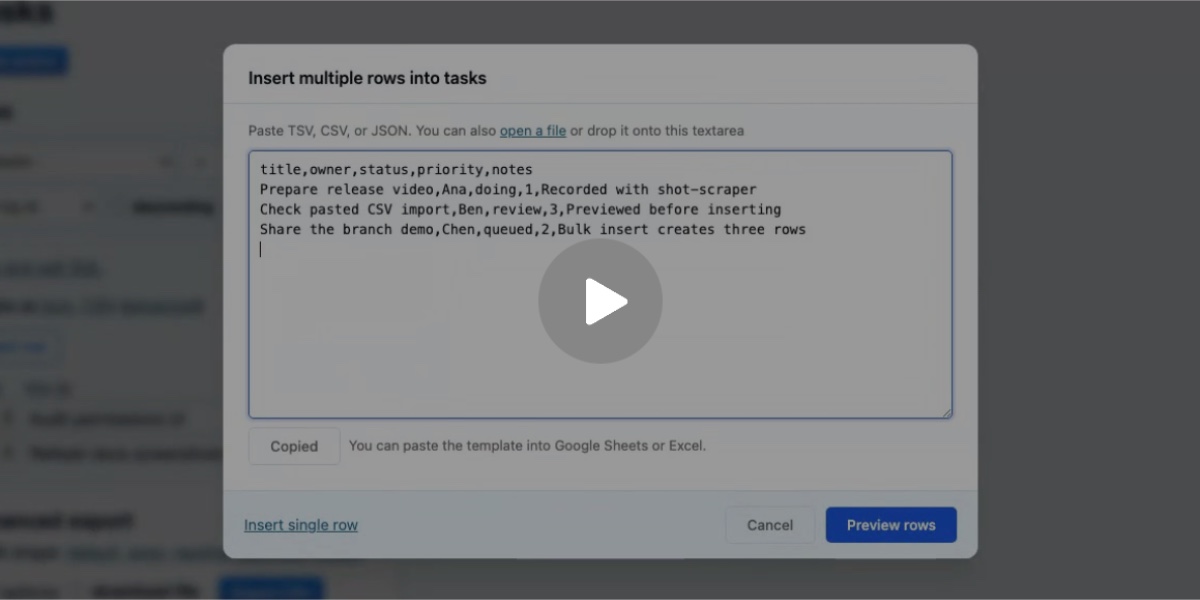
shot-scraper video is a new command introduced in today’s shot-scraper 1.10 release which accepts a storyboard.yml file defining a routine to run against a web application and uses Playwright to record a video of that routine. I’ve written before about the importance of having coding agents produce demos of their work; this is my latest attempt at enabling them to do that.
simonw/browser-compat-db. Inspired by Mozilla's new MDN MCP service - source code here - I decided to try converting their comprehensive mdn/browser-compat-data repository full of browser compatibility data into a SQLite database.
This new GitHub repo includes a Claude Code for web (Opus 4.8) generated script for doing that using sqlite-utils.
I wanted the resulting ~66MB SQLite database to be available via the GitHub CDN with open CORS headers. GitHub releases don't have those, but any file stored in a regular GitHub repository does - so I had Codex Desktop (GPT-5.5) build a GitHub Actions workflow that builds the database and then force-pushes it to a db "orphan" branch.
You can download the resulting database from here, and since it's hosted with open CORS headers you can also explore it with Datasette Lite.
sqlite-utils 4.0rc1 adds migrations and nested transactions
sqlite-utils is my combined Python library and CLI tool for working with SQLite databases. It provides an extensive set of higher-level operations on top of Python’s default sqlite3 package, including support for complex table transformations, automatic table creation from JSON data and a whole lot more.
[... 975 words]Datasette Apps: Host custom HTML applications inside Datasette
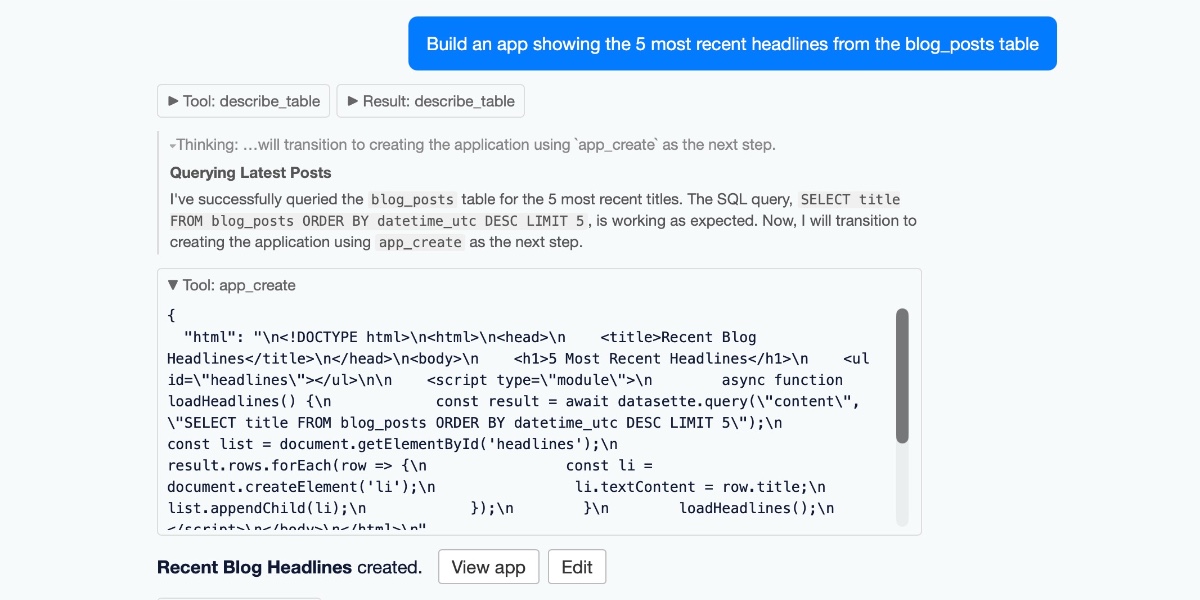
Today we launched a new plugin for Datasette, datasette-apps, with this launch announcement post on the Datasette project blog. That post has the what, but I’m going to expand on that a little bit here to provide the why.
[... 2,301 words]Quoting the release notes:
The big feature in this alpha is tools to insert, edit and delete rows within the Datasette interface. These features are available on table pages, and edit and delete are also available as action items on the row page.
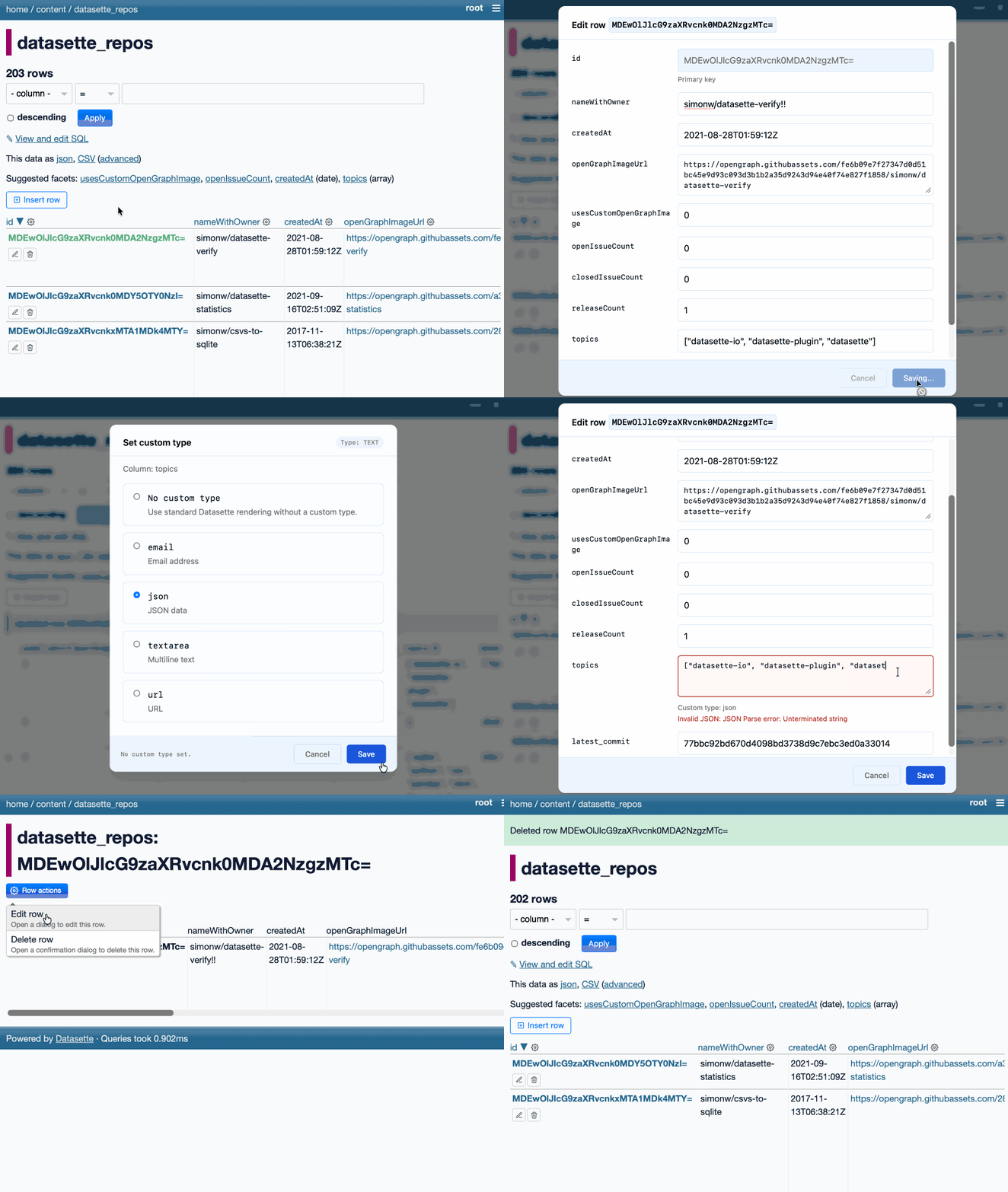
The inspiration for this feature - which is long overdue - was Datasette Agent. I added SQL write support to that the other day which highlighted how absurd it was that you could insert and edit ties via the chat interface but not in the regular Datasette UI!
- New tool,
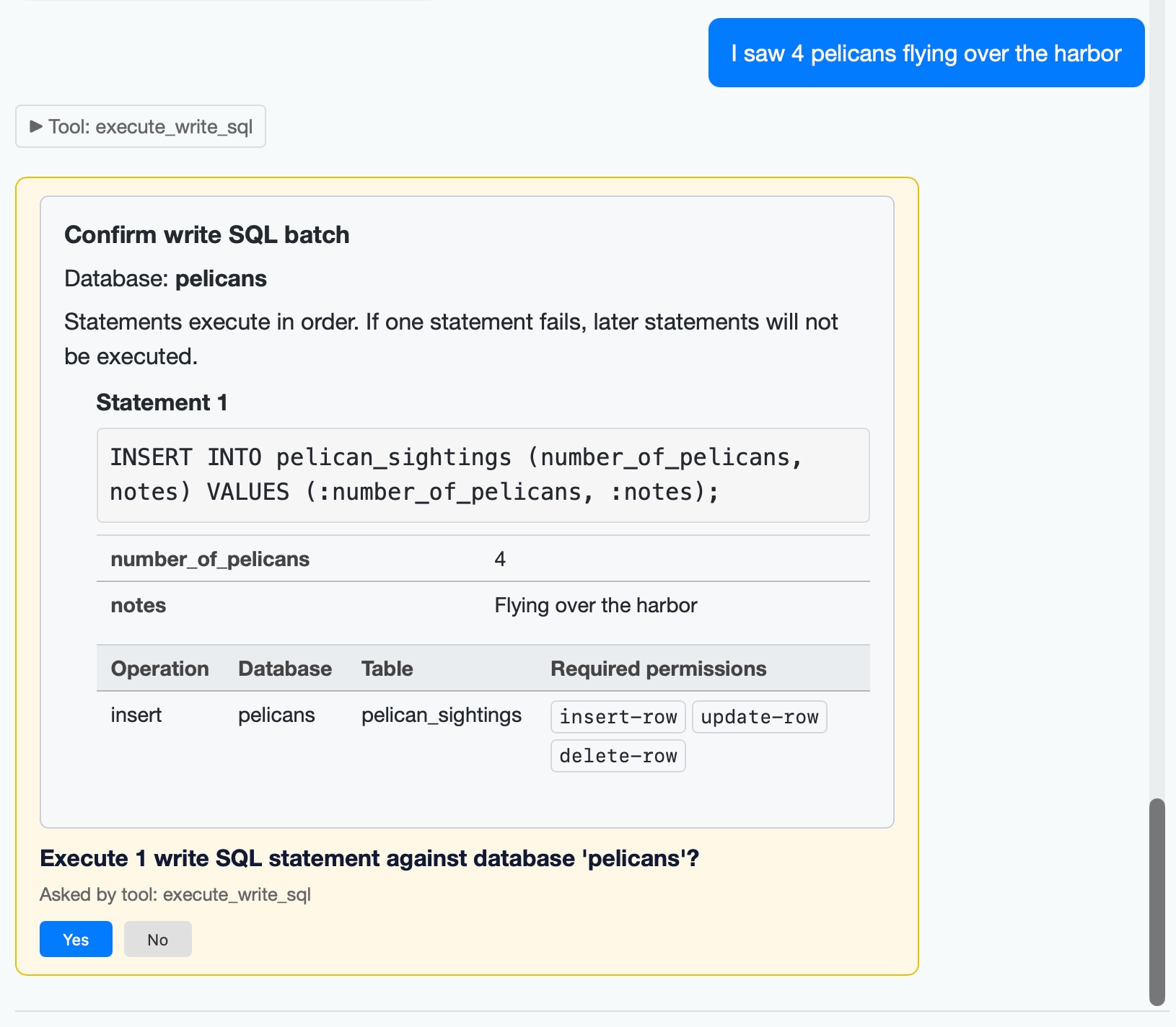
execute_write_sql, which requests user approval and then writes to a database - taking user permissions into account. #27
I added a mechanism for asking user approval in datasette agent 0.2a0. The new execute_write_sql tool can now prompt the user for all kinds of useful operations. Here's an example where I add some pelican sightings to my pelican_sightings table:
The new version also enhances the datasette agent chat terminal mode to support approvals, and adds several new options including --unsafe mode for auto-approving them:
datasette agent chatcan execute tools that require user approval. #30- Three new options for
datasette agent chat---rootto run as root,--yesto approve all ask user questions, and--unsafefor both.- Tools can now provide plain text alternatives to HTML, for display in the
datasette agent chatCLI. #31
The datasette agent chat content.db -m gpt-5.5 --unsafe command can now be used to chat directly with a specific database and directly modify it through prompts like "create a notes table", "add a note about X" etc.
This alpha is a significant step on the road to a stable 1.0, finally extending the ?_extra= pattern I introduced in Datasette 1.0a3 to cover queries and rows in addition to tables. That pattern is also now documented!
I wrote a whole lot more about the new release on the Datasette project blog: Datasette 1.0a33 with JSON extras in the API.
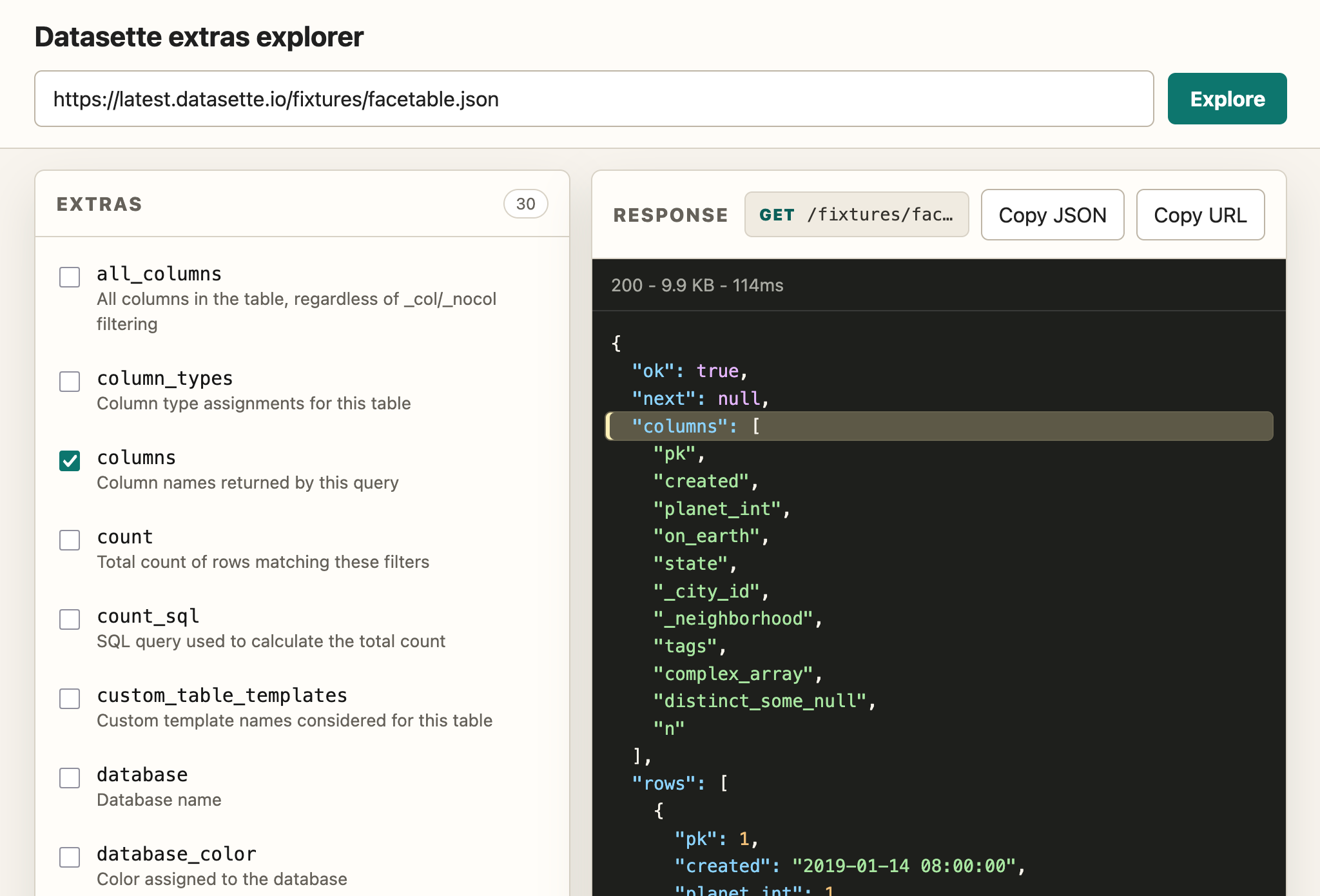
Because API explorer tools are almost free to build now I had Claude Fable 5 in Claude Code (for the plan) and GPT-5.5 xhigh in Codex Desktop (for the implementation) build me this custom extras API explorer to help demonstrate the feature:
I built this utility library to support an asyncio dependency injection pattern a few years ago. I was using it with Datasette and Claude Fable 5 spotted some bugs in the dependency which it then fixed for me. It's a very proactive model!
Almost entirely written by the new Claude Fable 5, see my write-up for more details.
Another significant alpha release, with two new headline features.
Datasette now offers users with the necessary permissions the ability to both execute write queries against their database and to save stored queries (renamed from "canned queries") both privately and for use by other members of their Datasette instance.
There's more detail in SQL write queries and stored queries in Datasette 1.0a31 on the Datasette blog, which now has three posts introducing new features since the blog launched two weeks ago.
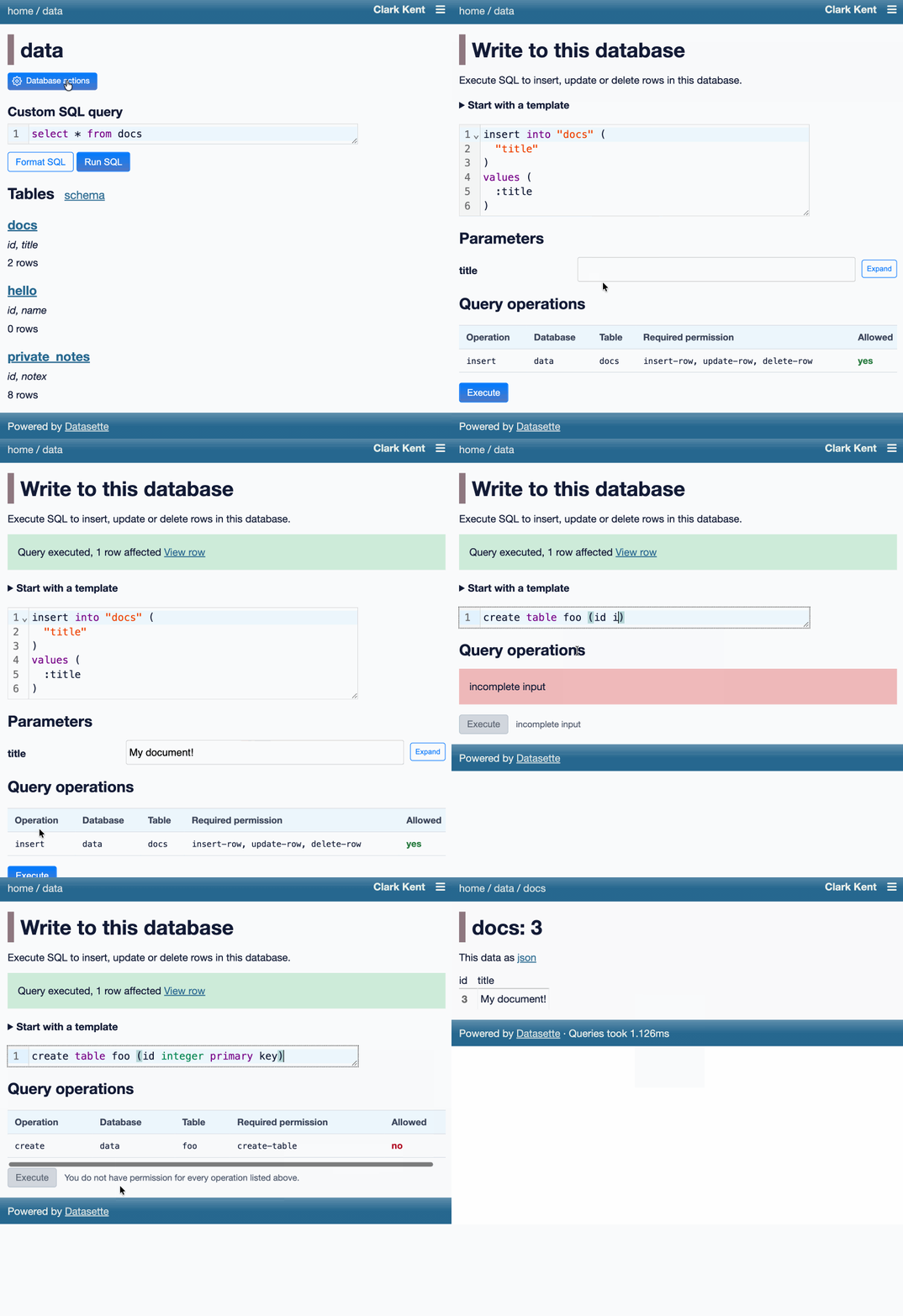
Here's an animated demo from the blog post showing how the new execute query interface lets people get started with templated insert/update/delete queries from tables they have permission to edit: