6 posts tagged “uber”
2026
Uber Caps Usage of AI Tools Like Claude Code to Manage Costs. I wrote the other day about Uber blowing its 2026 AI budget in four months, and how that wasn't particularly surprising given they would have set that budget in 2025, before anyone could have predicted how popular token-burning coding agents were about to become. Natalie Lung for Bloomberg:
The rideshare giant is limiting all employees to $1,500 in monthly token spending per AI coding tool, an Uber spokesperson said in response to a Bloomberg News inquiry. That means spending on one tool doesn’t have a bearing on the budget for another. The limits, which have been instituted in recent months, only apply to agentic coding software such as Cursor or Anthropic PBC’s Claude Code.
A $1,500 monthly limit per tool strikes me as a rational policy response to over-spending, and much more sensible than those tokenmaxxing leaderboards encouraging employees to compete for as much AI usage as possible.
It's also interesting in that it hints at a real dollar value for what Uber is getting out of these tools. If we assume two actively used tools per engineer that's $3,000 * 12 = $36,000 cap per engineer per year. Levels.fyi lists the median yearly compensation package for Uber software engineers in the USA at $330,000.
That means each employee's AI spending cap is ~11% of that median compensation package.
I noted that my own token usage comes to about $1,000/month against each of Anthropic and OpenAI - which currently costs me just $100 per provider thanks to their generous subsidized plans for individual subscribers. Those plans are no longer available to larger companies like Uber.
Their new policy means if I were working at Uber I'd still have ~$500/month of tokens to spare for each of those tools, given my current usage patterns.
I think Anthropic and OpenAI have found product-market fit
Anthropic are strongly rumored to be about to have their first profitable quarter. Stories are circulating of companies surprised at how expensive their LLM bills are becoming from usage by their staff. I think this is because OpenAI and Anthropic have both found product-market fit.
[... 1,931 words]2025
wolf-h3-viewer.glitch.me (via) Neat interactive visualization of Uber's H3 hexagonal geographical indexing mechanism.
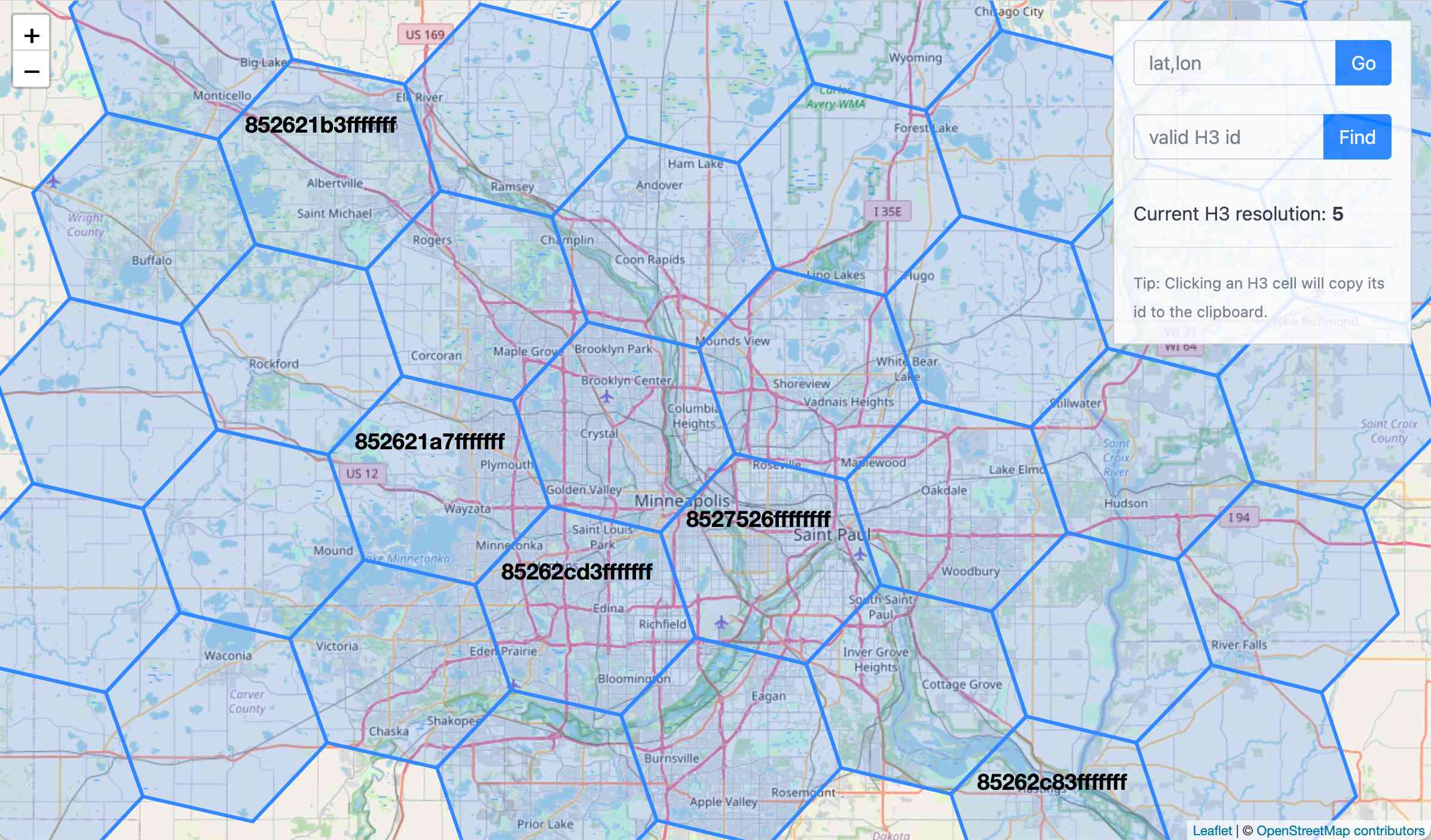
Here's the source code.
Why does H3 use hexagons? Because Hexagons are the Bestagons:
When hexagons come together, they form three-sided joints 120 degrees apart. This, for the least material, is the most mechanically stable arrangement.
Only triangles, squares, and hexagons can tile a plane without gaps, and of those three shapes hexagons offer the best ratio of perimeter to area.
2019
kepler.gl. Uber built this open source geospatial analysis tool for large-scale data sets, and they offer it as a free hosted online tool—just click Get Started on the site. I uploaded two CSV files with 30,000+ latitude/longitude points in them just now and used Kepler to render them as images.
2016
I’m in Polanco (Mexico City) and I hate it. Where to go?
You said you want to avoid expensive taxis.. are you morally opposed to Uber? If not you should know that it works in Mexico City (with your regular Uber account registered in another country), it’s fast and not very expensive. It may give you a lot more flexibility for exploring the city.
[... 71 words]