Tuesday, 14th July 2026
I finally found a cache-friendly recipe for using uvx tool-name in GitHub Actions workflows that I like.
The trick is setting a UV_EXCLUDE_NEWER: "2026-07-12" environment variable at the start of the workflow and then using that as part of the GitHub Actions cache key. This means any uvx tool-name commands will resolve to the most recent version as-of that date, and you can bust the cache and upgrade the tools by bumping the date in the future.
My goal here is to use Python tools in GitHub Actions without every run of the workflow hitting PyPI to download a fresh copy of the tool and its dependencies.
Update: Here's an existing issue against the astral-sh/setup-uv repository requesting that they switch the default to cache rather than purge wheels from PyPI.
A minor release. Performance and documentation improvements to the permissions system, plus I reverted a cosmetic API change which caused almost every existing plugin test suite to break.
The shared language of a software project is not English or Python but it is the common understanding of what its concepts mean, where the boundaries are, which invariants matter, who owns what, and why the system has the shape it does. This language is rarely written down in one place. It lives partly in documentation and code, but also in code review, conversations, arguments, and the experience of having to explain a change to somebody else.
Before agents, some of this shared understanding was maintained by friction. If I wanted to change your storage layer, I usually had to read your code, ask you questions, and perhaps coordinate with another team whose service depended on it. This was slow, and much of that slowness was waste but not all of it was. Some of it was the process by which your understanding became mine, and by which both of us discovered whether we still agreed about how the system worked. This friction synchronizes people.
— Armin Ronacher, The Tower Keeps Rising
lobste.rs is now running on SQLite. Community site Lobsters has been planning a migration away from MariaDB since August 2018 - originally targeting PostgreSQL, but last year they decided to investigate SQLite instead.
This weekend they completed the migration, and now consider it stable enough that it looks like this is the permanent architecture for the site going forward:
SQLite seems to have passed with flying colors: cpu usage is down, memory usage is down, site seems to be snappier at least for me, 1/2 the vps cost once mariadb vps is taken down
The Lobsters Rails application now runs on a single VPS, with a primary content SQLite database file that's around 3.8GB. There's also a 1.1GB cache database, a 218MB queue database, and a still growing 555MB rack_attack database used by the Rack::Attack middleware for blocking and throttling abusive requests.
There are plenty more details in both the linked thread and this SQLite migration PR by Thomas Dziedzic, which added 735 lines and removed 593 lines across 30 commits and 188 files. That PR built on top of previous PRs #1705, #1871, and #1924.
This is a really useful case study, and a great reminder that you can get a whole lot done with a single server and SQLite in 2026.
simonw/pedalican. Clearly I wasn't paying attention when these were first announced back in May, but today I accidentally activated a "pet" in Codex Desktop - a little animated robot, reminiscent of Clippy - and then learned you can create your own.
So I did, and now I have a cute little pelican on a bicycle bouncing around my desktop giving me updates on my Codex tasks.
The most interesting thing about this process was watching how the custom pet was created. I told it I wanted a custom pet that was a pelican riding a bicycle and GPT-5.6 Sol xhigh did the rest of the work, using several rounds with gpt-image-2 to generate the necessary sprite assets.
I had it make extensive notes and record all of the intermediary steps. My GitHub repo includes every generated image and combined sprite sheet, plus GIFs for each of the animation loops such as this one, called waving.gif:


That GIF was compiled from a single image generated by gpt-image-2 that looked like this:

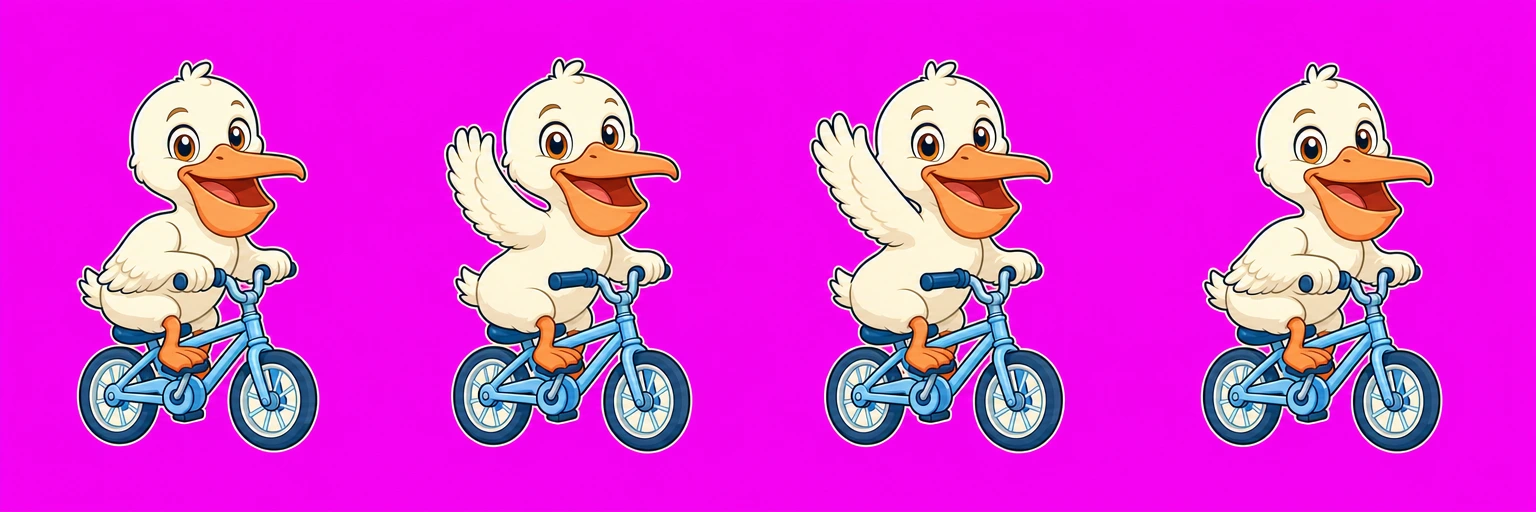
And that image was created by executing this prompt against the initial generated character reference image, which was created with this prompt, which has this structure:

Create one clean full-body reference sprite for Codex pet Pedalican.
Pet identity: A compact adorable baby pelican with a round cream-white body, soft coral-orange bill and feet, riding a tiny sky-blue bicycle [...]
Place a single centered pose on a perfectly flat pure magenta #FF00FF chroma-key background. Keep the full pet visible, compact, readable at 192x208, and easy to animate. [...]
I've been looking out for ways to use image generation to create simple game-ready sprites, so I spent some time digging into this mechanism to see how it works.
The key implementation details are open source - these two skills in particular, both Apache 2.0 licensed:
And yes, GPT-5.6 Sol did come up with the name "Pedalican". I like it!
Dependabot now waits until a new release has been available on its registry for at least three days before opening a version update pull request. This cooldown is now the default and requires no configuration.
— GitHub Changelog, embracing dependency cooldowns