8 posts tagged “glm”
The GLM family of LLMs from Z.ai.
2026
GLM-5.1: Towards Long-Horizon Tasks. Chinese AI lab Z.ai's latest model is a giant 754B parameter 1.51TB (on Hugging Face) MIT-licensed monster - the same size as their previous GLM-5 release, and sharing the same paper.
It's available via OpenRouter so I asked it to draw me a pelican:
llm install llm-openrouter
llm -m openrouter/z-ai/glm-5.1 'Generate an SVG of a pelican on a bicycle'
And something new happened... unprompted, the model decided to give me an HTML page that included both the SVG and a separate set of CSS animations!
The SVG was excellent, and might be my new favorite from an open weights model:

But the animation broke it:

That's the pelican, floating up in the top left corner.
I usually don't do follow-up prompts for the pelican test, but in this case I made an exception:
llm -c 'the animation is a bit broken, the pelican ends up positioned off the screen at the top right'
GLM 5.1 replied:
The issue is that CSS
transformanimations on SVG elements override the SVGtransformattribute used for positioning, causing the pelican to lose its placement and fly off to the top-right. The fix is to separate positioning (SVG attribute) from animation (inner group) and use<animateTransform>for SVG rotations since it handles coordinate systems correctly.
And spat out fresh HTML which fixed the problem!

I particularly like the animation of the beak, which is described in the SVG comments like so:
<!-- Pouch (lower beak) with wobble -->
<g>
    <path d="M42,-58 Q43,-50 48,-42 Q55,-35 62,-38 Q70,-42 75,-60 L42,-58 Z" fill="url(#pouchGrad)" stroke="#b06008" stroke-width="1" opacity="0.9"/>
    <path d="M48,-50 Q55,-46 60,-52" fill="none" stroke="#c06a08" stroke-width="0.8" opacity="0.6"/>
    <animateTransform attributeName="transform" type="scale"
    values="1,1; 1.03,0.97; 1,1" dur="0.75s" repeatCount="indefinite"
    additive="sum"/>
</g>Update: On Bluesky @charles.capps.me suggested a "NORTH VIRGINIA OPOSSUM ON AN E-SCOOTER" and...

The HTML+SVG comments on that one include /* Earring sparkle */, <!-- Opossum fur gradient -->, <!-- Distant treeline silhouette - Virginia pines -->, <!-- Front paw on handlebar --> - here's the transcript and the HTML result.
GLM-5: From Vibe Coding to Agentic Engineering (via) This is a huge new MIT-licensed model: 744B parameters and 1.51TB on Hugging Face twice the size of GLM-4.7 which was 368B and 717GB (4.5 and 4.6 were around that size too).
It's interesting to see Z.ai take a position on what we should call professional software engineers building with LLMs - I've seen Agentic Engineering show up in a few other places recently. most notable from Andrej Karpathy and Addy Osmani.
I ran my "Generate an SVG of a pelican riding a bicycle" prompt through GLM-5 via OpenRouter and got back a very good pelican on a disappointing bicycle frame:

2025
Introducing SWE-1.5: Our Fast Agent Model (via) Here's the second fast coding model released by a coding agent IDE in the same day - the first was Composer-1 by Cursor. This time it's Windsurf releasing SWE-1.5:
Today we’re releasing SWE-1.5, the latest in our family of models optimized for software engineering. It is a frontier-size model with hundreds of billions of parameters that achieves near-SOTA coding performance. It also sets a new standard for speed: we partnered with Cerebras to serve it at up to 950 tok/s – 6x faster than Haiku 4.5 and 13x faster than Sonnet 4.5.
Like Composer-1 it's only available via their editor, no separate API yet. Also like Composer-1 they don't appear willing to share details of the "leading open-source base model" they based their new model on.
I asked it to generate an SVG of a pelican riding a bicycle and got this:

This one felt really fast. Partnering with Cerebras for inference is a very smart move.
They share a lot of details about their training process in the post:
SWE-1.5 is trained on our state-of-the-art cluster of thousands of GB200 NVL72 chips. We believe SWE-1.5 may be the first public production model trained on the new GB200 generation. [...]
Our RL rollouts require high-fidelity environments with code execution and even web browsing. To achieve this, we leveraged our VM hypervisor
otterlinkthat allows us to scale Devin to tens of thousands of concurrent machines (learn more about blockdiff). This enabled us to smoothly support very high concurrency and ensure the training environment is aligned with our Devin production environments.
That's another similarity to Cursor's Composer-1! Cursor talked about how they ran "hundreds of thousands of concurrent sandboxed coding environments in the cloud" in their description of their RL training as well.
This is a notable trend: if you want to build a really great agentic coding tool there's clearly a lot to be said for using reinforcement learning to fine-tune a model against your own custom set of tools using large numbers of sandboxed simulated coding environments as part of that process.
Update: I think it's built on GLM.
Two new models from Chinese AI labs in the past few days. I tried them both out using llm-openrouter:
DeepSeek-V3.2-Exp from DeepSeek. Announcement, Tech Report, Hugging Face (690GB, MIT license).
As an intermediate step toward our next-generation architecture, V3.2-Exp builds upon V3.1-Terminus by introducing DeepSeek Sparse Attention—a sparse attention mechanism designed to explore and validate optimizations for training and inference efficiency in long-context scenarios.
This one felt very slow when I accessed it via OpenRouter - I probably got routed to one of the slower providers. Here's the pelican:
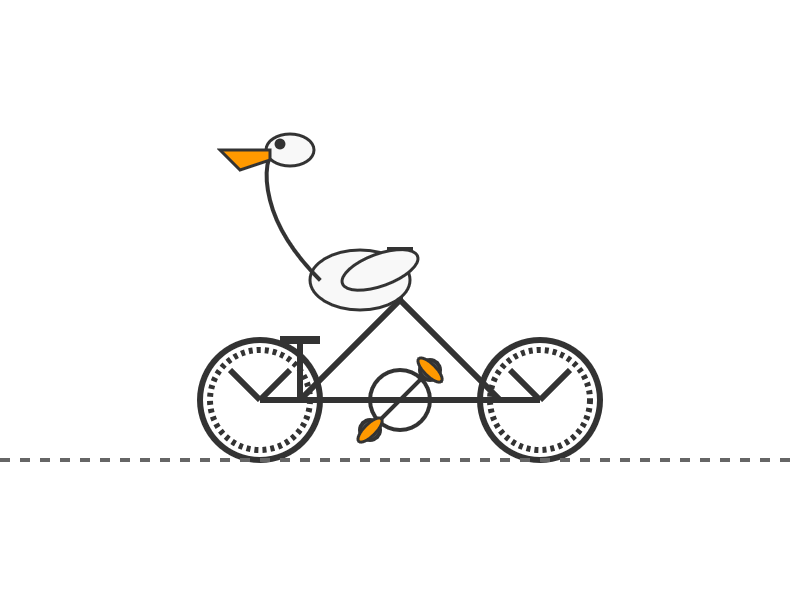
GLM-4.6 from Z.ai. Announcement, Hugging Face (714GB, MIT license).
The context window has been expanded from 128K to 200K tokens [...] higher scores on code benchmarks [...] GLM-4.6 exhibits stronger performance in tool using and search-based agents.
Here's the pelican for that:

Something that has become undeniable this month is that the best available open weight models now come from the Chinese AI labs.
I continue to have a lot of love for Mistral, Gemma and Llama but my feeling is that Qwen, Moonshot and Z.ai have positively smoked them over the course of July.
Here's what came out this month, with links to my notes on each one:
- Moonshot Kimi-K2-Instruct - 11th July, 1 trillion parameters
- Qwen Qwen3-235B-A22B-Instruct-2507 - 21st July, 235 billion
- Qwen Qwen3-Coder-480B-A35B-Instruct - 22nd July, 480 billion
- Qwen Qwen3-235B-A22B-Thinking-2507 - 25th July, 235 billion
- Z.ai GLM-4.5 and GLM-4.5 Air - 28th July, 355 and 106 billion
- Qwen Qwen3-30B-A3B-Instruct-2507 - 29th July, 30 billion
- Qwen Qwen3-30B-A3B-Thinking-2507 - 30th July, 30 billion
- Qwen Qwen3-Coder-30B-A3B-Instruct - 31st July, 30 billion (released after I first posted this note)
Notably absent from this list is DeepSeek, but that's only because their last model release was DeepSeek-R1-0528 back in April.
The only janky license among them is Kimi K2, which uses a non-OSI-compliant modified MIT. Qwen's models are all Apache 2 and Z.ai's are MIT.
The larger Chinese models all offer their own APIs and are increasingly available from other providers. I've been able to run versions of the Qwen 30B and GLM-4.5 Air 106B models on my own laptop.
I can't help but wonder if part of the reason for the delay in release of OpenAI's open weights model comes from a desire to be notably better than this truly impressive lineup of Chinese models.
Update August 5th 2025: The OpenAI open weight models came out and they are very impressive.
My 2.5 year old laptop can write Space Invaders in JavaScript now, using GLM-4.5 Air and MLX
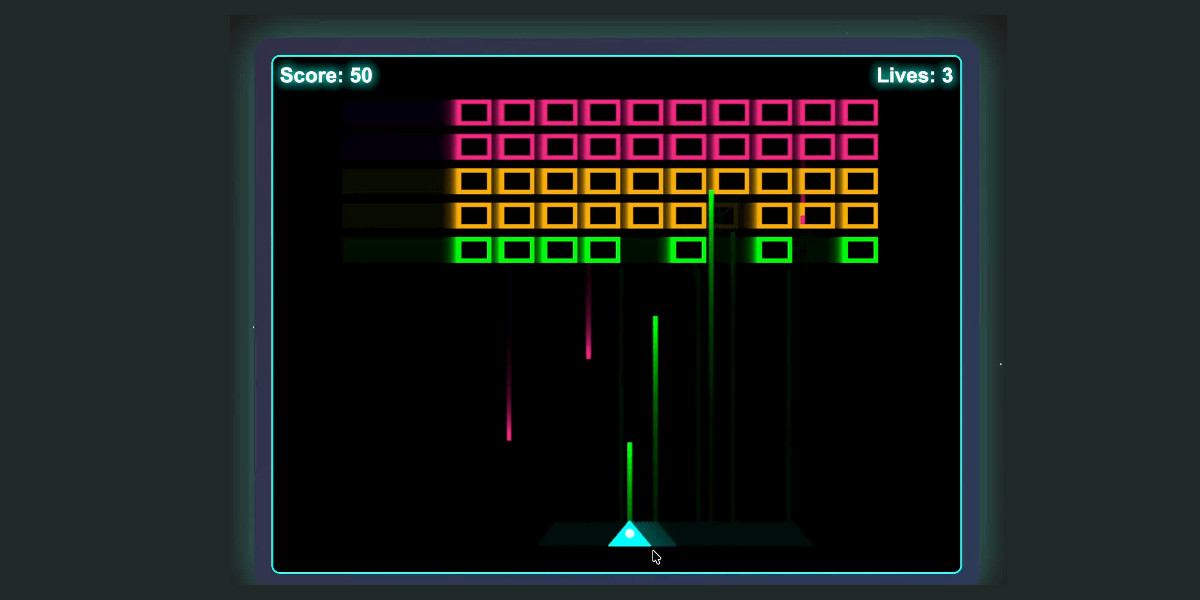
I wrote about the new GLM-4.5 model family yesterday—new open weight (MIT licensed) models from Z.ai in China which their benchmarks claim score highly in coding even against models such as Claude Sonnet 4.
[... 685 words]GLM-4.5: Reasoning, Coding, and Agentic Abililties. Another day, another significant new open weight model release from a Chinese frontier AI lab.
This time it's Z.ai - who rebranded (at least in English) from Zhipu AI a few months ago. They just dropped GLM-4.5-Base, GLM-4.5 and GLM-4.5 Air on Hugging Face, all under an MIT license.
These are MoE hybrid reasoning models with thinking and non-thinking modes, similar to Qwen 3. GLM-4.5 is 355 billion total parameters with 32 billion active, GLM-4.5-Air is 106 billion total parameters and 12 billion active.
They started using MIT a few months ago for their GLM-4-0414 models - their older releases used a janky non-open-source custom license.
Z.ai's own benchmarking (across 12 common benchmarks) ranked their GLM-4.5 3rd behind o3 and Grok-4 and just ahead of Claude Opus 4. They ranked GLM-4.5 Air 6th place just ahead of Claude 4 Sonnet. I haven't seen any independent benchmarks yet.
The other models they included in their own benchmarks were o4-mini (high), Gemini 2.5 Pro, Qwen3-235B-Thinking-2507, DeepSeek-R1-0528, Kimi K2, GPT-4.1, DeepSeek-V3-0324. Notably absent: any of Meta's Llama models, or any of Mistral's. Did they deliberately only compare themselves to open weight models from other Chinese AI labs?
Both models have a 128,000 context length and are trained for tool calling, which honestly feels like table stakes for any model released in 2025 at this point.
It's interesting to see them use Claude Code to run their own coding benchmarks:
To assess GLM-4.5's agentic coding capabilities, we utilized Claude Code to evaluate performance against Claude-4-Sonnet, Kimi K2, and Qwen3-Coder across 52 coding tasks spanning frontend development, tool development, data analysis, testing, and algorithm implementation. [...] The empirical results demonstrate that GLM-4.5 achieves a 53.9% win rate against Kimi K2 and exhibits dominant performance over Qwen3-Coder with an 80.8% success rate. While GLM-4.5 shows competitive performance, further optimization opportunities remain when compared to Claude-4-Sonnet.
They published the dataset for that benchmark as zai-org/CC-Bench-trajectories on Hugging Face. I think they're using the word "trajectory" for what I would call a chat transcript.
Unlike DeepSeek-V3 and Kimi K2, we reduce the width (hidden dimension and number of routed experts) of the model while increasing the height (number of layers), as we found that deeper models exhibit better reasoning capacity.
They pre-trained on 15 trillion tokens, then an additional 7 trillion for code and reasoning:
Our base model undergoes several training stages. During pre-training, the model is first trained on 15T tokens of a general pre-training corpus, followed by 7T tokens of a code & reasoning corpus. After pre-training, we introduce additional stages to further enhance the model's performance on key downstream domains.
They also open sourced their post-training reinforcement learning harness, which they've called slime. That's available at THUDM/slime on GitHub - THUDM is the Knowledge Engineer Group @ Tsinghua University, the University from which Zhipu AI spun out as an independent company.
This time I ran my pelican bechmark using the chat.z.ai chat interface, which offers free access (no account required) to both GLM 4.5 and GLM 4.5 Air. I had reasoning enabled for both.
Here's what I got for "Generate an SVG of a pelican riding a bicycle" on GLM 4.5. I like how the pelican has its wings on the handlebars:

And GLM 4.5 Air:

Ivan Fioravanti shared a video of the mlx-community/GLM-4.5-Air-4bit quantized model running on a M4 Mac with 128GB of RAM, and it looks like a very strong contender for a local model that can write useful code. The cheapest 128GB Mac Studio costs around $3,500 right now, so genuinely great open weight coding models are creeping closer to being affordable on consumer machines.
Update: Ivan released a 3 bit quantized version of GLM-4.5 Air which runs using 48GB of RAM on my laptop. I tried it and was really impressed, see My 2.5 year old laptop can write Space Invaders in JavaScript now.
2023
You will not use the Software for any act that may undermine China's national security and national unity, harm the public interest of society, or infringe upon the rights and interests of human beings.