635 posts tagged “llm”
LLM is my command-line tool for running prompts against Large Language Models.
2024
Ask questions of SQLite databases and CSV/JSON files in your terminal
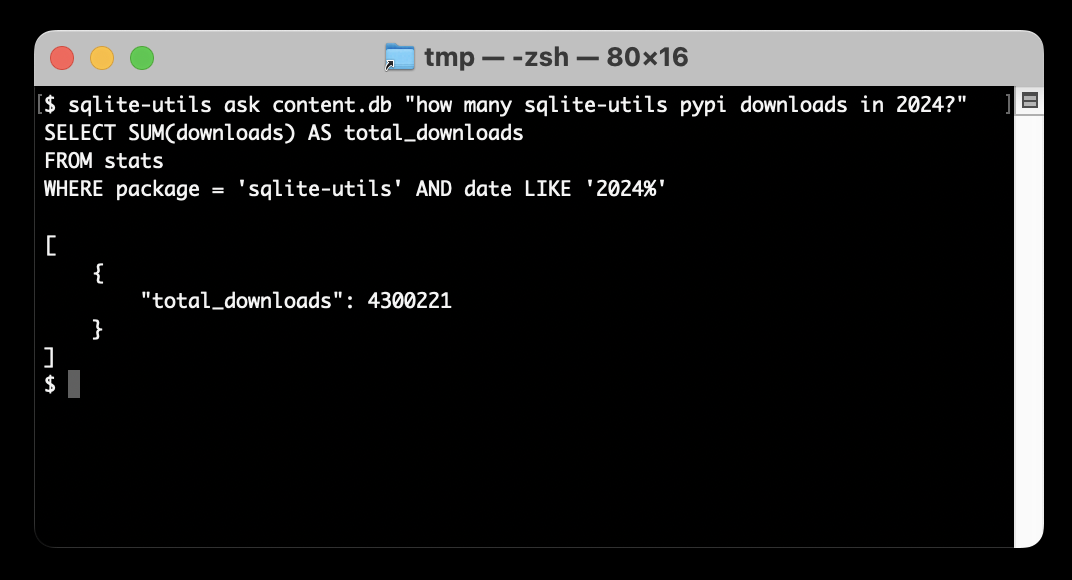
I built a new plugin for my sqlite-utils CLI tool that lets you ask human-language questions directly of SQLite databases and CSV/JSON files on your computer.
[... 723 words]Weeknotes: asynchronous LLMs, synchronous embeddings, and I kind of started a podcast
These past few weeks I’ve been bringing Datasette and LLM together and distracting myself with a new sort-of-podcast crossed with a live streaming experiment.
[... 896 words]Say hello to gemini-exp-1121. Google Gemini's Logan Kilpatrick on Twitter:
Say hello to gemini-exp-1121! Our latest experimental gemini model, with:
- significant gains on coding performance
- stronger reasoning capabilities
- improved visual understanding
Available on Google AI Studio and the Gemini API right now
The 1121 in the name is a release date of the 21st November. This comes fast on the heels of last week's gemini-exp-1114.
Both of these new experimental Gemini models have seen moments at the top of the Chatbot Arena. gemini-exp-1114 took the top spot a few days ago, and then lost it to a new OpenAI model called "ChatGPT-4o-latest (2024-11-20)"... only for the new gemini-exp-1121 to hold the top spot right now.
(These model names are all so, so bad.)
I released llm-gemini 0.4.2 with support for the new model - this should have been 0.5 but I already have a 0.5a0 alpha that depends on an unreleased feature in LLM core.
I tried my pelican benchmark:
llm -m gemini-exp-1121 'Generate an SVG of a pelican riding a bicycle'
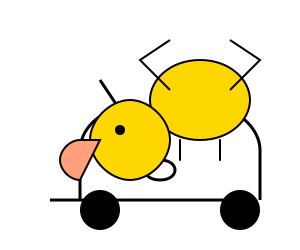
Since Gemini is a multi-modal vision model, I had it describe the image it had created back to me (by feeding it a PNG render):
llm -m gemini-exp-1121 describe -a pelican.png
And got this description, which is pretty great:
The image shows a simple, stylized drawing of an insect, possibly a bee or an ant, on a vehicle. The insect is composed of a large yellow circle for the body and a smaller yellow circle for the head. It has a black dot for an eye, a small orange oval for a beak or mouth, and thin black lines for antennae and legs. The insect is positioned on top of a simple black and white vehicle with two black wheels. The drawing is abstract and geometric, using basic shapes and a limited color palette of black, white, yellow, and orange.
Update: Logan confirmed on Twitter that these models currently only have a 32,000 token input, significantly less than the rest of the Gemini family.
llm-gguf 0.2, now with embeddings. This new release of my llm-gguf plugin - which provides support for locally hosted GGUF LLMs - adds a new feature: it now supports embedding models distributed as GGUFs as well.
This means you can use models like the bafflingly small (30.8MB in its smallest quantization) mxbai-embed-xsmall-v1 with LLM like this:
llm install llm-gguf
llm gguf download-embed-model \
  'https://huggingface.co/mixedbread-ai/mxbai-embed-xsmall-v1/resolve/main/gguf/mxbai-embed-xsmall-v1-q8_0.gguf'
Then to embed a string:
llm embed -m gguf/mxbai-embed-xsmall-v1-q8_0 -c 'hello'
The LLM docs have extensive coverage of things you can then do with this model, like embedding every row in a CSV file / file in a directory / record in a SQLite database table and running similarity and semantic search against them.
Under the hood this takes advantage of the create_embedding() method provided by the llama-cpp-python wrapper around llama.cpp.
Pixtral Large (via) New today from Mistral:
Today we announce Pixtral Large, a 124B open-weights multimodal model built on top of Mistral Large 2. Pixtral Large is the second model in our multimodal family and demonstrates frontier-level image understanding.
The weights are out on Hugging Face (over 200GB to download, and you'll need a hefty GPU rig to run them). The license is free for academic research but you'll need to pay for commercial usage.
The new Pixtral Large model is available through their API, as models called pixtral-large-2411 and pixtral-large-latest.
Here's how to run it using LLM and the llm-mistral plugin:
llm install -U llm-mistral
llm keys set mistral
# paste in API key
llm mistral refresh
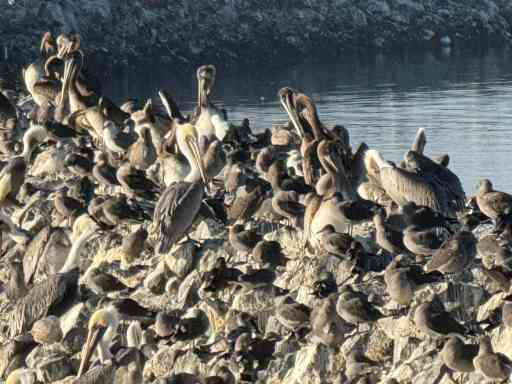
llm -m mistral/pixtral-large-latest describe -a https://static.simonwillison.net/static/2024/pelicans.jpg
The image shows a large group of birds, specifically pelicans, congregated together on a rocky area near a body of water. These pelicans are densely packed together, some looking directly at the camera while others are engaging in various activities such as preening or resting. Pelicans are known for their large bills with a distinctive pouch, which they use for catching fish. The rocky terrain and the proximity to water suggest this could be a coastal area or an island where pelicans commonly gather in large numbers. The scene reflects a common natural behavior of these birds, often seen in their nesting or feeding grounds.
Update: I released llm-mistral 0.8 which adds async model support for the full Mistral line, plus a new llm -m mistral-large shortcut alias for the Mistral Large model.
llm-gemini 0.4.
New release of my llm-gemini plugin, adding support for asynchronous models (see LLM 0.18), plus the new gemini-exp-1114 model (currently at the top of the Chatbot Arena) and a -o json_object 1 option to force JSON output.
I also released llm-claude-3 0.9 which adds asynchronous support for the Claude family of models.
LLM 0.18. New release of LLM. The big new feature is asynchronous model support - you can now use supported models in async Python code like this:
import llm

model = llm.get_async_model("gpt-4o")
async for chunk in model.prompt(
    "Five surprising names for a pet pelican"
):
    print(chunk, end="", flush=True)
Also new in this release: support for sending audio attachments to OpenAI's gpt-4o-audio-preview model.
Ollama: Llama 3.2 Vision. Ollama released version 0.4 last week with support for Meta's first Llama vision model, Llama 3.2.
If you have Ollama installed you can fetch the 11B model (7.9 GB) like this:
ollama pull llama3.2-vision
Or the larger 90B model (55GB download, likely needs ~88GB of RAM) like this:
ollama pull llama3.2-vision:90b
I was delighted to learn that Sukhbinder Singh had already contributed support for LLM attachments to Sergey Alexandrov's llm-ollama plugin, which means the following works once you've pulled the models:
llm install --upgrade llm-ollama
llm -m llama3.2-vision:latest 'describe' \
  -a https://static.simonwillison.net/static/2024/pelican.jpg
This image features a brown pelican standing on rocks, facing the camera and positioned to the left of center. The bird's long beak is a light brown color with a darker tip, while its white neck is adorned with gray feathers that continue down to its body. Its legs are also gray.
In the background, out-of-focus boats and water are visible, providing context for the pelican's environment.
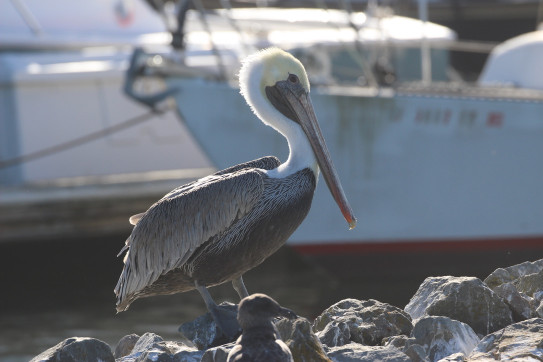
That's not a bad description of this image, especially for a 7.9GB model that runs happily on my MacBook Pro.
Qwen2.5-Coder-32B is an LLM that can code well that runs on my Mac
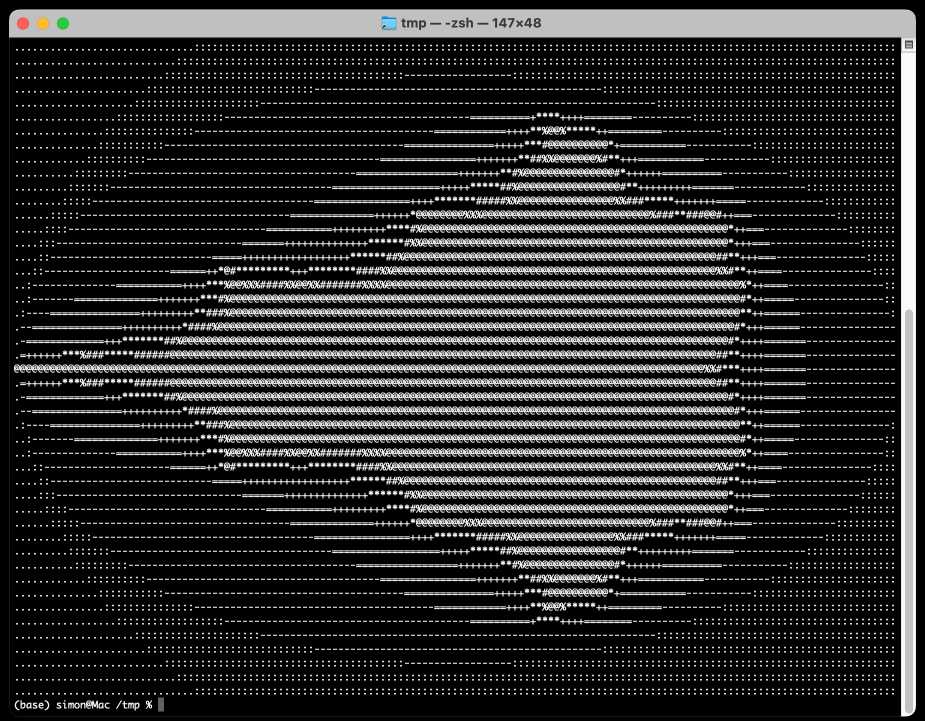
There’s a whole lot of buzz around the new Qwen2.5-Coder Series of open source (Apache 2.0 licensed) LLM releases from Alibaba’s Qwen research team. On first impression it looks like the buzz is well deserved.
[... 697 words]Generating documentation from tests using files-to-prompt and LLM. I was experimenting with the wasmtime-py Python library today (for executing WebAssembly programs from inside CPython) and I found the existing API docs didn't quite show me what I wanted to know.
The project has a comprehensive test suite so I tried seeing if I could generate documentation using that:
cd /tmp
git clone https://github.com/bytecodealliance/wasmtime-py
files-to-prompt -e py wasmtime-py/tests -c | \
  llm -m claude-3.5-sonnet -s \
  'write detailed usage documentation including realistic examples'
More notes in my TIL. You can see the full Claude transcript here - I think this worked really well!
Claude 3.5 Haiku
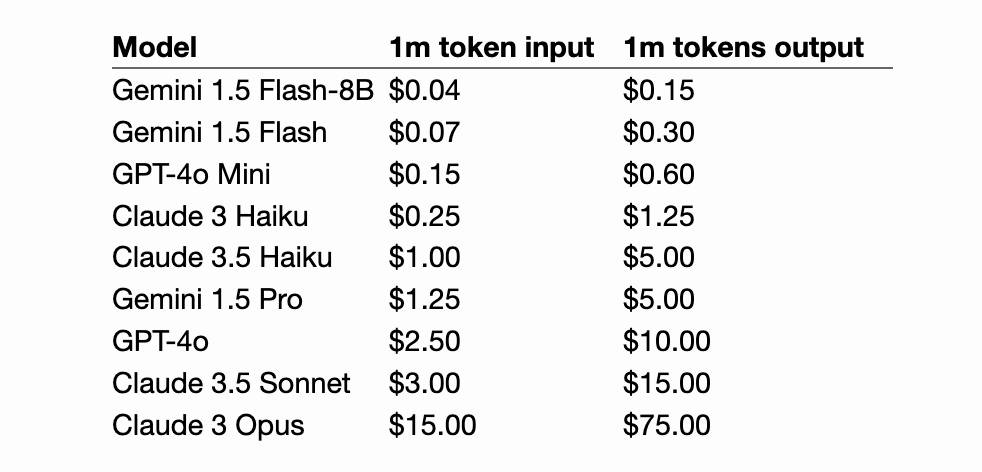
Anthropic released Claude 3.5 Haiku today, a few days later than expected (they said it would be out by the end of October).
[... 502 words]