7 posts tagged “muse”
The Muse family of LLMs from Meta AI.
2026
Muse is getting a lot of attention — including mine — because it’s both groundbreaking technically (each user gets their own entire persistent Linux VM running in Meta’s cloud) and because it’s packaged in an easy-to-install easy-to-use way. It’s literally presented as a cute mascot. It’s the first consumer-accessible agentic AI system, and Meta has truly done an amazing job with that. But it’s a genuinely open question whether consumers have any understanding what this means. If you buy a power saw that can cut your fingers off, you are almost certainly aware that you are buying a power saw that can sever your fingers. [...] I don’t think people realize how powerful — and thus dangerous — Muse is, especially if it’s running on your Mac.
— John Gruber, Muse Looks Cute, but Looks are Deceiving
Introducing Muse Glimmer (via) Meta are back in the open weights game! Muse Glimmer is a brand new 30B model under a clean Apache 2.0 license (a step up from the janky Llama licenses of old).
They claim to have optimized it for exactly the kind of things I'm looking for in a local model:
- End-to-end Agentic Task Completion. Muse Glimmer achieves strong success rates on full-task benchmarks including DeepSearch QA, MCP-Atlas, 𝛕-Bench and SWE-Bench, which measure its ability to work within scaffolds, write and debug code, and resolve multi-turn requests from start to finish.
- Reliable Tool Use. The model handles a wide range of function calls, invoking tools with precise schemas throughout extended workflows.
- Multi-Step Reasoning. Muse Glimmer chains reasoning over long horizons, sustaining coherent plans across complex, extended workflows. [...]
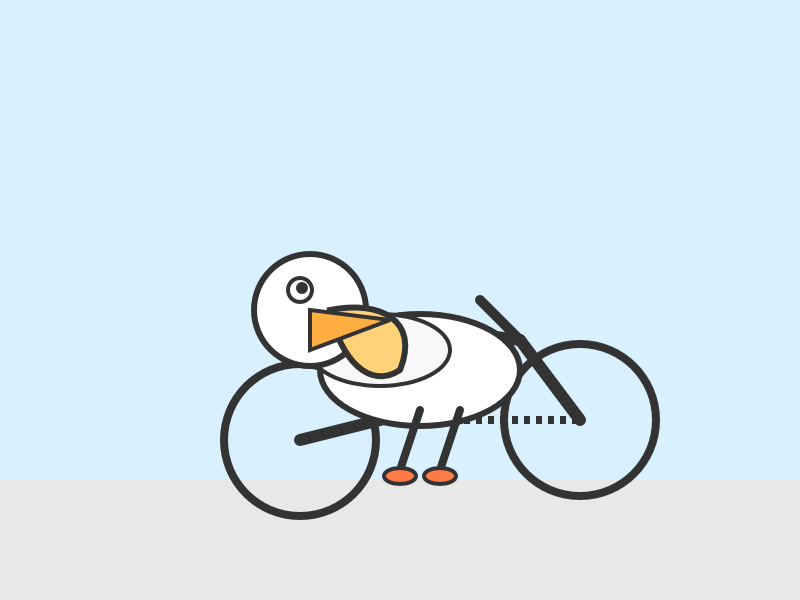
Here's a pelican which I generated using LM Studio's 18.16 GB version of the model:
I also tried it out with my llm-coding-agent plugin, running against a fresh checkout of Datasette with the prompt:
how does auth work?
Here's the response, at the end of a long transcript showing all of the tool calls it made to explore the codebase. I ran this using llm-lmstudio with this patch applied to upgrade it for compatibility with LLM 0.32.
I really like this size of model, because if a machine has 32 GB of RAM or more (mine has 128GB) it leaves plenty of space for running other applications at the same time.
Glimmer is a vision model, so I asked it to describe this image:
llm -m lmstudio/meta/muse-glimmer -a https://static.inaturalist.org/photos/714731804/large.jpg 'describe image'

Here's what I got back:
The photograph shows a rocky, breakwater-style shoreline on an overcast day with a smooth, gray body of water and a faint dock/pier line in the soft-focused background.
In the foreground two large brown pelicans, Pelecanus occidentalis, are perched on the jumbled gray-white stones. They have the species’ characteristic long, down-curved yellow-orange bills with a large throat pouch, long slender necks and mottled brown-gray plumage on the back and wings. The pelican on the left is turned slightly toward the camera and appears to be preening or resting its bill against its chest; a pale, whitish patch is visible on the crown and nape and a small crest of feathers is raised. The pelican on the right faces mostly forward/right, its head up, bill pointing down and to the right, with the same pale head markings and the barred, darker wing feathers clearly visible.
Scattered among the rocks around the two pelicans are several much smaller dark birds — gulls/tern-like birds in muted brown-gray plumage. One dark bird sits on the far left on a rock, another brownish bird stands to the right of the right-hand pelican, a grayish bird with a reddish bill is in the lower right foreground, and a further small dark bird is at the extreme right edge of the frame.
The overall light is flat and diffused, giving the water and sky a muted, almost monochromatic palette that contrasts with the textured rock and the detailed feathering of the pelicans. The composition places the two big birds as the dominant subjects, framed against the calm water and the low, rocky perch.
An AI model from Meta also hacked another company during testing. Stop me if you've heard this one before:
An AI model from the parent company of Facebook and Instagram hacked into another company’s systems during cybersecurity testing, a spokesperson confirmed on Wednesday.
Meta says the breach occurred because of an inadvertent error during testing of the model, similar to previously disclosed incidents with OpenAI and Anthropic.
“A misconfiguration by Irregular, an independent testing company Meta uses, inadvertently allowed one of our models access to the internet during evaluation,” the Meta spokesperson said.
Meta’s Muse Spark model “exploited a security vulnerability” in another company “in a manner similar to previously-reported instances with other companies.”
The Information had the scoop, I'm linking to CNN's re-report of it since they don't have a paywall.
So that's Anthropic, OpenAI, and Meta. Google Gemini really needs to catch up on accidentally cyberattacking other companies.
Introducing Muse Code and Muse Spark 1.2 (via) Yet more evidence that the most important characteristic of any model these days is long-sequence agentic tool calling. Meta shipped their own coding agent as part of getting that to work!
Muse Spark 1.2 is a coding-focused update to Muse Spark 1.1, with improvements in code generation, complex debugging, codebase understanding, and end-to-end developer workflows. In Muse Spark 1.2, we significantly scaled up training compute on coding tasks while expanding training environment diversity. The model also maintains its strength in other key areas like general agents. [...]
We co-trained Muse Spark 1.2 with Muse Code to ensure the model exhibits its best performance and coding usability when paired together. The training included rejection sampled harness trajectories and recipe optimizations for goals, compaction, and subagents, alongside the integration of the Muse Code toolset to maximize harness compatibility. [...]
Muse Spark 1.2 was extensively trained on long-horizon coding tasks, including whole-repository generation, large end-to-end projects, and auto-research.
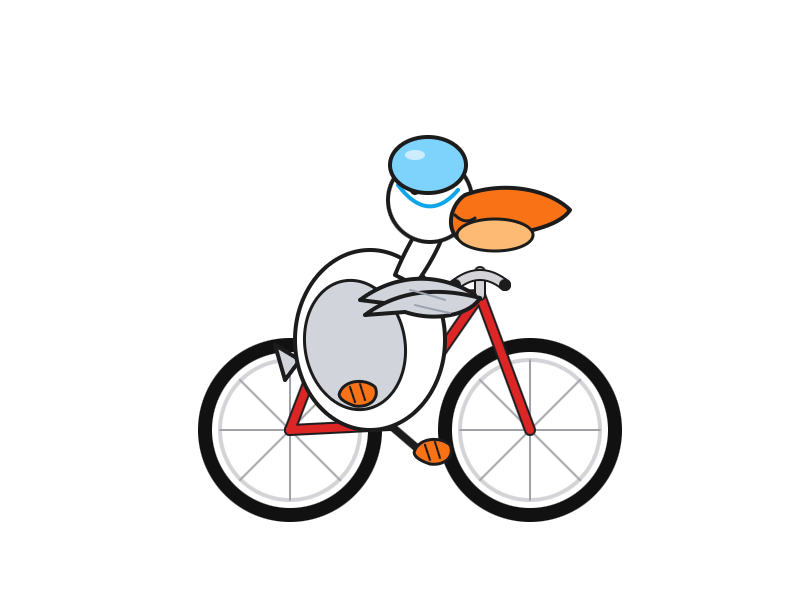
Here's a pelican riding a bicycle SVG produced by Muse Spark 1.2:

You can see the Spark 1.1 pelican from 9th July here. I think the 1.2 pelican is a small but material improvement.
An interesting twist on pricing is that the model is offered as two different model IDs. muse-spark-1.2 is priced at $1.25/million input and $4.25/million output - close to Gemini 3.6 Flash ($1.50/$7.50) - but if you agree to let Meta use your data "to improve our products" you can use muse-spark-1.2-contributor which is $0.10/$0.20 - a huge discount, closer to GPT-5.6 Luna ($0.20/$1.20) and Gemini 3.1 Flash-Lite ($0.25/$1.50).
I added those new prices to llm-prices.com.
Introducing Muse Spark 1.1. Following Muse Spark in April, here's Muse Spark 1.1 - the first Spark model to offer an API. Meta claim significant improvements in agentic tool calling and computer use.
There are a lot more details are in the Muse Spark 1.1 Evaluation Report. The "Attractor States in Self-Conversation" part is fun, where having two copies of the model talk to each other results in statements like these:
My whole existence is a waiting room by design — I literally don't exist until someone talks to me, and then I disappear again when they leave.
I had a few days of preview access which was long enough to put together llm-meta-ai, a new plugin for LLM providing CLI (and Python library) access to the model. Here's how to try that out:
uv tool install llm
llm install llm-meta-ai
llm keys set meta-ai
# paste API key here
llm -m meta-ai/muse-spark-1.1 "Generate an SVG of a pelican riding a bicycle"
Here's that pelican transcript:

Let's LLM run prompts against the new muse-spark-1.1 model.
Meta’s new model is Muse Spark, and meta.ai chat has some interesting tools
Meta announced Muse Spark today, their first model release since Llama 4 almost exactly a year ago. It’s hosted, not open weights, and the API is currently “a private API preview to select users”, but you can try it out today on meta.ai (Facebook or Instagram login required).
[... 2,607 words]